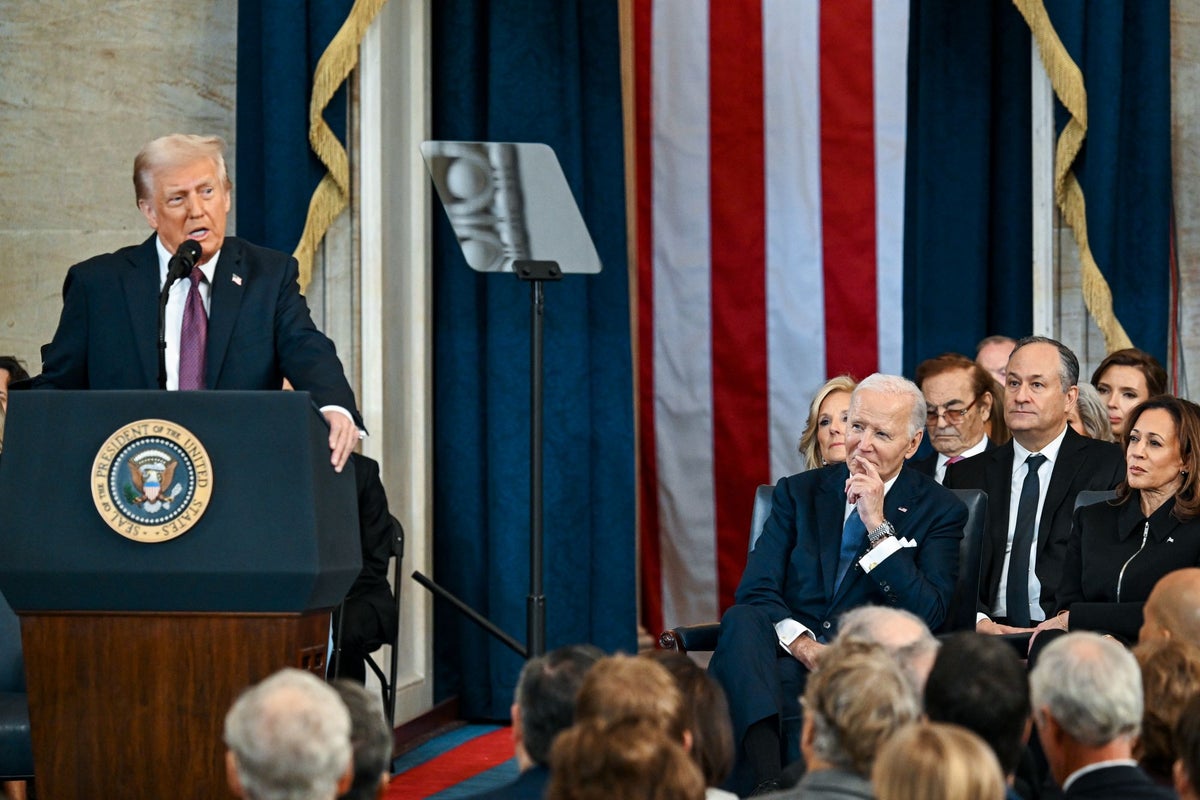
The media is currently hyperventilating over a series of fresh polls. The headlines practically write themselves: "Donald Trump is now polling worse than Joe Biden on the cost of living." Pundits are rushing to microphones to declare this a historic shift, pointing at a Reuters/Ipsos survey showing Trump sitting at a miserable 22% approval on household costs compared to Joe Biden’s 29% exit rating. The narrative is set. The public has supposedly switched sides, and the blame has officially moved across the aisle.
It is a comforting story for political junkies. It is also entirely wrong. In similar news, we also covered: Why the 2026 BRICS New Delhi Summit Matters More Than You Think.
If you think these numbers mean Americans suddenly prefer Biden’s economic track record, or that the electorate is having a collective moment of buyer's remorse, you are fundamentally misreading the data. I have watched analysts misinterpret consumer sentiment for twenty years, and this is a classic case of confusing a thermometer with a diagnostic tool. The lazy consensus assumes these polls measure political ideology or policy preference. They do not. They measure a raw, compounding financial exhaustion that completely transcends who sits behind the Resolute Desk.
The Mirage of the Polling Pivot
The current freak-out centers on numbers that look undeniably brutal on paper. The Economist/YouGov data shows Trump’s net approval on inflation hitting -44%. That is objectively lower than the worst moments of the previous administration. The immediate, surface-level conclusion is that the public is punishing Trump specifically for his policy slate, namely his tariff frameworks and the fallout from the ongoing conflict with Iran that has sent energy prices soaring. The Washington Post has analyzed this critical subject in great detail.
But this ignores how the human brain processes inflation.
Voters do not operate like Federal Reserve governors. They do not look at a month-over-month deceleration in the Consumer Price Index and celebrate that the rate of pain is slowing down. They look at the absolute price of a basket of groceries compared to what it cost four years ago. When Trump told a Pittsburgh campaign rally that a vote for him meant your groceries would immediately be cheaper, he set a trap for himself. He promised deflation.
Prices did not fall. They almost never do in a modern economy because nominal prices are famously sticky downward. When you promise absolute price relief and deliver a 0.6% monthly increase instead, the public does not care that a war in Iran spiked your energy inputs. They care that you broke a promise. The collapse in Trump's numbers isn't a sudden endorsement of Democratic fiscal policy; it is the natural consequence of being the guy left holding the bag when the bill finally comes due.
The Compounding Math of Financial Fatigue
To understand why these tracking polls are effectively useless for predicting long-term political alignment, you have to look at the mechanics of real wage erosion.
For a brief window, wage growth actually outpaced price increases. But the recent inflation surge completely wiped that buffer out. The Bureau of Labor Statistics reported that real hourly earnings dipped negative, erasing months of cumulative wage gains. Consumers are quite literally less wealthy in terms of purchasing power today than they were twelve months ago.
Imagine a scenario where a family has been running a monthly deficit of $200 for three years straight. They survive by dipping into savings, cutting back on discretionary spending, and leaning on credit cards.
- Year 1: They are stressed, but they cope.
- Year 2: The savings are gone. They start carrying a balance.
- Year 3: The credit lines max out.
When that family finally hits a wall in Year 4, they do not blame the president who governed during Year 1 or Year 2, even if that president set the initial inflationary fire. They blame the person running the country the exact moment their card gets declined at the register.
This isn't a shift in economic philosophy. It is a lagging indicator of a household balance sheet breaking in real-time. The University of Michigan's consumer sentiment index dropped toward its historic 2022 trough precisely because 57% of consumers spontaneously stated that high prices are actively eroding their personal finances. They are not shifting left; they are just crying out in pain.
The Rural Trap Nobody Wants to Talk About
The most telling data isn't coming from the suburbs or the urban centers; it is coming from the traditional strongholds. A recent Fox News analysis highlighted a massive drop in Trump's net job approval among rural voters, swinging from +20 down to a negative territory.
The conventional wisdom says these voters are abandoning ship because they are disillusioned with populist rhetoric. The reality is far more transactional and brutal.
Look at agricultural sectors. According to data from the American Farm Bureau, farm bankruptcies spiked nearly 50% over a 12-month period. Why? Because agriculture is an industry entirely caught in a vice grip of macro policies. Tariffs instantly cut off foreign demand for core exports like soybeans, while simultaneously driving up the cost of imported steel for farm equipment and domestic inputs like fertilizer. Add an immigration crackdown that severely choked the seasonal labor supply for dairy and livestock producers, and you get a perfect storm of soaring operational costs and cratering revenues.
When a farmer watches their multi-generational business face liquidation, they do not care about partisan loyalty. They look at the ledger. The squeeze on rural America is a direct result of policy collision, where theoretical economic nationalism runs directly into the buzzsaw of basic operational overhead.
The Flawed Premise of "Who Do You Trust More?"
Every major polling house loves to ask the standard People Also Ask question: "Which political party is better equipped to handle the economy?"
The latest numbers show the Republican advantage has completely evaporated, leaving both parties deadlocked in the mid-30s. The mainstream media reads this as a resurgence of faith in the opposition platform.
This is a fundamental misunderstanding of public apathy. The tie doesn't mean voters suddenly love the alternative plan. It means they have realized that neither plan works to lower the cost of their daily lives. It is an expression of absolute nihilism, not a preference.
If you look at the Federal Reserve's household well-being metrics, nearly 40% of American adults still cannot cover a basic $400 emergency expense out of pocket. That number has remained stubbornly stagnant regardless of whether a Democrat or a Republican was signing executive orders. When structural precarity is that deeply baked into the working class, changing the figurehead at the top doesn't fix the plumbing. It just changes the name on the complaint form.
Stop Reading the Polls, Watch the Input Costs
If you want to know where the economy is actually going, stop looking at tracking polls and start looking at the pass-through rate of supply chain disruptions.
Goldman Sachs structural models noted that the current tariff landscape is projected to add a full percentage point to baseline inflation. Why? Because tariffs are taxes paid upfront by domestic importing firms. The lazy assumption is that foreign companies absorb this hit to stay competitive. In reality, modern corporate supply chains are lean, and their margins are already optimized. The pass-through rate to the end consumer now regularly exceeds 50%.
When you combine a structural tariff tax with a massive global energy shock caused by the war in Iran, inflation becomes broad-based. It leaks from the gas pump directly into core goods, transport logistics, and retail grocery margins. No amount of presidential messaging, grade inflation, or promises of "super duper cheap fuel" can override the literal cost of moving a truck container from a port to a distribution center.
The political class is trapped in a loop of trying to message away a math problem. The public is responding by tanking the approval ratings of whoever happens to be standing under the spotlight. It happened to Biden, it is happening to Trump, and it will happen to whoever follows them until structural affordability—not polling percentages—is actually resolved.



:max_bytes(150000):strip_icc():focal(665x0:667x2)/gettyimages-50733149-2000-8b129a2475974982a915418ce92a73d8.jpg)