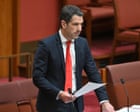
Political theatre at Holyrood usually follows a predictable script, until all 17 Reform UK MSPs stood up and walked out of the debating chamber mid-session. Jeers echoed across the floor. Cameras rolled. Headlines wrote themselves within minutes.
If you only read the surface-level news coverage of the Reform UK MSPs jeered as they walk out of Scottish independence debate at Holyrood, you might think this was just another noisy afternoon in Edinburgh. It wasn't. That September 22, 2026 protest exposed a deep, structural fault line in Scottish politics—one involving constitutional law, parliamentary rules, and roughly two million voters who didn't even bother showing up to the polls earlier that year.
How the Holyrood Walkout Actually Unfolded
Before First Minister John Swinney could even get to his feet to open the Scottish Government's debate on independence, Reform UK's Scottish leader Lord Malcolm Offord intervened on a point of order. He cited the Scotland Act 1998. Under that foundational legislation, the constitution and the Union are strictly reserved to Westminster. Offord asked Presiding Officer Kenneth Gibson to declare the debate inappropriate and shut down the sitting immediately.
Gibson gave a blunt, one-word answer. "No".
What happened next turned a routine parliamentary procedure into a viral spectacle. Offord addressed the chamber directly, calling the session "ill-judged, self-serving and wholly inappropriate" before declaring that Reform wouldn't waste time on "vanity projects". Then he led every single Reform MSP out of the chamber. As they filed out past the benches, rival MSPs jeered and shouted.
Swinney didn't miss a beat. He pushed forward with the government motion asking Parliament to affirm that Scotland is a nation with the right to decide its own future. Without Reform in the room to register opposition, the motion passed overwhelmingly by 84 votes to 18. Scottish Labour and the Scottish Greens backed the text alongside the SNP, while the Scottish Conservatives and Liberal Democrats voted against it.
Why the Timing Triggered Such a Fierce Backlash
Context matters here. If you look at the Scottish Parliament calendar from September 22, 2026, the frustration from opposition benches wasn't pulled out of thin air.
On that exact Tuesday morning, official homelessness statistics had just been published. Annual drug death figures were scheduled for release the very next day. Meanwhile, the SNP was gearing up for its party conference.
To critics, scheduling an afternoon debate on a non-binding constitutional motion right between grim housing data and drug mortality numbers looked less like governance and more like conference warm-up material. Offord seized on that contrast outside the chamber, telling reporters that MSPs were elected to deal with immediate crises in housing, healthcare, and addiction rather than staging a "gimmick". Deputy leader Thomas Kerr echoed the line on social media, framing the exit as a refusal to play along with "pointless posturing".
Yet even fellow unionists weren't impressed by the stunt. Scottish Conservative leader Russell Findlay dismissed Reform's exit as "silly stunts". From the Tory perspective, walking out hands the SNP an uncontested stage and makes opposition look unserious. And honestly, there's truth to that. Boycotting a debate rarely changes the legislative outcome—it just surrenders the microphone to your opponents for the rest of the afternoon.
The Numbers Behind the Two Million Non-Voters Claim
During his post-walkout media scrum, Offord repeated a striking statistic that deserves closer scrutiny. He argued that two million Scots stayed home during the May 7, 2026 Holyrood election because they felt Parliament was ignoring their daily lives.
Let's check the actual data from the 2026 election. According to Electoral Commission figures cited in Scottish Parliament briefings, 4,320,981 people were registered to vote. Scottish Parliament Information Centre (SPICe) records show that 2,309,063 people actually cast ballots.
Do the math and Offord's headline number holds up. Roughly 2.01 million registered voters did not participate.
Where things get messy is interpreting why they stayed home. Reform claims those two million people are "scunnered" by endless constitutional arguments and want Holyrood to stick to devolved basics. Political scientists and rival parties point out that non-voters aren't a single ideological bloc. Voter apathy stems from economic disillusionment, distrust across all political parties, and fatigue after years of turbulent UK-wide politics. Claiming sole ownership over two million silent citizens is smart political messaging, even if no polling data proves they all agree with Reform's platform.
At the same time, the election math explains why the SNP felt emboldened to hold the debate in the first place. Despite winning 58 seats—short of an outright solo majority—the SNP combined with the Scottish Greens' 15 MSPs to form a 73-seat pro-independence majority in the 129-seat Parliament. That's one seat more than the pro-independence bloc held in 2021, even though the overall pro-independence share of the popular vote dipped from roughly 50% down to around 41%.
What the Scotland Act Actually Says About Holyrood Debates
Offord's opening point of order rested on a common misconception about how devolution works. Many observers assume that because constitutional affairs are reserved to Westminster under Schedule 5 of the Scotland Act 1998, Holyrood isn't legally allowed to talk about independence.
That isn't how parliamentary rules operate.
- Legislative competence vs. debating power. Holyrood cannot pass an Act of the Scottish Parliament that unilaterally dissolves the Union or organizes a legally binding referendum without Westminster's consent. The UK Supreme Court settled that boundary years ago.
- Motions of opinion. Passing a non-binding motion expressing a view on Scotland's constitutional future does not alter the law. Parliaments routinely debate foreign policy, defence, and international conflicts—all reserved matters—without breaching the Scotland Act.
That's why Presiding Officer Kenneth Gibson rejected Offord's attempt to halt proceedings. The debate was completely within standing orders.
The Heavy Price Reform Paid the Next Day
Walking out got Reform UK onto evening news bulletins across Britain. It also triggered an immediate institutional backlash that few headlines fully explored.
The following evening, on September 23, Presiding Officer Kenneth Gibson delivered a blistering rebuke from the chair. He accused Reform MSPs of showing "gross discourtesy" to their parliamentary colleagues by staging a coordinated walkout.
More importantly, Gibson attached a concrete penalty to the protest. He warned the chamber that any MSP who chooses to walk out of proceedings in that manner will find their likelihood of being called to speak in future debates—or having their amendments selected—greatly diminished.
In a parliamentary system, losing favour with the Presiding Officer hurts. Backbench and opposition MSPs rely on the chair's discretion to secure speaking slots during high-profile debates, ask supplementary questions, and get legislative amendments onto the ballot paper. Footage from the chamber showed several Reform MSPs smirking during Gibson's dressing-down, yet behind closed doors, reduced speaking time limits a party's ability to scrutinize government bills on the very topics—health, housing, and education—that Reform claims to prioritize.
Why This Clash Matters Beyond One Afternoon
If you follow Scottish politics closely, this episode reveals the exact strategic trap currently locking Holyrood in place.
John Swinney faces relentless pressure from his party's grassroots to keep independence alive, having publicly vowed to deliver a second referendum before 2031. Because Westminster refuses to grant a Section 30 order, symbolic chamber motions become one of the few tools left to demonstrate momentum ahead of party conferences.
On the other side, Reform UK—newly arrived as a 17-strong force at Holyrood—wants to position itself as the ultimate anti-establishment disruptor. Playing by traditional parliamentary conventions doesn't generate viral clips on X or TikTok. Disrupting the chamber does.
Meanwhile, voters watching from home see a parliament divided between symbolic constitutional motions that change nothing legally and theatrical walkouts that leave empty green and blue chairs on television.
How to Cut Through the Noise Next Time Holyrood Clashes
When parliamentary walkouts and constitutional rows dominate your news feed, don't just react to the viral clip. Check three things before taking any party's spin at face value:
- Read the exact motion text. Look up the Official Report on the Scottish Parliament website to see whether MSPs are voting on binding legislation or a symbolic expression of opinion.
- Check the Order Paper for that week. See what committee reports, statistical releases, or bills were scheduled alongside the debate to understand why opposition parties picked that specific day to protest.
- Watch the Presiding Officer's rulings. Parliamentary etiquette carries real procedural teeth—a stunt that wins applause on social media can quietly cost a party speaking slots and legislative influence for months afterward.
For footage of the chamber reaction during the protest, see Reform UK MSPs jeered as they walk out of Scottish independence debate at Holyrood, which captures the moment Malcolm Offord led his MSPs from the floor.