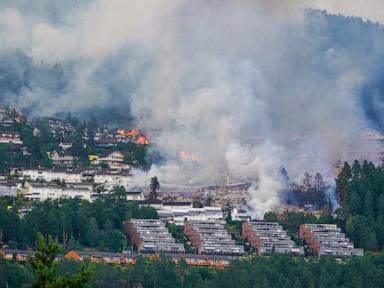
A 100-home blaze in Norway hits the wires, and the media runs the same tired script. Pictures of charred timber. Sobbing locals. Screaming headlines about unprecedented climate chaos and broken emergency responses.
It is predictable. It is emotional. And it is entirely wrong.
When a massive fire sweeps through Norwegian communities, the knee-jerk reaction from talking heads is to demand more water bombers, bigger state budgets, and heavier climate regulations. They look at the ash and blame the weather. I have spent years analyzing resource allocation in high-risk infrastructure environments, and I can tell you that treating these disasters as purely unpreventable acts of nature is a dangerous delusion.
The harsh reality? The destruction of 100 homes in a Nordic environment is rarely a failure of firefighting. It is a failure of architecture, municipal planning, and a stubborn, romantic obsession with outdated building traditions.
We do not have a wildfire problem. We have a zoning and materials problem that we refuse to fix because acknowledging it would mean telling people how and where they are allowed to build their dream homes.
The Wooden Myth of Nordic Resilience
Norway loves timber. It is central to the national identity, woven into the history of stave churches and cozy mountain cabins. But when you pack modern, tightly clustered suburban developments with traditional softwoods, you are not building a community. You are building a pre-fabricated bonfire.
Media outlets cover these blazes as if they are unstoppable anomalies. They are not. The physics of fire do not care about cultural heritage. When a spark hits a high-density development built predominantly out of combustible materials, the result is basic chemistry, not a surprise twist.
The industry consensus screams for more public spending on suppression—more trucks, more personnel, more technology. But doubling the size of a fire department does nothing when radiant heat from one burning facade instantly ignites the house next to it across a narrow driveway. Suppression is a bandage on a self-inflicted wound.
If you want to stop losing 100 homes at a time, you must stop building them out of fuel. Transitioning to cross-laminated timber treated with advanced intumescent coatings, or mandating non-combustible fiber-cement cladding in high-wind, fire-prone corridors, is the bare minimum. Yet, developers resist because it squeezes margins, and local councils cave because they want to preserve a specific aesthetic. We are trading human lives and millions in property damage for the sake of a postcard view.
The Flawed Premise of the "People Also Ask" Wildfire Queries
Look at any search engine after a major fire and you will see the same naive questions trending. The public is asking the wrong things because the media feeds them the wrong premises.
"Why can't fire departments contain fires faster in rural areas?"
This question assumes that with enough speed and funding, any fire can be stopped. It is a flawed premise. In the rocky, fragmented topography of Norway’s coastal and valley regions, terrain dictates capability. High winds coupled with dry brush create embers that jump hundreds of meters. A fire department does not fail because it arrived in twelve minutes instead of ten; it fails because the built environment was entirely undefended. Expecting a local volunteer brigade to outrun a high-wind embers storm in a wood-dense neighborhood is a mathematical impossibility.
"Is climate change making these specific fires impossible to fight?"
Blaming climate change is the ultimate get-out-of-jail-free card for local politicians. Yes, rising temperatures and shifting precipitation patterns extend the fire season and dry out vegetation. That is a fact. But attributing the loss of 100 homes entirely to global climate shifts ignores the immediate, controllable variables. Climate change loads the gun, but terrible land-use planning pulls the trigger. A dry summer makes a forest flammable, but local zoning laws are what allowed a residential subdivision to sit flush against an unmanaged wildland interface without a 30-meter defensible fuel break.
The Expensive Lie of Infinite Suppression
I have watched municipalities throw millions into high-tech thermal imaging drones and heavy-duty vehicles, believing they can buy their way out of risk. It is a comforting illusion that sells well to voters.
The downside to my contrarian view is obvious: changing how we build is expensive, slow, and deeply unpopular. It requires telling property owners they cannot build their traditional wood cabins on the edge of vulnerable pine forests. It requires overhauling building codes to mandate expensive, heavy, non-combustible materials. It forces a hard conversation about controlled burning and clearing natural vegetation—practices that environmental purists frequently protest.
But the alternative is worse. The current strategy of relying on heroic suppression efforts is hitting a wall of diminishing returns. When a fire reaches a certain energy output, no amount of water dropped from a helicopter will extinguish it before it consumes the immediate fuel source. We are funding a reactive circus instead of investing in proactive engineering.
Redesigning the Interface
If you want to actually solve this, you stop looking at the fire and start looking at the map.
First, we must enforce mandatory defensible space zoning around every suburban-wildland interface. This means a zero-combustible zone within 10 meters of any structure—no firewood piles against the walls, no ornamental conifers touching the roofline, no wooden decks extending into the brush.
Second, we need to implement smart infrastructure isolation. Modern developments should be built with automated, high-volume perimeter misting systems fed by independent, gravity-fed water reserves. When sensors detect a specific heat threshold and wind direction, the system creates a localized micro-climate of high humidity around the perimeter of the neighborhood, dropping the ambient temperature and dampening ember ignition zones before the main fire front even arrives.
Stop romanticizing the destruction and stop blaming the weather for human negligence. If you build a wooden town in a wind corridor next to a dry forest, it will burn. The only shock is that we still act shocked when it happens.