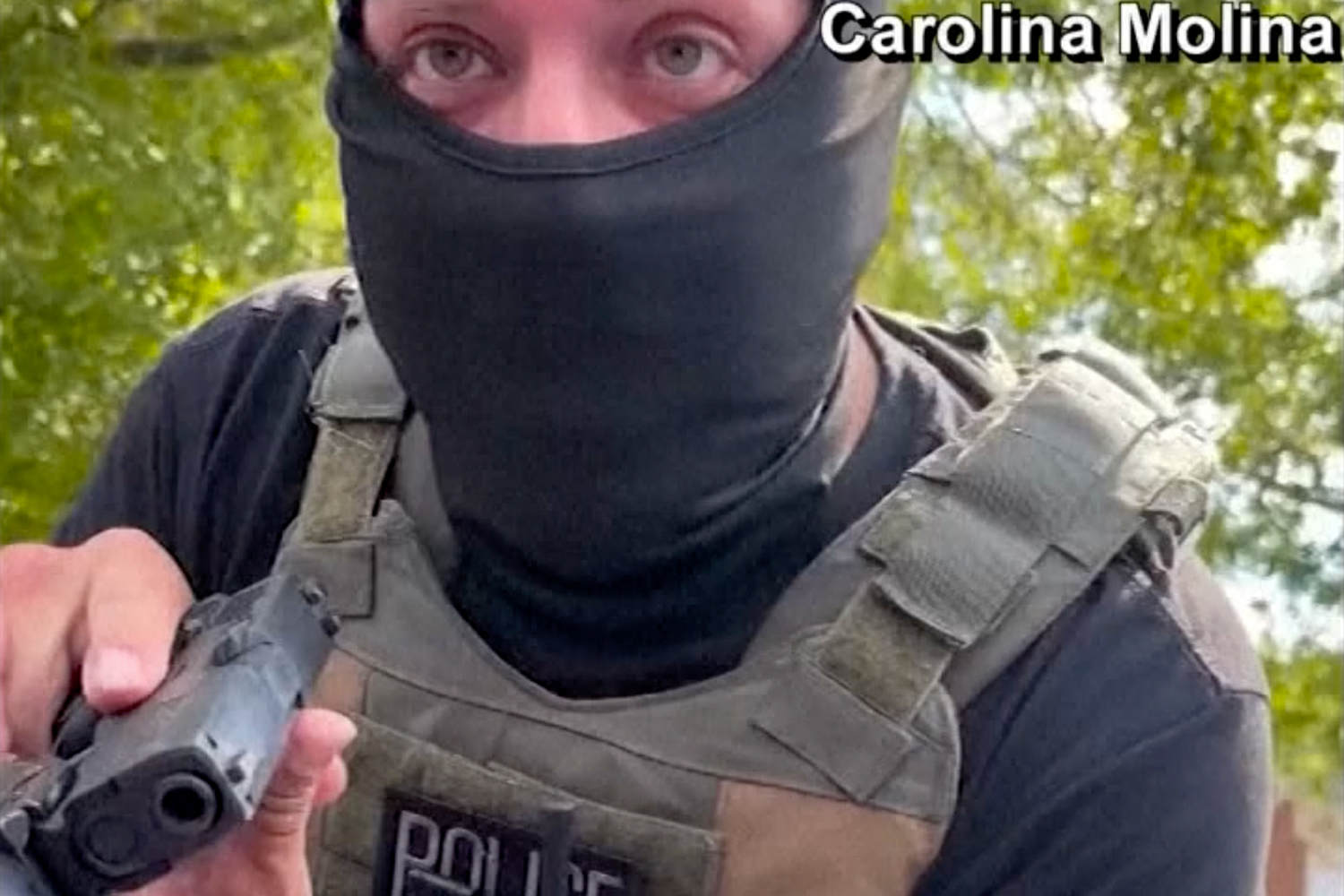
Another day, another shaky vertical video capture of an enforcement agent drawing a weapon in a crowded parking lot, followed by an immediate social media firestorm. The internet demands heads on pikes. Pundits scream about civil liberties. Viewers pick an absolute side based on a thirty-second clip stripped of all context, acoustic reality, and operational doctrine.
Everybody is reacting exactly how the algorithm wants them to react. And everybody is dead wrong.
I have spent years studying tactical communications, crowd dynamics, and high-stress operational environments. I have watched hundreds of these civilian-versus-agent footage snippets dissected by armchair lawyers who have never spent five seconds trying to secure a perimeter or manage a hostile, screaming crowd in an unstructured public space. The lazy consensus says this is purely a story about overreach, unchecked authority, and terrified citizens. That narrative is lazy, dangerous, and obscures the actual mechanical failure happening on the ground.
Let us dismantle the core premise of what is actually happening when a citizen steps into an active enforcement zone to scream at armed federal or local personnel.
The Myth of the Passive Observer
The first foundational misunderstanding floating around every comment section is the definition of a passive bystander. People assume that because you are standing in a public parking lot, you possess a legal and tactical bubble of complete immunity to scream, crowd, and advance on officers executing a warrant or a detention.
That is not how physics, psychology, or the law operates.
When agents are managing a subject, their cognitive bandwidth is maxed out. They are tracking hands, scanning for secondary threats, maintaining spatial awareness, and controlling the primary target. Every decimal point of attention diverted to a screaming, advancing civilian shouting obscenities is a distraction from lethal threat detection.
Imagine a scenario where an officer is maintaining weapon retention on a cooperative or semi-cooperative detainee. A third party rushes into their blind spot, yelling vitriol, moving erratically, and closing the distance. From the officer's perspective, this is not a citizen exercising free speech. This is an active disruption of a tactical environment that historically precedes ambushes, weapon grabs, or physical assaults.
The internet treats the drawn weapon as the original sin. It is not. The drawn weapon is the lagging indicator of a total breakdown in crowd safety discipline initiated by the person filming and screaming.
Why the Outrage Machine Fails
Outrage requires simplicity. Nuance kills engagement. Therefore, media outlets frame these parking lot standoffs as simple battles of good versus evil, David versus Goliath, the state versus the individual.
This framing ignores the brutal mathematics of human startle responses. Put a human being in body armor, load them down with forty pounds of gear, raise their adrenaline levels to maximum through high-stakes field work, and then have an angry stranger sprint or march up to within arm's reach while screaming at the top of their lungs. The human nervous system does not consult the United States Constitution before reacting to a perceived physical threat. It fires cortisol and adrenaline.
When critics demand that agents maintain robotic, Zen-like calm while being berated inches from their faces, they are asking for biological impossibilities. Can training mitigate this? Absolutely. Do agencies need better de-escalation protocols for secondary crowds? Yes. But pretending that the agent woke up that morning looking for an excuse to draw a firearm on a random civilian is a fairy tale told by people who have never managed a high-stress crisis in their lives.
The real culprit isn't just bad tactical temperament; it is the perverse incentive structure of digital clout.
The Performance Art of Confrontation
Let us be entirely honest about what these parking lot videos have become. They are staged theatrical productions for digital consumption.
Civilians have learned that if they approach law enforcement operations while recording on a smartphone and deliberately provoke a reaction, they can capture a spicy piece of content. If the agents ignore them, they win internet points for heckling. If the agents get defensive or draw a weapon, they hit the viral jackpot. They secure a payday of outrage, Patreon subscriptions, and algorithmic martyrdom.
This creates a perverse feedback loop. People actively inject themselves into dangerous, volatile situations specifically to manufacture a civil rights violation. They treat active operational scenes like interactive theater where they are the main character.
The downside of my perspective? It completely strips away the comforting fantasy that the citizen is always an innocent lamb and the officer is always a cartoon villain. Real life is messier, uglier, and far more reciprocal. Both sides are frequently behaving with catastrophic lack of judgment.
The Uncomfortable Solution
If we want these viral standoffs to stop, we have to change the rules of engagement for both sides, starting with the public understanding of physical space.
First, stop treating law enforcement perimeters like public viewing galleries for political protest. If an agency is conducting an operation, stepping within ten feet of those operatives while screaming is not brave activism; it is a profound tactical hazard that triggers defensive countermeasures. You have a right to record. You do not have a right to interfere, crowd, or create a force multiplier hazard.
Second, agencies need to overhaul how they train personnel to deal with cell phones and hecklers. Drawing a weapon should be strictly reserved for actual, verifiable lethal threats, not out of frustration or startled annoyance at a loudmouth civilian. If an agent cannot maintain tactical patience against verbal abuse without unholstering a firearm, they fail the baseline requirements of the badge.
Both things can be true at the same time. The citizen in the parking lot was looking for a fight, and the agent handled the pressure with dangerous clumsiness.
Stop looking for heroes in a parking lot skirmish. Start looking at the structural breakdown that turns routine public spaces into volatile battlegrounds of ego and adrenaline.
The next time a video drops and the internet demands instant blood, look past the weapon, look past the screaming, and look at the people treating public safety like a clout factory. Until we stop rewarding the performance, the guns will keep coming out.


