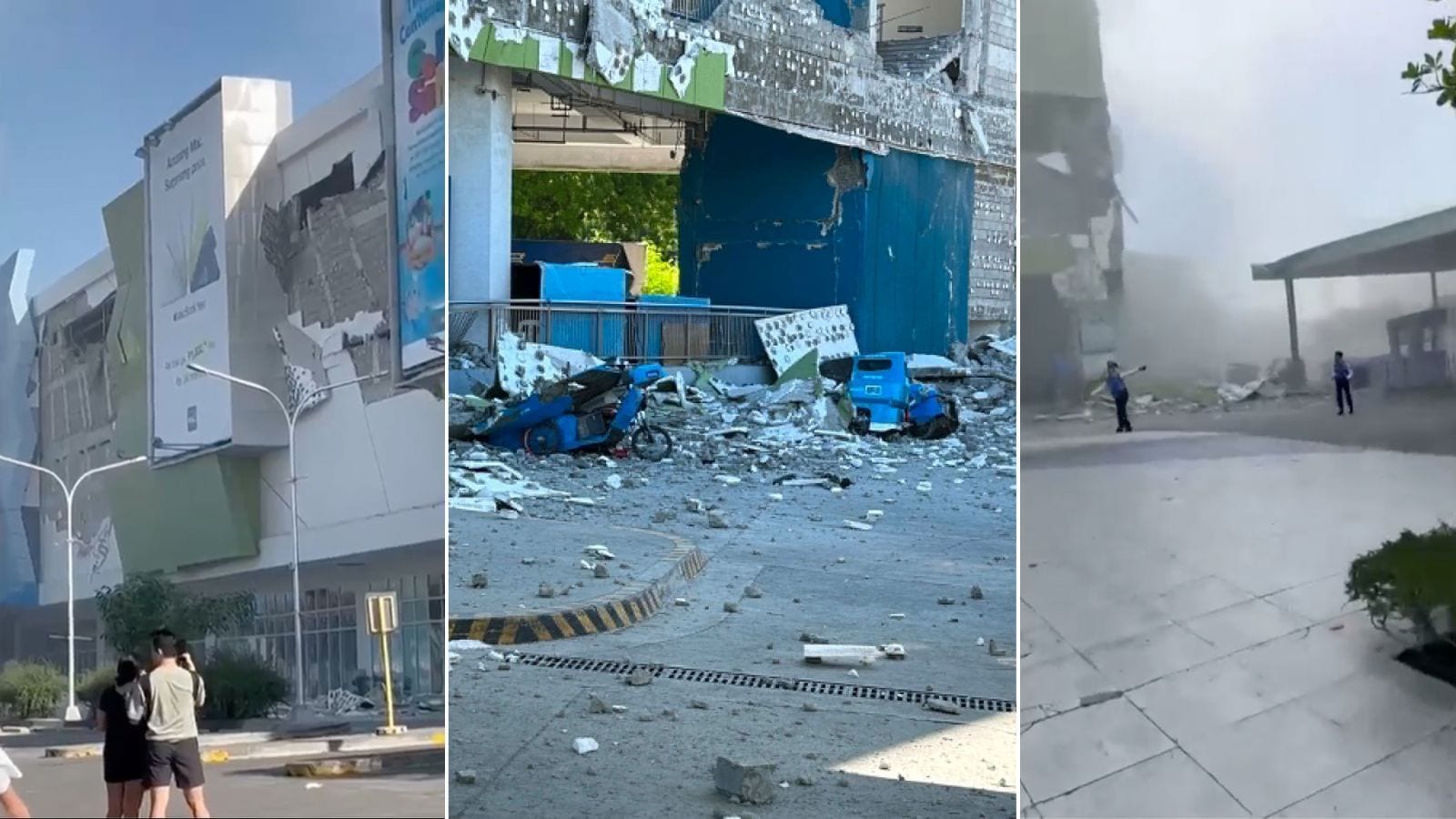
Mainstream news outlets are running the exact same headline today: a massive 7.8 magnitude earthquake struck off the coast of Mindanao, killing at least twelve people and triggering panicked coastal evacuations under a tsunami warning. The coverage is identical across every major network. They show videos of a collapsed Jollibee restaurant in General Santos City, panic during morning school assemblies, and generic maps of the Pacific Ring of Fire.
They treat this as an unavoidable tragedy, a sudden act of God that caught the region by surprise.
They are entirely wrong.
The media focuses on the body count and the sensational visuals of shattered glass, but they miss the structural reality of modern seismology. When a 7.8 magnitude earthquake strikes a major population hub like General Santos City—a port city of over 700,000 people—and the death toll remains in the low double digits, the story is not the destruction. The story is the engineering.
We need to stop looking at earthquakes through the lens of pure tragedy and start analyzing them as rigorous stress tests of human infrastructure.
The Myth of the Unpredictable Catastrophe
Every time a major fault line ruptures, the public narrative defaults to helpless panic. Reporters ask why we cannot predict these events, operating under the flawed premise that better forecasting is the holy grail of seismic safety.
I have spent years looking at how cities respond to tectonic stress. The obsessed pursuit of short-term earthquake prediction is a multi-million-dollar distraction. You cannot predict a rupture down to the minute, and you never will. The physics of deep-crust stress accumulation make it impossible.
The real question we should ask is why we expect prediction to save us when building code enforcement is what actually keeps people alive.
Consider the data from this latest event. The Philippine Institute of Volcanology and Seismology (PHIVOLCS) and the U.S. Geological Survey (USGS) logged the event at 7.37 a.m. local time, at a depth of anywhere between 10 to 55 kilometers. A shallow 7.8 magnitude tremor releases an immense amount of energy. If an equivalent quake hit a region with unregulated construction, the body count would be in the thousands.
Instead, the structural failures in Mindanao were highly localized. The upper floor of a fast-food outlet collapsed, an access bridge cracked, and minor commercial buildings lost exterior walls. The heavy hitters of regional infrastructure held ground. Dr. Wijayanto, an engineering expert assessing regional impact, noted that the vast majority of damages were limited to falling wall plaster, non-structural fences, and superficial cracks.
This is a triumph of modern engineering masquerading as a disaster headline.
The Tsunami Panic Industrial Complex
The second lazy consensus in today’s news cycle is the sensationalism surrounding the tsunami warning. Headlines screamed about three-meter waves threatening the coasts of the Philippines, Indonesia, and Malaysia. Local agencies rightfully ordered evacuations to higher ground, because ignoring an offshore 7.8 rupture is a fool's errand.
But look at what actually happened. The Pacific Tsunami Warning Center lifted the threat within five hours. The actual waves measured around one meter in Sultan Kudarat and roughly 83 centimeters off Indonesia’s Sulawesi island.
The media treats every tsunami advisory as an impending repeat of the 2004 Indian Ocean disaster. This binary framing—either total safety or apocalyptic annihilation—obscures how wave mechanics work. A one-meter wave in the open ocean is negligible; when it hits a shallow coastline, it can cause localized flooding and pull loose equipment into the sea. It is dangerous, yes, but it is a manageable hydrological event, not a Hollywood tidal wave.
The constant amplification of worst-case scenarios causes systematic alarm fatigue. When you tell a coastal population that a devastating wall of water is coming, and they evacuate only to see a one-meter surge that barely clears the pier, they are less likely to move the next time a warning is issued. We are trading long-term credibility for short-term clicks.
The Flaw in Disaster Metrics
The international community evaluates the severity of an earthquake by its magnitude on the moment magnitude scale or by its immediate casualty count. Both metrics are fundamentally flawed indicators of a society's resilience.
Imagine a scenario where a 6.0 magnitude earthquake hits an area with zero building code enforcement, killing 500 people. Now compare it to this 7.8 magnitude event in Mindanao that claimed twelve lives. The mainstream media gives more coverage to the former because the visceral horror is higher, but the latter offers the actual blueprint for survival.
The true metric of disaster preparedness is the delta between seismic energy released and structural failure rates.
The Philippines sits squarely on the Ring of Fire. It averages twenty typhoons a year and constant seismic activity. Because of this relentless environmental pressure, the regional construction standards, specifically the National Building Code of the Philippines, have evolved. The structures that collapsed this morning were almost certainly older, non-compliant municipal buildings or rapidly thrown-up commercial extensions.
If we want to stop writing these articles every six months, the strategy is simple but unsexy:
- Enforce strict retrofitting mandates on all commercial properties built before 2010.
- Ban decorative, non-structural concrete facades on urban thoroughfares.
- Shift emergency funding from post-disaster relief to pre-disaster structural subsidies for low-income residential zones.
The focus must move away from the drama of search-and-rescue and toward the cold reality of structural integrity. Twelve lives lost is a tragedy for those families, but from an institutional perspective, the low number proves that the built environment is winning the war against tectonic shifts. Stop looking at the rubble of one Jollibee and start looking at the hundreds of skyscrapers in Davao and General Santos that didn't shed a single pane of glass.