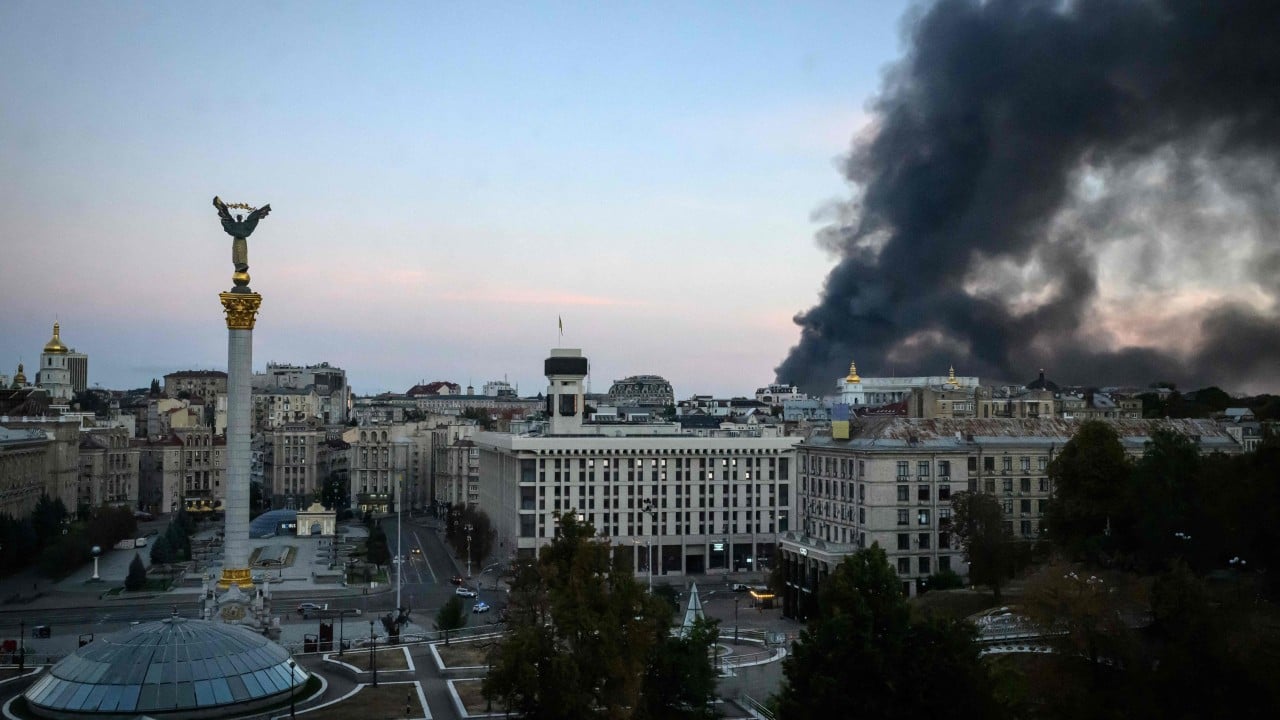
The lazy consensus in international reporting runs on a predictable script. A diplomatic delegation arrives in a capital, photographs are snapped, handshakes are exchanged, and a brief pause in hostilities follows. When the missiles start falling again immediately after the diplomats wheels lift off the tarmac, the media screams betrayal. Analysts hyperventilate about broken trust, diplomatic failures, and intentional slaps in the face.
It is a comforting narrative for television anchors. It is also entirely amateurish. For another view, see: this related article.
Treating military logistics and long-range targeting cycles like a personal insult or a sudden emotional reaction misunderstands how modern state-level violence operates. Missiles do not launch because someone felt insulted at a negotiation table. They launch because refueling schedules, telemetry updates, payload assembly, and clearance chains finally aligned.
The Choreography of Escalation
I have spent years watching strategic analysts mistake coincidence for causation. When a barrage hits Kyiv hours after high-level envoys depart, the knee-jerk media reaction assumes a direct tit-for-tat emotional feedback loop. This anthropomorphizes war machines into petulant teenagers. Further insight on this trend has been shared by NPR.
Military operations of this scale run on multi-week planning windows. Target packages require satellite reconnaissance verification, air defense suppression mapping, and inventory redistribution across hundreds of miles. The timing of a diplomatic visit is a rounding error to a general staff managing an active artillery front spanning thousands of kilometers.
To believe that a barrage was rushed out to send a political message to a specific delegation is to fundamentally misread the mechanical coldness of the General Staff. They do not care about your photo op. They care about supply chain replenishment thresholds. When the warehouse is full and the weather clears, the birds fly. Date matching is for pundits, not logicians.
The Delusion of Strategic Pauses
Another favorite trope of the mainstream foreign desk is the concept of the humanitarian or diplomatic pause. Commentators write as if a brief halt in air raids represents a genuine opening for peace, only for the subsequent strikes to shatter those fragile hopes.
Hopes were never built. You cannot shatter something that did not exist.
A tactical pause in a high-intensity conflict usually indicates one of two boring, mechanical realities: maintenance cycles or weather anomalies. Low cloud ceilings ground drones and complicate cruise missile terminal guidance. Maintenance downtime requires units to pull back, swap out turbine components, and recalibrate inertial navigation systems.
When the pause ends, it does not mean negotiations failed. It means the engines are bolted back onto the airframes. Treating every operational lull as a diplomatic breakthrough is a reliable way to ensure you are perpetually surprised by reality.
Why the Wrong Questions Dominate the Cycle
If you read the mainstream coverage of these strikes, the questions asked by reporters reveal a staggering lack of operational literacy.
People ask: What message is Moscow sending to Washington?
The correct question: Why are we still pretending air defense attrition curves allow for absolute city protection under saturation attacks?
People ask: Will this derail the peace process?
The correct question: What peace process? There is no stationary framework, only a shifting battlefield where terms are dictated by kinetic reality, not communique drafts.
By framing every tactical exchange as a psychological drama, commentators obscure the brutal engineering of the war. They want a story about heroes, villains, and broken promises because it plays well on mobile feeds. They refuse to look at the ledger of ordnance consumption, manufacturing output, and reserve depletion rates because numbers do not generate ad clicks.
The Downside of Pure Cynicism
Adopting this mechanical view of war comes with its own intellectual trap. When you strip away the political theater and view everything through the lens of logistics and calculus, you risk erasing the human cost on the ground.
Families in Kyiv do not care whether a missile landed because of a broken diplomatic protocol or a scheduled maintenance window. The ceiling collapses regardless of the general staff's spreadsheet. Maintaining analytical detachment does not mean ignoring the catastrophe; it means refusing to let lazy journalism blind you to how the machine actually functions.
If you want to understand tomorrow's headlines, stop reading the body language of diplomats. Start tracking rare-earth mineral supply chains, microchip smuggling routes, and fuel tanker rail movements.
The missiles do not fly because of who is in town. They fly because the logistics finally cleared. Everything else is just noise.