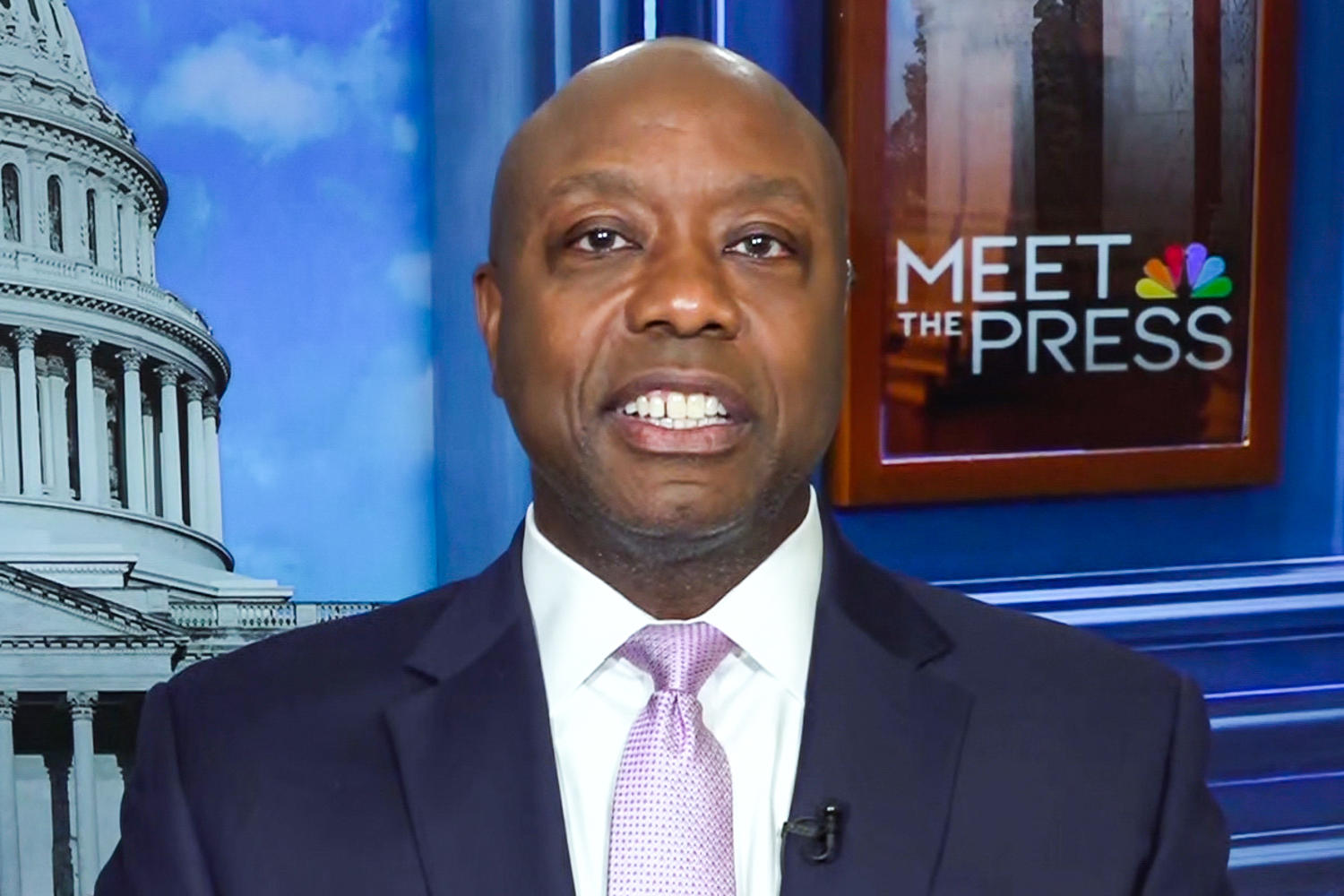
The calculus of political support often disregards specialized competence in favor of alignment mechanics. When a high-profile surrogate rationalizes a candidate's explicit admission of ignorance regarding foreign policy, political analysts observe a calculated trade-off between technical proficiency and ideological loyalty. Senator Tim Scott framing Darline Graham stumbling over Taiwan and the South China Sea as an insignificant factor reveals how modern candidate evaluation functions. This dynamic demonstrates that institutional endorsements prioritize predictable voting behavior over domain expertise.
The Functional Mechanics of Ideological Alignment
Voter alignment models typically separate candidates into two distinct operational vectors: execution capability and value congruence. Execution capability involves understanding complex legislative portfolios, including international trade agreements, defense procurement, and geopolitical risk mitigation. Value congruence measures a candidate's adherence to a specific voter base's cultural and economic preferences.
The decision by party leadership to defend an open lack of foreign policy knowledge relies on a simple cost-benefit calculation:
- Value congruence guarantees baseline voter retention within safe geographic strongholds.
- Domain expertise shortfalls carry negligible electoral penalties in hyper-polarized environments where legislative votes depend on party leadership guidance.
- Authenticity signals, even when framing an unvarnished admission of unpreparedness, can be spun as populist candor rather than professional disqualification.
This creates an operational framework where technical deficits are discounted because the institutional machinery provides structural support. A legislator does not need to master geopolitical strategy independently if party whips and institutional committees supply pre-packaged positions.
The Cost Function of Competency Gaps
Evaluating political candidates requires examining the operational risk associated with competency gaps. When an elected official publicly states that national security is outside their operational domain, the risk function shifts from localized domestic delivery to systemic legislative exposure.
[Candidate Entry] ---> [Competency Deficit Identified] ---> [Party Shield Activation] ---> [Electoral Insulation]
The primary risk variables include committee assignment utility and floor vote vulnerability. In legislative bodies structured around specialized committees, placing an untrained agent on national security or foreign relations subcommittees introduces friction into legislative drafting. However, party leaders mitigate this risk through strategic committee placements that shield vulnerable profiles from high-stakes technical oversight.
The defense mechanism deployed by senior figures like Tim Scott functions as brand protection. By asserting that current domestic grievances—such as affordability and economic survival—supersede international relations, leadership redefines the job description of a United States Senator. This redefinition narrows the performance metrics down to variables the candidate can manage, isolating them from broader macroeconomic or geopolitical evaluations.
Strategic Allocation of Endorsement Capital
Endorsements from established political figures operate as risk-transfer mechanisms. When institutional leaders back a political novice who struggles with foundational policy questions, they invest accumulated political capital to bridge the credibility gap.
The return on this investment relies on the baseline partisanship of the electorate rather than the merit of the individual. In structurally safe districts or states, the penalty for policy misstatements approaches zero, provided the candidate remains inside the accepted ideological boundaries. The strategic imperative for leadership is maintaining legislative seat control, making competency a secondary variable compared to ballot retention and ideological loyalty.
Align tactical resource deployment directly behind core voter priorities while insulating weak operational vectors through committee management and party-line discipline.
Pretty EMBARRASSING: Columnist reacts to Darline Graham's debate blunder
This video provides contemporary media commentary and analysis regarding the debate performance and the ensuing political fallout in South Carolina.