Brussels is sounding the alarm. The European Commission’s latest economic outlook suggests we’re flirting with a scenario most leaders thought was buried in the 1970s history books. Stagflation isn't just a buzzword anymore. It’s a looming reality where growth vanishes while prices refuse to stop climbing.
You’ve probably felt the squeeze at the pump or the grocery store. But the official numbers coming out of the Berlaymont building confirm that this isn't just temporary "noise" in the data. The conflict in the Middle East has become the primary wildcard, threatening to derail an already fragile recovery across the eurozone. It’s a mess.
The core problem is simple to state but brutal to solve. Europe depends on stable global energy markets. When the Middle East destabilizes, oil and gas prices react instantly. This puts the European Central Bank (ECB) in an impossible position. Do they raise interest rates to kill inflation, risking a deeper recession? Or do they cut rates to spark growth, risking a runaway price spiral? There are no easy exits here.
The Stagflation Trap is Real
Economic growth across the 20-nation bloc is currently anemic. We're looking at figures that barely scratch 0.8% or 1% in the best-case scenarios for the coming year. When you factor in the persistent inflation that’s still hovering above the 2% target, you get the classic definition of stagflation. It’s a stagnant economy paired with inflating costs.
It’s basically a pincer movement. On one side, households are spending less because their salaries don't go as far. On the other, businesses are pulling back on investment because borrowing costs are high and the future looks murky. The Commission’s forecast makes it clear that the "soft landing" everyone hoped for is looking more like a bumpy, prolonged grounding.
We have to look at Germany. As the traditional engine of Europe, its struggle is everyone's struggle. The industrial base there is reeling from high energy costs and a slowdown in global demand. If Germany can’t find its footing, the rest of the continent stays stuck in the mud.
Why the Middle East Changes Everything for Your Wallet
Geopolitics used to feel distant. Now, it’s baked into the price of your morning coffee and your heating bill. The conflict in the Middle East isn't just a humanitarian tragedy; it's a massive supply-side shock.
The primary risk is the Strait of Hormuz. If tensions escalate to the point where shipping is significantly disrupted, energy prices won't just rise—they’ll explode. We saw a version of this when Russia invaded Ukraine. But Europe had more options then. We've already pivoted away from Russian gas. If Middle Eastern supplies are throttled, there isn't a "Plan C" waiting in the wings.
Think about the Red Sea. Shipping companies are already diverting vessels around the Cape of Good Hope to avoid attacks. This adds weeks to delivery times and millions to fuel costs. These costs don't just disappear. They get passed directly to you. Every time a container ship takes the long way around Africa, the price of the electronics or clothes inside goes up.
The ECB's Impossible Balancing Act
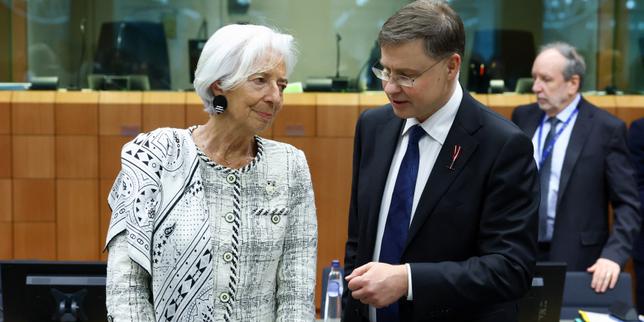
Christine Lagarde and the ECB board are stuck. Usually, when an economy slows down, a central bank lowers interest rates to make borrowing cheaper. This encourages people to buy homes and businesses to expand. But you can't do that if inflation is high.
If the ECB cuts rates too early, they risk letting inflation become permanent. People start expecting prices to rise, so they demand higher wages, which causes prices to rise further. It’s a vicious cycle. But if they keep rates high for too long, they might break the economy entirely.
- High Rates: Curb inflation but crush small businesses and mortgage holders.
- Low Rates: Boost growth but risk devaluing the Euro and sparking a price surge.
- The Middle Path: A slow, agonizing series of micro-adjustments that might satisfy no one.
Most experts I talk to are worried that the ECB is moving too slowly. They’re looking at backward-looking data while the real-world economy is already freezing up. It’s like trying to drive a car by only looking in the rearview mirror.
Breaking Down the Numbers
The Commission’s downgraded projections aren't just dry statistics. They represent lost jobs and shuttered windows on the high street. Real GDP growth for the Eurozone has been revised downward repeatedly over the last few quarters.
Look at the debt-to-GDP ratios in countries like Italy and Greece. High interest rates make servicing that debt incredibly expensive. This leaves governments with less money for infrastructure, healthcare, or green energy transitions. We’re seeing a widening gap between what Europe needs to do to remain competitive and what it can actually afford to do.
Inflation isn't hitting everyone equally, either. Food inflation remains significantly higher than the headline rate. This hits lower-income households the hardest. When the Commission talks about "downside risks," they’re talking about the potential for social unrest if the cost of living doesn't stabilize soon.
What You Should Actually Do Now
Waiting for a government bailout or a sudden drop in prices isn't a strategy. If you're running a business or managing a household budget, you need to assume this volatility is the new baseline.
First, look at your energy exposure. If you haven't invested in efficiency yet, now is the time. Government subsidies for heat pumps or insulation are still available in many regions, and they’re a hedge against the next price spike.
Second, rethink your debt. If you have variable-rate loans, try to lock in fixed rates if the window hasn't already slammed shut. The era of "free money" and zero-percent interest is over. It’s not coming back anytime soon.
Third, diversify. If your income or your investments are tied solely to the European market, you’re vulnerable to this specific brand of stagflation. Look at markets that are less dependent on Middle Eastern energy or that have stronger internal growth dynamics.
The "trap" the Commission describes is real, but it’s not inescapable. It requires a level of political courage and economic flexibility that Europe hasn't shown in years. We need to stop pretending that we can go back to the pre-2022 economy. That world is gone.
Stop waiting for "normal" to return. Start building a strategy that works in a high-cost, low-growth environment. Tighten your supply chains, cut the fluff from your budget, and stay liquid. The winners in the next five years won't be the ones who predicted the bottom—they'll be the ones who were prepared for a long, cold plateau.