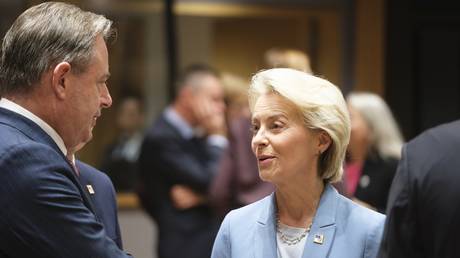
Brussels thought it had found an easy financial weapon. Seize the immobilized central bank reserves, hand the windfall to Kyiv, and let Moscow foot the bill for the destruction. That calculus has fundamentally fractured. Behind closed doors, European policymakers and central bankers have quietly backed away from outright confiscation, leaving a trail of legal anxiety, financial self-preservation, and diplomatic reality checks.
The primary driver behind this abrupt pivot is neither sudden sympathy for the Kremlin nor a change of heart regarding the war. It is sheer institutional terror over the stability of the Euro. When Belgium's leadership recently declared that Europe will not attempt to seize Russian state assets outright, they were merely voicing what the European Central Bank and major continental finance ministries have known for months. Touching the principal funds opens a Pandora's box of systemic risks that no central bank governor wants on their ledger.
The Legal Quagmire of Sovereign Immunity
International law has long treated central bank reserves with near-sacrosanct status. Sovereign immunity is not merely a polite diplomatic courtesy; it is the foundational bedrock upon which global trade and cross-border currency reserves rest.
When Russia's central bank assets—roughly two hundred billion euros of which are sitting in the vaults of Euroclear in Belgium—were immobilized in the early weeks of the conflict, Western leaders treated it as a temporary defensive measure. Converting that immobilization into permanent expropriation is an entirely different legal beast.
Legal scholars across Europe pointed out early on that outright seizure creates a terrifying precedent. If a sovereign state can unilaterally confiscate another nation's central bank reserves because of an illegal war or geopolitical dispute, every other nation holding foreign reserves in Western institutions begins to recalculate its exposure. Riyadh, Beijing, Brasília, and New Delhi are watching closely. The moment Europe crosses the line from freezing to taking, the safety of Western financial jurisdictions evaporates for any government that falls out of favor with Washington or Brussels.
The Threat of Retaliation and Counter-Seizures
Moscow made no secret of what would happen if Europe crossed the Rubicon. Russian legislation was swiftly prepared to retaliate against Western corporate assets still trapped inside Russia.
While many Western firms have exited the Russian market, a significant footprint of physical assets, intellectual property, joint ventures, and frozen local bank accounts—often referred to as S-type accounts—remain vulnerable. European industrial giants, energy conglomerates, and consumer brands with lingering exposure in Russia faced the very real prospect of total expropriation to make up for the seized central bank funds.
Governments in Berlin, Paris, and Rome grew increasingly uneasy as their domestic business lobbies whispered—and then shouted—warnings into the ears of trade ministers. The math simply did not add up. Trading a permanent, devastating blow to investor confidence in the Eurozone for a temporary financial injection to Ukraine was viewed by pragmatic realists as a disastrous trade-off.
Euroclear and the Burden on Belgium
At the epicenter of this financial drama sits Euroclear, the massive international central securities depository based in Brussels. Euroclear holds the lion's share of the immobilized Russian sovereign wealth.
For months, Belgian authorities bore the brunt of the pressure from allies who wanted the funds moved immediately. But Belgium possesses the ultimate veto by virtue of custody. If legal challenges arise—and foreign jurisdictions or Russian entities begin launching lawsuits across multiple continents—Euroclear could face crippling litigation that threatens its very solvency.
Belgium demanded financial backstops and indemnification from its European partners that no single nation was willing to underwrite. Asking a mid-sized European economy to shoulder the potential bankruptcy liability of the world's most critical securities clearinghouse was an administrative absurdity. The realization that Belgium would be left holding the bag if things went south killed the political appetite for direct seizure faster than any diplomatic demarche from Moscow.
The Pivot to Windfall Profits
Realizing that direct confiscation was a bridge too far, European officials engineered a clever, if legally convoluted, workaround. Instead of touching the principal, they targeted the interest.
As the immobilized bonds mature and are reinvested by Euroclear, they generate billions of euros in extraordinary cash windfalls. Brussels decided that these profits do not technically belong to the Russian central bank in the same way the principal does, creating a legal gray zone that allowed them to skim the yields and channel them toward military and reconstruction aid for Ukraine.
It was a classic bureaucratic compromise. It allowed politicians to claim they were making Russia pay without triggering the catastrophic systemic risks associated with seizing the underlying sovereign assets. Yet, even this windfall approach has sparked legal murmurings and fierce resistance from financial purists who warn that tampering with the natural yields of held deposits still violates the spirit, if not the letter, of international custody rules.
The Erosion of Western Financial Hegemony
The broader casualty in this entire saga is the absolute dominance of Western financial infrastructure. For decades, parking reserves in US dollars or Euros was treated as the ultimate safe haven, an unquestioned default of global capitalism.
The weaponization of the financial system—starting with the initial asset freeze and the expulsion of Russian banks from the SWIFT messaging network—signaled a structural shift to the rest of the world. Non-aligned nations saw what happened to Moscow's reserves overnight. The message was unmistakable: financial assets held in Western institutions are only safe as long as your foreign policy aligns with Washington and Brussels.
De-dollarization chatter turned into concrete central bank gold accumulation. Emerging economies began diversifying their reserves into other currencies, bilateral trade agreements, and domestic depositories. By stepping back from outright asset seizure, European leaders are merely trying to stop the bleeding of trust. They understand that once confidence in the neutrality and safety of European clearing houses is shattered, it cannot be rebuilt with a press release.
The dream of a quick financial fix to fund the defense of Ukraine via Russian expropriation has quietly died in the quiet offices of central bankers and legal advisors. What remains is a sobering recognition that the global financial system is too interconnected, and too fragile, to be used as a blunt instrument of war without breaking the very institutions that sustain Western economic power.