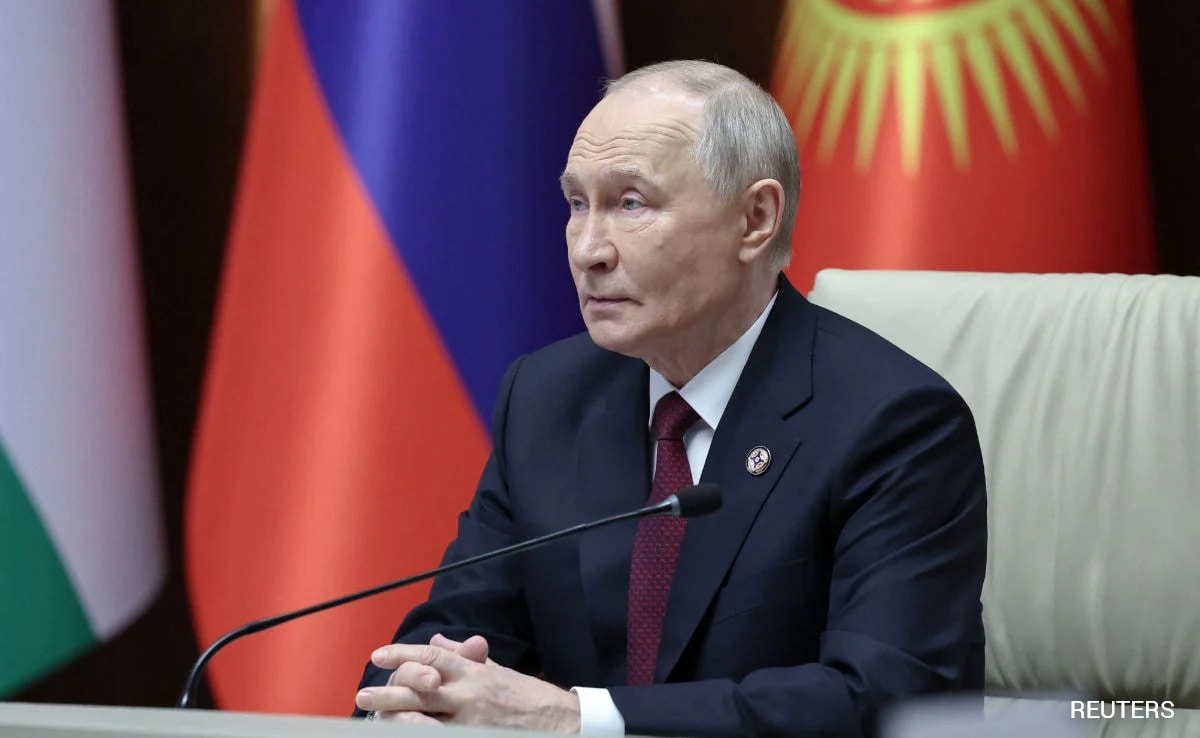
The Kremlin recently issued a pointed warning to European nations regarding the potential stationing of French nuclear-capable aircraft on their soil. This move highlights a sharpening of the strategic friction that has defined the continent since 2022. While the diplomatic rhetoric suggests a sudden shift in policy, the reality is a calculated response to France’s increasingly assertive role in NATO’s collective defense posture. Russia is signaling that any expansion of Western nuclear reach will be met with a mirrored escalation, further eroding the buffer zones that once provided a semblance of stability in Eastern Europe.
The Mirage of Strategic Ambiguity
For decades, France has maintained a unique position within the nuclear order. Unlike the United Kingdom, which integrates its nuclear forces closely with American command structures, France adheres to a doctrine of strict independence. This autonomy allows Paris to project power without waiting for a consensus from Washington. When French President Emmanuel Macron speaks of "strategic ambiguity," he is essentially telling Moscow that the threshold for French intervention is intentionally undefined.
Moscow views this ambiguity as a direct threat. By suggesting that French Rafale jets—capable of carrying the ASMP-A supersonic nuclear missile—could operate from airbases closer to the Russian border, NATO is effectively compressing the decision-making time for Russian high command. In the world of nuclear deterrence, time is the only currency that matters. When flight times are slashed from hours to minutes, the risk of a launch-on-warning scenario increases exponentially. This isn't just about the planes; it is about the geography of the threat.
The Geography of Reach
Stationing nuclear-capable assets in countries like Poland or Romania changes the math for the Russian General Staff. Under current arrangements, most Western nuclear deterrence is centralized or sea-based. Moving these assets to the "frontline" states forces Russia to reallocate its air defense systems and tactical missile units, such as the Iskander-M, to cover new angles of approach.
The Kremlin’s warning is an attempt to utilize political pressure within these European host nations. Russia knows that the public in many EU states is deeply divided over becoming a "frontline" target. By highlighting the risks of hosting French bombers, Moscow aims to trigger domestic debates that could paralyze NATO decision-making. It is a play for the hearts and minds of the European electorate, framed through the lens of survival.
The French Nuclear Modernization Push
France is currently in the middle of a massive reinvestment in its nuclear triad. The Force de Raid, the airborne component of their deterrence, is receiving significant upgrades. The transition to the Rafale F4 standard and the development of the ASN4G missile—a hypersonic successor to the current arsenal—demonstrate a commitment to maintaining a credible threat against modern integrated air defense systems (IADS).
- The ASMP-A Missile: A liquid-fueled ramjet that flies at Mach 3, designed to punch through the S-400 and S-500 tiers of Russian defense.
- The Rafale Platform: A highly maneuverable, "omni-role" fighter that excels in low-level penetration, making it difficult for traditional radar to track until it is too late.
Russia's concern isn't just that these planes are nuclear-capable. It is that they are dual-capable. A Rafale can carry conventional precision-guided munitions one day and a nuclear warhead the next. This creates a "verification nightmare." Russian intelligence cannot look at a jet on a runway in Lithuania and know for certain whether it represents a tactical skirmish or a strategic catastrophe.
Testing the Limits of NATO’s Internal Unity
The Russian warning targets the seams of the alliance. There is a clear distinction between "Nuclear Sharing" (the U.S. program where B61 bombs are stored in countries like Germany and Italy) and the sovereign French deterrent. If France begins to rotate its nuclear-capable assets through Eastern Europe, it bypasses the traditional NATO Nuclear Planning Group.
This creates a multi-polar nuclear environment in Europe. From the Kremlin's perspective, they no longer just have to worry about the "red phone" to Washington. They have to worry about a more volatile, more localized decision-making process in Paris. The warning to European capitals is a reminder that by hosting these assets, they are tethering their national security to French strategic interests, which may not always align with the broader NATO or American consensus.
The Role of Host Nation Support
Nations considering this arrangement face a brutal reality. Hosting a nuclear-capable squadron requires more than just a runway. It requires specialized hardened shelters, rigorous security protocols, and most importantly, it makes that specific site a priority-one target for Russian pre-emptive strikes.
In a conflict scenario, Russia’s military doctrine—often described as "escalate to de-escalate"—suggests that they might use a low-yield nuclear weapon to signal resolve and force a ceasefire. A base hosting French bombers would be the most logical target for such a demonstration. The Kremlin's rhetoric is designed to ensure that every Polish, Romanian, or Finnish politician understands this risk before they sign a basing agreement.
The Impact on Arms Control Architecture
The collapse of the INF (Intermediate-Range Nuclear Forces) Treaty and the suspension of New START have left a vacuum in European security. There are no longer any inspectors checking what is under the wings of these aircraft. We have entered an era of "blind competition" where both sides assume the worst about the other’s intentions.
Russia is using this vacuum to justify its own movements. We have already seen the deployment of Russian tactical nuclear weapons into Belarus. Moscow frames this as a necessary counterbalance to NATO's eastward expansion. By warning against French bombers, they are setting the stage for the next phase of their own deployment, possibly involving more advanced systems closer to the Baltic states.
The Technical Reality of the Threat
We must look at the hardware to understand the heat. The Russian S-400 system is formidable, but it is not infallible. The French doctrine of "nuclear warning" (l'avertissement nucléaire) involves a single, high-altitude nuclear strike intended to signal that "the game has changed." This is fundamentally different from the American concept of a graduated response.
- Launch: The Rafale takes off from a forward-deployed base.
- Penetration: Using its SPECTRA electronic warfare suite, it masks its signature.
- Release: The ASMP-A is released hundreds of kilometers from the target.
- Detonation: A 300-kiloton blast—twenty times the size of the Hiroshima bomb—serves as the "warning."
When Russia warns Europe, they are acknowledging that their air defense bubble is being stressed by these specific capabilities. They are not just worried about a full-scale war; they are worried about a scenario where France has the tools to checkmate Russian conventional forces with a single, localized nuclear move.
Deterrence or Provocation
The central tension lies in the definition of these deployments. NATO sees them as "enhanced vigilance" meant to discourage Russian aggression. Russia sees them as "provocative encirclement." There is no middle ground in this interpretation. Every time a French pilot practices a refueling mission over the Black Sea, the data is fed into a Russian computer that is calculating the proximity to its own "red lines."
The danger is that these red lines are moving. For decades, they were static. Now, they are fluid. The Kremlin’s warning is an attempt to re-establish a hard boundary. They are telling Europe that the "nuclear umbrella" is not a passive shield, but a lightning rod that attracts the very strikes it is meant to prevent.
The Economic and Political Cost of Tension
Beyond the military hardware, there is the issue of regional stability. Countries that agree to host such high-stakes assets often see a shift in their foreign direct investment and insurance risks. Constant military drills and the looming threat of being a primary target do not create an environment conducive to long-term economic growth. Russia leverages this economic anxiety, suggesting that "security" provided by France will come at the cost of national prosperity.
The Silence of the Non-Nuclear States
Smaller European nations are caught in a pincer. They rely on the collective security of the alliance, but they have no say in the nuclear doctrines of the "Big Three" (U.S., UK, France). The Russian warning exploits this hierarchy. It suggests to the non-nuclear members of NATO that they are being used as pawns by Paris to project power without Paris having to face the immediate consequences on French soil.
This is a classic "decoupling" strategy. If Russia can convince Berlin or Warsaw that Paris is being reckless, the internal cohesion of the European Union and NATO begins to fray. The warning isn't just about bombers; it is about the very idea of European strategic autonomy.
The New Cold War Paradigm
We are no longer talking about the possibility of a new Cold War; we are living through its most dangerous phase. During the original Cold War, the lines were clear and the rules were understood. Today, with the introduction of hypersonic missiles, cyber warfare, and dual-capable aircraft like the Rafale, the rules are being written in real-time.
Russia’s focus on France is strategic. By singling out the French deterrent, they are attacking the most independent and unpredictable element of the Western alliance. They are betting that the rest of Europe is not ready for the consequences of French "grandeur."
The escalation in rhetoric is a precursor to a more permanent shift in military infrastructure. If the warnings go unheeded, expect to see Russia move beyond words and into the deployment of its own advanced interceptors and tactical nukes in even more forward positions. The "buffer" is gone. What remains is a direct, unblinking stare between two nuclear-armed powers, with the rest of Europe standing in the crosshairs.
There is no "fix" for this situation that doesn't involve a fundamental return to the negotiating table, something neither side seems prepared to do. The move toward forward-basing nuclear-capable jets is a one-way street. Once the infrastructure is built and the missiles are in place, the logic of "use it or lose it" begins to dominate. Europe is not just hosting bombers; it is hosting a trigger mechanism.