The ink on a television script is never just ink. It is a mortgage payment. It is dental insurance for a seven-year-old. It is the quiet, desperate hope that a creative life in America does not have to end in financial ruin.
Sarah—a composite of three mid-level television writers currently watching their bank accounts slowly evaporate—spent ten years climbing the industry ladder. She started as a writer’s assistant, brewing coffee and organizing dry cleaning, before finally booking her first staff writing gig. For a brief moment, the dream worked. She bought a modest home in Glendale. She believed she had a career.
Today, Sarah is looking at spreadsheets, trying to figure out how many weeks of groceries she can buy before she has to sell her car.
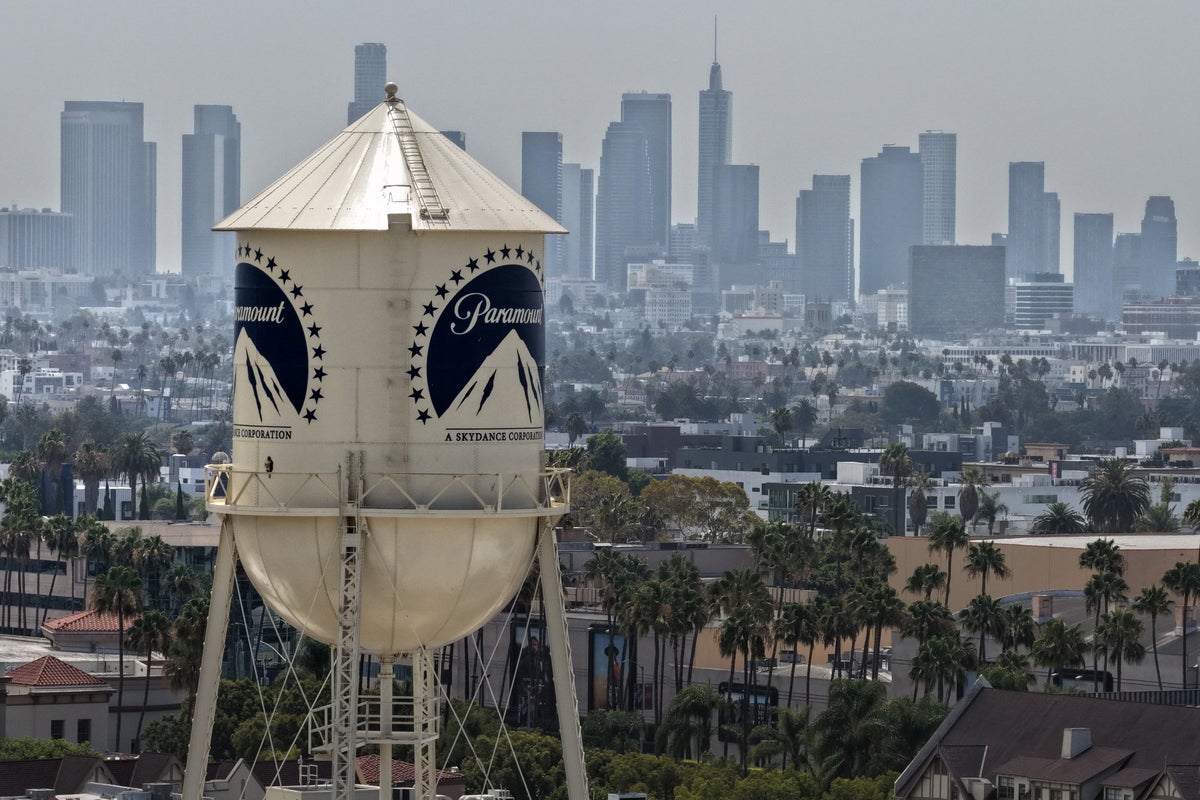
The threat to her survival does not come from a lack of ideas or a sudden loss of talent. It comes from the sterile, wood-paneled boardrooms of New York and Los Angeles, where executives are currently attempting to merge two of the largest entertainment empires on earth: Paramount and Warner Bros. Discovery.
To the Wall Street analysts who trade in stock tickers and quarterly projections, this proposed merger is a logical consolidation. It is a defensive maneuver against the tech giants dominating the streaming landscape. But to the writers who actually create the words those actors speak, it is a slow-motion execution of their profession.
That is why the Writers Guild of America has filed a federal lawsuit to block the merger. This is not just a legal squabble over antitrust laws. It is a battle for the soul of storytelling, and a fight to keep the creative middle class from being wiped off the map entirely.
The Illusion of Choice in the Streaming Era
To understand why this lawsuit matters, we have to look past the glitzy trailers and the red carpets. We have to look at the market.
Imagine a town with ten different grocery stores. If you are a farmer selling tomatoes, you have leverage. If Store A offers you pennies for your harvest, you walk down the street to Store B. If Store B is rude, you try Store C. The competition keeps the buyers honest and the sellers fed.
Now imagine those ten stores merge until only two colossal supermarkets remain.
Suddenly, those two corporations dictate everything. They tell you what your tomatoes are worth. If you do not like their price, you can let your crops rot in the field. You have nowhere else to go.
This is exactly what is happening to the marketplace for stories.
Over the last decade, a wave of massive consolidation has swallowed the entertainment industry. Disney bought Fox. AT&T bought Time Warner, only to spin it off into a merger with Discovery. Amazon bought MGM. With every handshake and every multi-billion-dollar acquisition, the number of doors a writer can knock on shrinks.
If Paramount and Warner Bros. Discovery become a single entity, we are left with a terrifyingly small handful of buyers controlling nearly the entire television and film output of the United States.
Consider the immediate, tangible consequence for a writer pitching a show. Under the current system, if Paramount’s development team passes on a sci-fi drama, the writer can take that exact same pitch to Warner Bros.
If they merge? That second chance vanishes. One "no" from a single executive committee can instantly kill a project that took years to develop. The buyers hold all the cards. The sellers—the people who actually invent the characters we love—are left begging for crumbs.
The Hidden Cost of "Synergy"
Corporate press releases love the word "efficiency." They promise investors that merging these two behemoths will eliminate redundant costs and streamline operations.
But in Hollywood, "redundancy" is code for human beings.
When major studios merge, they do not just combine their human resources departments. They slash development budgets. They greenlight fewer shows. They shrink the size of writing rooms—a devastating trend known as "mini-rooms," where a tiny handful of writers are hired for a fraction of the traditional time to write an entire season before a show is even greenlit.
The consequences of this lean, corporate-first model are already visible.
Ten years ago, a standard network television season consisted of 22 episodes. This meant a writer was employed for ten months out of the year. They had time to learn their craft on set, watch how directors interpreted their words, and participate in the editing process. It was an apprenticeship system. It created the next generation of showrunners.
Today, streaming seasons are often six to eight episodes. Writers are hired for a few frantic weeks, paid the bare minimum, and then let go long before cameras even start rolling. They are barred from the set. They do not learn how to produce. They are treated like gig workers, Uber drivers of the creative world, scraping by from one short-term contract to the next.
If Paramount and Warner Bros. Discovery merge, this gig-economy model will become the permanent, unbreakable law of the land.
There will be no incentive for the remaining mega-studios to offer fair contracts, because there will be no competitors offering better terms to lure talent away. The middle-class writer—the person who writes your favorite procedural, your comforting sitcom, or your gritty late-night drama—will be priced out of the industry entirely. Only the independently wealthy or the ultra-famous elite will be able to afford to write for a living.
Why This Fight Belongs to the Audience
It is easy to look at a lawsuit filed by a Hollywood union and dismiss it as a rich person's problem. We see the multi-million-dollar deals signed by star creators and assume everyone in the Writers Guild is living in a Malibu mansion.
But the reality of Hollywood is far different from the myth.
The vast majority of WGA members are working-class creatives. They are people who worry about rent, who struggle to qualify for union healthcare each year, and who face months of unemployment between gigs. They are the engine of an industry that exports American culture to every corner of the globe, yet they are increasingly unable to afford to live in the cities where that culture is made.
When we squeeze the writers, we do not just hurt their bank accounts. We hurt the stories we get to watch.
Art does not thrive under conditions of extreme monopoly. When a tiny group of corporate executives has total control over what gets made, they stop taking risks. They do not want original, daring, or challenging stories. They want predictable, repeatable intellectual property. They want sequels, prequels, and spin-offs of things you have already seen a thousand times.
They want algorithms to write the scripts, and they want human beings to simply polish the output for a flat fee.
The WGA’s lawsuit is a desperate line in the sand. By arguing that this merger violates antitrust laws by creating a monopsony—a market with only one major buyer—the union is fighting for the very diversity of the stories we consume. They are fighting for the right of an unknown writer from Ohio to pitch a weird, beautiful, original show and actually get it made.
The sun is setting over the Hollywood Hills, casting long, golden shadows across the empty studio lots. In a quiet apartment in Glendale, Sarah sits at her desk. The screen is blank, save for a blinking cursor.
She has an idea for a new show. It is personal, funny, and unlike anything currently on television. But as she looks at her screen, she wonders if there will even be a place left to pitch it by the time she finishes the pilot. She wonders if the giant corporate machine will have finally closed every open door.
The lawsuit winding its way through the federal courts is not about legal jargon or corporate spreadsheets. It is about whether Sarah, and thousands of writers like her, will be allowed to exist. It is about whether the stories of our lives will be written by people who live them, or by a spreadsheet designed to maximize shareholder value.