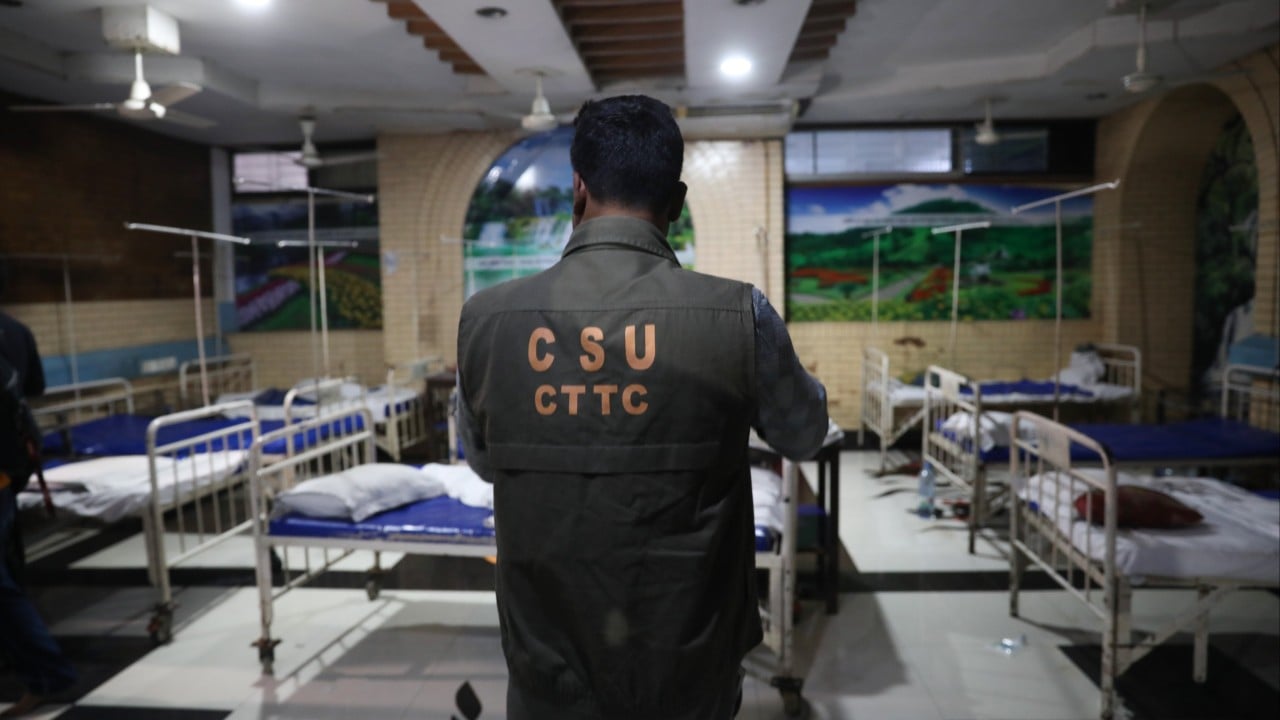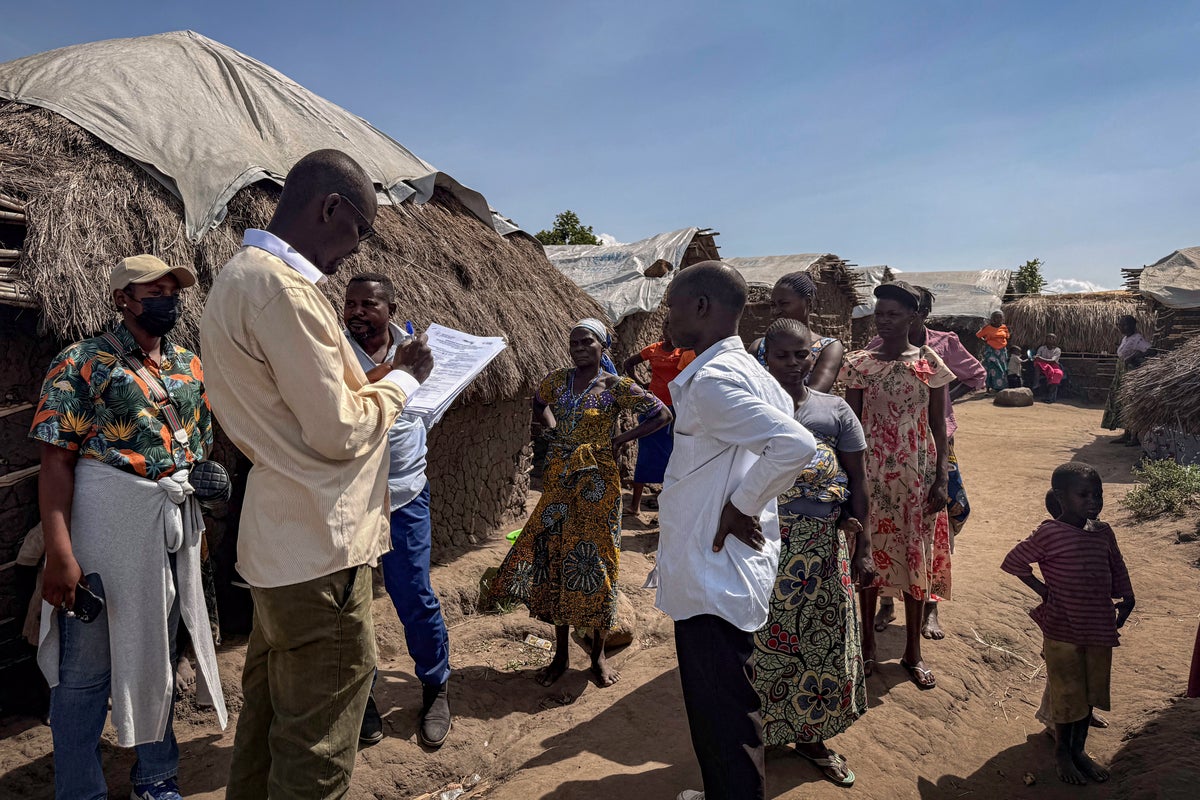
The suspension of commercial airspace operations in Bunia and the simultaneous tightening of the Uganda-Democratic Republic of the Congo (DRC) land borders represent a high-stakes epidemiological gamble. By shutting down passenger aviation at Bunia Airport and closing weekly markets at critical border crossings like Mpondwe, authorities are attempting to construct a physical containment barrier around the epicenter of the Bundibugyo ebolavirus outbreak. This containment strategy operates on a fundamental mathematical logic: by reducing the mobility vector of the population to zero, the effective reproduction number ($R_0$) of the virus outside the immediate hot zone should theoretically drop below 1.
However, linear administrative decrees rarely yield linear outcomes in complex humanitarian ecosystems. The cross-border corridor between northeastern DRC and western Uganda is not merely a path on a map; it is a highly integrated economic and logistical circulatory system. Severing these connections triggers a series of cascading systemic feedback loops. While the blunt instrument of geographic isolation can suppress short-term, long-distance transmission via commercial air travel, it simultaneously undermines local outbreak surveillance, compromises supply chains for essential medical counter-measures, and incentivizes undocumented border crossings through unmonitored informal routes.
The Mathematical Framework of Containment and Border Friction
To evaluate the efficacy of the current interventions, the regional response must be parsed through two distinct operational mechanisms: macro-mobility suppression (the flight ban) and micro-mobility friction (the land border restrictions).
Macro-Mobility Suppression: The Aviation Deficit
Bunia functions as the administrative and economic hub of Ituri Province. The Ministry of Transport and Communications' complete suspension of passenger air traffic removes the highest-velocity transmission vector from the epidemiological equation. In a standard metapopulation disease model, the spread between distinct geographic nodes is driven by the rate of travel between them. Commercial aviation allows an incubated, asymptomatic individual to traverse hundreds of kilometers from Bunia to Kinshasa, Goma, or regional international hubs within hours, effectively bypassing localized geographic containment.
By halting commercial and private flights, the DRC government has effectively decoupled the Bunia metapopulation node from the wider domestic and international aviation network. This restriction creates an immediate operational trade-off:
- Positive Epidemiological Friction: The probability of export events via high-speed networks drops toward zero.
- Negative Logistical Drag: The absolute reliance on special ministerial approvals for humanitarian and medical flights introduces administrative latency. The time required to secure flight clearances for epidemiologists, laboratory staff, and cold-chain equipment creates a bottleneck in a scenario where response velocity is paramount.
Micro-Mobility Friction: The Border Market Paradigm
While aviation suppression addresses long-distance dissemination, the land border restrictions enacted by Uganda target high-density, low-distance cross-border movement. The closure of weekly border markets, such as the one at Mpondwe, is designed to eliminate high-contact environments where transmission dynamics peak due to physical proximity.
The cross-border dynamics of this outbreak are dictated by the specific viral agent: the Bundibugyo ebolavirus strain. Historically exhibiting a case fatality rate of up to 50 percent, this strain demands rigorous contact tracing and rapid isolation. When formal, regulated border points introduce severe delays or outright closures, the movement of people does not cease; it shifts. The frontier between Ituri Province and western Uganda features a porous topography of informal paths, agricultural fields, and river crossings. Increasing friction at formal checkpoints directly increases the volume of traffic utilizing these unmonitored bypasses, which fundamentally breaks down formal surveillance and contact-tracing efforts.
Quantification of the Crisis: Epidemic Trajectory vs. Containment Capacity
The tension between administrative containment and epidemiological reality is illustrated by the divergence between confirmed data and suspected case modeling. As of late May 2026, the official metrics provided by regional health authorities and the World Health Organization (WHO) reveal a structural deficit in containment velocity.
The Surveillance Discrepancy
The true scale of an Ebola outbreak is rarely captured by laboratory-confirmed figures during the acceleration phase. The current operational data underscores a severe tracking gap:
- Confirmed Vectors: 82 cases confirmed via laboratory testing, with 7 confirmed fatalities.
- Suspected Vectors: Up to 750 suspected cases and 177 suspected deaths across North Kivu, South Kivu, and Ituri provinces.
- Total Attributed Mortality: The broader clinical envelope indicates that the outbreak has already claimed more than 220 lives, with total reported cases exceeding 930 across 11 distinct health zones since mid-May.
$$\text{Surveillance Gap Ratio} = \frac{\text{Suspected Cases}}{\text{Confirmed Cases}} = \frac{750}{82} \approx 9.15$$
This ratio demonstrates that for every single patient integrated into the formal isolation and treatment workflow, more than nine suspected cases remain unconfirmed within the community. This discrepancy is a direct function of operational friction. Armed conflict, community resistance, and acute physical insecurity in eastern DRC severely limit the mobility of mobile laboratory teams and contact tracers. When contact-tracing efforts are overwhelmed, the virus spreads faster than the diagnostic infrastructure can map it.
The Cross-Border Ingress
The justification for Uganda’s stringent border posture is validated by the realization of cross-border transmission. With five confirmed cases already identified within Uganda—including two imported cases detected in Kampala—the geographic footprint of the virus has outpaced local containment zones. The presence of the virus in a major metropolitan transit hub like Kampala fundamentally changes the risk profile, shifting the objective from localized containment to regional mitigation.
The Economic Cost Function of Physical Isolation
The containment strategy fails to account for the economic survival mechanics of the population inhabitating the Ituri-Uganda corridor. Bunia’s local economy relies heavily on a service-and-import model driven by trade, transport, and retail. By treating the health crisis in isolation from the economic system, the strategy creates a secondary crisis that actively undermines health compliance.
Supply Chain Disruptions and Market Asymmetry
The city of Bunia depends on Kampala as its primary source of wholesale commercial goods, manufacturing inputs, and processed food items. Land border restrictions disrupt this supply chain in several phases:
- Inventory Depletion: Retailers in Bunia operate on thin margins and low-capacity warehousing, relying on just-in-time logistics via overland trucks from Uganda. Border curbs cause immediate stockouts of essential commodities.
- Price Inflation: As supply decreases while local demand remains inelastic, the cost of basic goods rises sharply. This strains household budgets in a population already facing systemic economic vulnerability.
- Capital Flight: The shutdown of Bunia Airport halts the influx of regional investors, commercial buyers, and humanitarian logistics contractors, freezing the service sector (hotels, local transport, and retail networks).
The Insecurity-Resistance Feedback Loop
In eastern DRC, economic deprivation is directly correlated with a deterioration in security. When formal livelihoods are eliminated by administrative decree—such as shutting down border markets without providing financial safety nets—the alternative economic path often involves armed groups or illegal trade networks.
Furthermore, when a community perceives that the government's public health response is the direct cause of their economic ruin, institutional trust collapses. This loss of trust manifests as community resistance: hiding symptomatic relatives, refusing the deployment of vaccination teams, and rejecting contact-tracing personnel. Thus, an unmitigated economic shock directly degrades the primary tools required to stop the biological spread of the virus.
Structural Deficiencies in the Global Health Architecture
The unilateral implementation of flight bans and border closures highlights a persistent rift between national political calculations and international health frameworks. The WHO’s International Health Regulations (IHR) explicitly discourage the disruption of international traffic and trade during public health emergencies unless supported by clear scientific consensus.
The rationale behind the IHR guidelines is structural: global health security depends entirely on transparency. If a sovereign state faces immediate economic isolation and airspace closure as a direct consequence of declaring an outbreak, the political incentive shifts toward delayed reporting or underreporting. While the current DRC administration moved quickly to declare the outbreak on May 15, the subsequent rapid enforcement of transport bans by both domestic transport ministries and neighboring states risks disincentivizing similar transparency in future regional health emergencies.
Strategic Playbook for Regional Containment Optimization
To prevent a localized epidemic from developing into a protracted pan-African health crisis, the intervention framework must shift from blunt geographic isolation to a dynamic, risk-mitigated corridor model. The following structural realignments must be executed immediately by regional ministries, civil aviation authorities, and international health partners.
1. Transition from Absolute Flight Bans to Air Transit Sanitization
The complete shutdown of Bunia Airport must be replaced with a targeted bio-secure transit protocol. Total isolation stalls the deployment of expert personnel and advanced diagnostic tools.
- Action: Reopen Bunia Airport exclusively for scheduled, highly regulated commercial logistics corridors under joint WHO and DRC Ministry of Health oversight.
- Protocol: Implement mandatory point-of-departure molecular diagnostic testing (PCR) for all flight crews and approved travelers, paired with a digital health passport system to track contacts for 21 days post-arrival.
2. Establish Managed Humanitarian and Trade Convoys
Land border closures must be replaced with biosecure commercial corridors to maintain the supply of food and medicine into Bunia, preserving economic stability and local cooperation.
- Action: Create designated "green lanes" at the Mpondwe crossing for commercial freight trucks transporting essential goods from Kampala.
- Protocol: Implement a trailer-swapping or rapid-disinfection protocol at the border line. Congolese drivers take over trailers brought to the border by Ugandan drivers, preventing cross-border personnel contact while allowing the physical flow of goods to continue uninterrupted.
3. Decentralize Laboratory and Therapeutics Infrastructure
Given that violence and physical distance impede contact tracing and sample transport to central facilities, diagnostic and treatment capabilities must be moved closer to the community.
- Action: Deploy mobile, containerized biosafety level 3 (BSL-3) laboratories directly to the border health zones of Ituri and North Kivu.
- Protocol: Utilize point-of-care rapid molecular diagnostic tests to reduce the confirmation window from days to hours, compressing the surveillance gap and enabling immediate isolation of confirmed vectors without relying on distant urban centers.
4. Implement Direct Cash Transfers to Offset Market Closures
To mitigate community resistance and reduce the incentive for individuals to use unmonitored informal border crossings, the economic loss from closed markets must be directly subsidized.
- Action: Divert emergency humanitarian funding to establish direct, mobile-money cash transfers for registered market traders and transport workers affected by the Mpondwe market closure.
- Protocol: Tie financial assistance to participation in community-led syndromic surveillance reporting, transforming an economically displaced workforce into an active line of epidemiological defense.
The current strategy of absolute isolation treats Bunia as a closed system, ignoring the porous reality of the region's borders and the survival needs of its population. Lasting containment will not be achieved by cutting the region off from the world, but by building secure, tightly monitored pathways that allow essential resources to flow in while keeping the virus contained.