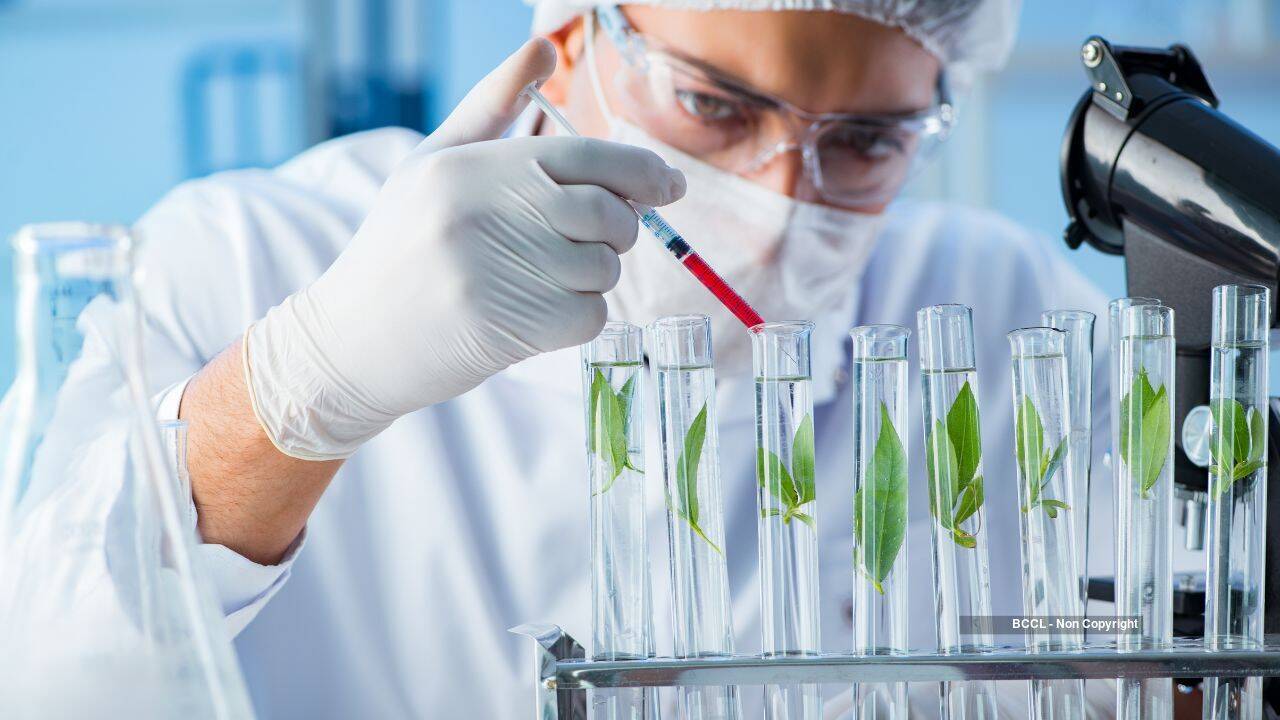
Botanical toxins evolved not as pharmaceutical candidates for human intervention, but as chemical defense mechanisms designed to deter herbivory and microbial degradation. These compounds, frequently characterized by complex structural backbones containing multiple stereocenters, present severe synthetic bottlenecks when approached via traditional total synthesis. The cost function of manufacturing complex alkaloids or glycosides through multi-step organic chemistry often renders commercial production economically unviable. Consequently, attention has shifted toward the enzymatic machinery utilized by toxic plants to synthesize these molecules natively. By isolating and characterizing the biocatalysts that construct these defensive chemical profiles, industrial bioengineers aim to bypass traditional synthesis pathways entirely, substituting slow chemical routes with high-yield enzymatic biotransformations.
The Biochemical Architecture of Botanical Defense
To understand why toxic plants yield valuable pharmaceutical precursors, one must examine the biosynthetic pathways responsible for their production. Toxic flora—ranging from species within the Apocynaceae, Papaveraceae, and Solanaceae families—rely on specialized secondary metabolites. These molecules are not strictly required for primary growth and development, yet they occupy a critical ecological niche.
The biosynthesis of these secondary metabolites typically begins with simple metabolic precursors derived from primary pathways, such as amino acids, acetyl-CoA, or isoprenoids. Specialized enzymes then catalyze successive modifications, including oxidations, reductions, methylations, and complex ring closures.
The primary challenge in harnessing these pathways lies in enzyme discovery and functional characterization. While the end product—such as a potent neurotoxin or a cytotoxic alkaloid—is easily identified, the intermediate enzymes responsible for specific structural transitions are often expressed at extremely low concentrations within the plant tissue. Furthermore, many of these biosynthetic gene clusters are not organized neatly along a single chromosome, complicating genomic extraction.
The extraction methodology relies on modern transcriptomic and proteomic screening. By sequencing the RNA of toxic plant tissues undergoing active secondary metabolism, researchers identify candidate genes encoding cytochrome P450s, glycosyltransferases, and oxidoreductases. These candidate genes are subsequently heterologously expressed in microbial hosts, primarily Escherichia coli or Saccharomyces cerevisiae, to test their catalytic capabilities in isolation.
The Economic and Industrial Bottlenecks of Biocatalysis
Transitioning from plant-derived extraction to engineered enzymatic biosynthesis introduces distinct operational inefficiencies and engineering hurdles. While the theoretical yield of a recombinant enzymatic pathway vastly exceeds the agricultural yield of cultivating, harvesting, and processing toxic flora, the practical implementation is constrained by several systemic factors.
- Substrate Toxicity to Host Organisms: The enzymes derived from toxic plants often process or produce intermediates that are inherently toxic to the microbial host used for manufacturing. If an engineered yeast strain expresses an intermediate step that disrupts its own cellular membrane or inhibits vital metabolic enzymes, cell lysis occurs long before commercial titers are reached.
- Enzyme Stability and Turnover Rates: Natural plant enzymes are optimized for in vivo environments within specific cellular compartments, such as vacuoles or plastids. When placed inside an industrial bioreactor, these proteins frequently exhibit low thermal stability, rapid proteolytic degradation, or unfavorable turnover numbers, capping volumetric productivity.
- Cofactor Regeneration Costs: Many complex oxidation and reduction steps catalyzed by plant-derived enzymes require expensive biological cofactors, such as NADPH or NADH. Without an integrated, highly efficient cofactor regeneration system within the microbial chassis, the operational expenditure of supplying these cofactors makes large-scale fermentation economically non-viable.
Addressing these bottlenecks requires directed evolution campaigns. Protein engineers utilize error-prone PCR, high-throughput screening, and computational machine learning models to redesign plant enzymes. The objective is to decouple the catalytic domain from its original regulatory constraints, increasing thermal tolerance while mitigating host toxicity issues.
Structural Integration into Pharmaceutical Pipelines
The integration of plant-derived biosynthetic enzymes into commercial pharmaceutical pipelines changes the unit economics of drug development. Historically, complex drugs requiring polycyclic skeletons were either extracted directly from rare plant species—creating fragile supply chains vulnerable to climate anomalies, geopolitical shifts, and agricultural blight—or built via linear chemical synthesis spanning dozens of individual reactions, each generating chemical waste and lowering aggregate yield.
Enzymatic manufacturing introduces convergence to this process. By utilizing modular biocatalysts, chemical synthesis routes can be shortened from fifteen steps to three or four chemo-enzymatic steps. This convergence dramatically reduces the mass intensity metric, defined as the total mass of raw materials required to produce a unit mass of active pharmaceutical ingredient.
The supply chain implications are equally structural. Instead of relying on vast acreage for agricultural cultivation, manufacturing facilities can scale horizontally via precision fermentation. This decouples pharmaceutical production from arable land availability, turning regional supply chain vulnerabilities into localized, reproducible fermentation metrics.
Strategic Deployment of Engineered Biocatalysis
To maximize the commercial viability of enzymes sourced from toxic flora, development teams must abandon broad-spectrum screening in favor of targeted pathway decoupling.
First, isolate the rate-limiting step within the native plant biosynthetic pathway using metabolic flux analysis. In most complex alkaloid pathways, a specific cytochrome P450-mediated hydroxylation or ring expansion limits the overall throughput of the pathway. Capitalize engineering efforts exclusively on this bottleneck rather than attempting to reconstruct entire multi-enzyme pathways simultaneously.
Second, decouple the production host from native regulatory feedback loops. Plant enzymes are heavily regulated by downstream metabolite concentrations to prevent cellular toxicity within the plant. When transferring these enzymes to microbial hosts, remove these allosteric inhibition sites via targeted mutagenesis to ensure continuous, constitutive expression.
Third, establish closed-loop cofactor recycling systems concurrent with the primary enzymatic reaction. The economic viability of these bioprocesses depends entirely on maintaining high intracellular pools of reducing equivalents without continuously feeding expensive external chemical cofactors. Implement engineered secondary metabolic pathways within the host chassis that couple primary carbon catabolism directly to the regeneration of NADP+ pools.


