Silence.
That is the first thing you notice when a search and rescue mission officially ends, a heavy, suffocating quiet that settles over the bridge of a cutter and the inbox of a waiting family.
A standard news brief will give you the cold architecture of the event in forty words or fewer. A 72-year-old passenger went overboard from a cruise ship. The United States Coast Guard launched aircraft and cutters, scouring thousands of square nautical miles of open water. After days of relentless grid patterns, the agency suspended the search pending further developments.
You read those three sentences over morning coffee, feel a brief, obligatory pang of sympathy, and scroll down to the weather forecast. The headline treats the event like a clerical update, a box checked in the vast ledger of maritime logistics.
What the wire report leaves out is the terrifying physics of the deep, the agonizing mathematics of survival, and the exact moment hope turns into grief at sea.
The Illusion of the Floating City
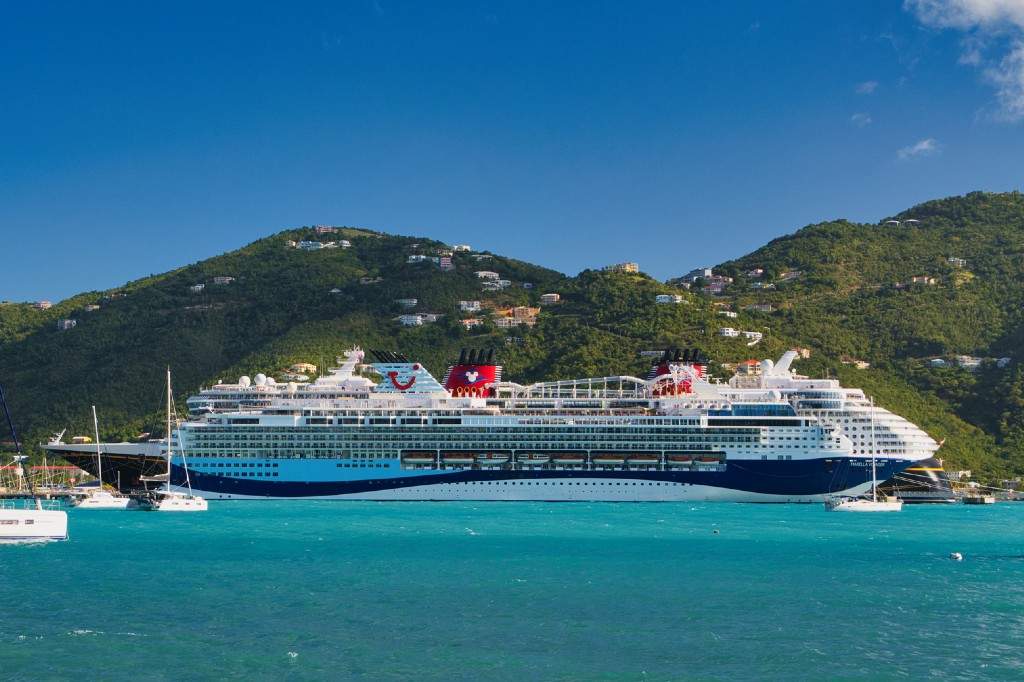
Modern cruise ships are engineered to make you forget where you are. With fifteen decks of climate-controlled lounges, Broadway-style theaters, and sprawling buffets, a mega-liner feels less like a vessel and more like a suburban resort that happens to have a view of the horizon. You walk on polished teak and plush carpet, insulated from the violent reality just inches beyond the steel hull.
Consider a hypothetical passenger—let us call him Arthur—stepping out onto a quiet promenade deck at two in the morning. He is seventy-two, perhaps restless from a heavy dinner or drawn by the silver path of moonlight cutting across the swells. At that hour, the ship is moving at roughly twenty knots, slicing through the dark water at twenty-three miles per hour.
To understand what happens next, picture trying to drop a single golf ball out the window of a sedan speeding down an unlit highway at night, and then asking a friend in a helicopter to find that ball three hours later in a rainstorm.
That is the scale of the nightmare.
When someone goes over a railing—whether by a sudden medical episode, a freak slip on wet decking, or a deliberate choice—the ocean does not catch them gently. Falling seventy or a hundred feet into open water is like hitting concrete. The impact alone can knock the wind from a person's lungs or break ribs, leaving a 72-year-old body instantly compromised in a hostile environment. Even if they survive the drop uninjured, the ship does not stop on a dime. A modern liner requires more than a mile of open water just to come to a halt, and by the time anyone realizes a cabin is empty, the floating city is already fifty miles down the coast.
The Brutal Math of the Grid
I have spent enough time around maritime operations to know that the people flying those orange-and-white helicopters do not quit easily. Search and rescue crews carry a fierce, almost stubborn devotion to bringing people home. When the Coast Guard launches a search, they are not just guessing where to look; they are running complex oceanographic models that factor in wind speed, surface currents, water temperature, and the specific buoyancy of a human body.
Yet even the sharpest science hits a wall against the sheer volume of the sea.
An HC-130 Hercules aircraft flying at a thousand feet looks down at an endless expanse of whitecaps, sun glare, and shifting shadows. From that altitude, a human head bobbing in six-foot swells is no larger than a freckle on a moving carpet. Crews press their faces against the observation windows for hours until their eyes burn and their depth perception blurs, scanning mile after mile of identical blue-gray churn.
Behind every suspended search sits a cold biological clock. Cold water immersion triggers an immediate gasp reflex, followed within minutes by cold incapacitation, where hands lose the dexterity to tread water or cling to debris. Hypothermia sets in relentlessly, draining core heat twenty-five times faster than cold air of the same temperature. For a seventy-two-year-old body, the margin for survival is measured in hours, not days.
When a sector commander finally signs the order to suspend a search, it is never because they stopped caring. It is because every mathematical probability has been exhausted, and keeping crews in the air risks lives for a miracle that physics no longer permits.
The Questions Nobody Wants to Ask
Whenever a headline like this surfaces, the public immediately reaches for easy explanations, grasping for control over a scenario that feels entirely random. People ask how someone can simply vanish from a ship packed with thousands of cameras and crew members.
The truth is uncomfortable. While modern vessels utilize closed-circuit television and increasingly sophisticated man-overboard detection systems using infrared and radar sensors, false alarms from birds, sea spray, and flying fish remain a persistent operational hurdle. More fundamentally, a cruise ship is not a prison. Railings are built to strict international height standards—typically at least forty-two inches high—meaning an adult of average height does not simply trip and tumble over by accident while walking down a corridor.
Yet accidents still happen when people climb onto furniture for a better photograph, lean too far out while dizzy, or suffer an acute cardiac event near an open stern. And sometimes, the sea becomes a quiet refuge for someone carrying a sorrow they never shared with their travel companions.
Families left behind are thrust into a uniquely cruel limbo. There is no hospital room to gather around, no wreckage to examine, and often no final remains to bury. There is only a suitcase still sitting neatly unpacked in a stateroom, a pair of reading glasses on a nightstand, and an official press release announcing that the boats have turned back toward port.
What Remains After the Wake Fades
We love the ocean because it makes us feel small in a way that feels poetic, standing at the bow with salt wind in our hair, watching flying fish scatter across the bow wave. We book passage on giant ships precisely because we believe human engineering has tamed that vastness, turning an ancient, unforgiving wilderness into an all-inclusive itinerary.
We forget that the steel beneath our shoes is thin, and the contract we sign with the sea is entirely one-sided.
Thousands of miles off the coast, the cutters turn their bows toward the harbor, their wake smoothing out behind them until the surface looks exactly as it did before they arrived. On a quiet deck far away, a passenger leans against a cold metal rail, staring down into the black water rushing past the hull, unaware of how thin the line really is between a vacation and a vanish.