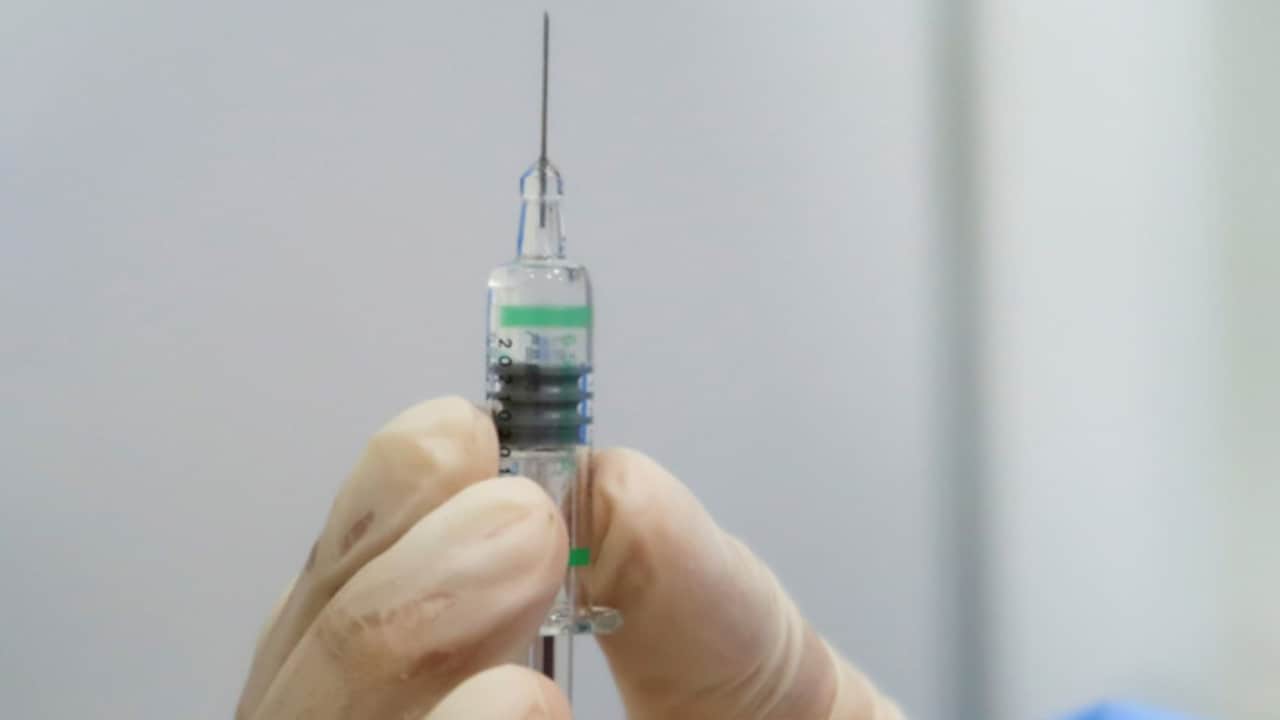
Every autumn, the ritual repeats. We walk into fluorescent-lit pharmacies, roll up our sleeves, and take a gamble. We call it the flu shot, but it is actually a highly educated guessing game. Medical boards look at data from the opposite hemisphere, track mutated strains across continents, and try to predict which version of a shape-shifting virus will hit our neighborhoods six months later. Sometimes they get it right. Sometimes, like in the brutal winter of 2017, the match is poor, and hospital waiting rooms fill to capacity.
We have accepted this cycle for a century. We treated the virus like a master thief, always one step ahead, forcing us to constantly forge new keys for locks that keep changing.
But inside a quiet laboratory, the rules of this chase just changed forever. For the first time, a vaccine designed entirely by artificial intelligence has entered human clinical trials. It does not target the version of the virus that exists today, or the one predicted for next winter. It targets the parts that cannot change. It is the world’s first truly universal vaccine, and it was born not in a petri dish, but in a server rack.
To understand how we got here, look at your own hand. Think of a virus as an intruder covered in a thick, shag carpet of proteins. Our immune system learns to recognize the very tips of those carpet fibers. The problem is that the virus can change the color and shape of those tips in a single generation. When it does, our antibodies walk right past it, blind to the danger.
For decades, human researchers have tried to look deeper. Beneath those wildly mutating tips lies the "stem" of the protein—the structural base that attaches to the virus itself. The virus cannot change this base. If it does, it breaks, rendering it unable to infect anything. The stem is the viral Achilles' heel. It is universal.
If we could train the human immune system to ignore the distracting, changing tips and attack only the stable stem, we could create a single shot that protects against every strain of influenza past, present, and future. One shot. Decades of immunity.
Human biologists spent twenty years trying to isolate this stem. They failed because the molecule is inherently unstable. Strip away the top, and the base collapses like a house of cards. Human hands and human minds could not figure out how to fold the molecular structure so that it remained stable enough to be manufactured and injected.
Enter the algorithms.
An AI platform does not look at a protein the way a human doctor does. It views the problem as a massive, multi-dimensional geometry puzzle. Researchers fed the system the genetic sequences of thousands of flu strains collected over decades. They gave the machine a single command: design a synthetic molecule that mimics the universal stem of the virus, but structurally lock it into a shape that the human body can recognize and fight.
The computer did not sleep. It did not take coffee breaks. It ran millions of virtual simulations, folding proteins in digital space, discarding millions of failures that would have taken human scientists months each to test in a physical lab.
Within days, the system spat out a blueprint. A completely novel, synthetic protein that does not exist in nature. It was stable. It was perfect.
When researchers synthesized the digital blueprint into a physical fluid and tested it on animal models, the results bypassed standard benchmarks. The animals did not just survive exposure to the specific flu strain of the season; they survived massive, lethal doses of entirely different strains—strains that didn't even exist when the vaccine was designed.
Now, that digital blueprint is running through the veins of human volunteers in a historic phase one clinical trial.
There is a natural discomfort that comes with this shift. We are used to medicine originating from nature—from molds, plants, or weakened pathogens. Trusting a sequence of code generated by a machine to train our white blood cells feels like stepping onto an airplane with no pilot. It forces us to confront a terrifying and beautiful reality: computers are beginning to understand the code of biology better than the biological entities themselves.
But the stakes extend far beyond avoiding a miserable week in bed with a fever.
Think of the quiet vulnerabilities in our communities. Consider an elderly grandmother whose immune system is too frail to respond effectively to the weak annual shot. Consider the chaotic supply chains that fail to deliver refrigeration-dependent vaccines to rural villages in developing nations before a seasonal wave hits. A universal vaccine changes infrastructure. It turns a frantic, reactive scramble into a permanent shield.
We are witnessing the end of the reactive era of medicine. If this trial succeeds, the methodology will immediately pivot toward other global threats. HIV, malaria, dengue—viruses that have embarrassed human ingenuity for generations by mutating too quickly—are all governed by the same structural rules. They all have a hidden, unchanging base. They all have a code waiting to be cracked.
The volunteers currently sitting in clinics, tracking their temperatures and giving blood samples, are not just testing a new flu shot. They are validating a new method of human survival.
The frantic race to predict next year's sickness is winding down. In its place is a quiet, calculated certainty. The thief hasn't stopped running, but we have finally stopped chasing its shadow.
.png?width=1200&auto=webp&trim=0%2C0%2C0%2C0)