Contemporary Amperex Technology Co. Limited (CATL) just signed a 60 GWh supply agreement with energy storage giant HyperStrong, a deal so massive it effectively ends the experimental era of sodium-ion technology. This single three-year contract represents roughly half of CATL’s entire energy storage shipments for the previous year. By securing this volume, CATL has moved beyond small-scale pilot programs and entered the heavy industrial phase where sodium-ion batteries transition from a "lithium backup" to a primary global standard. The move signals a fundamental shift in how the world secures its energy future, prioritizing resource independence over raw energy density.
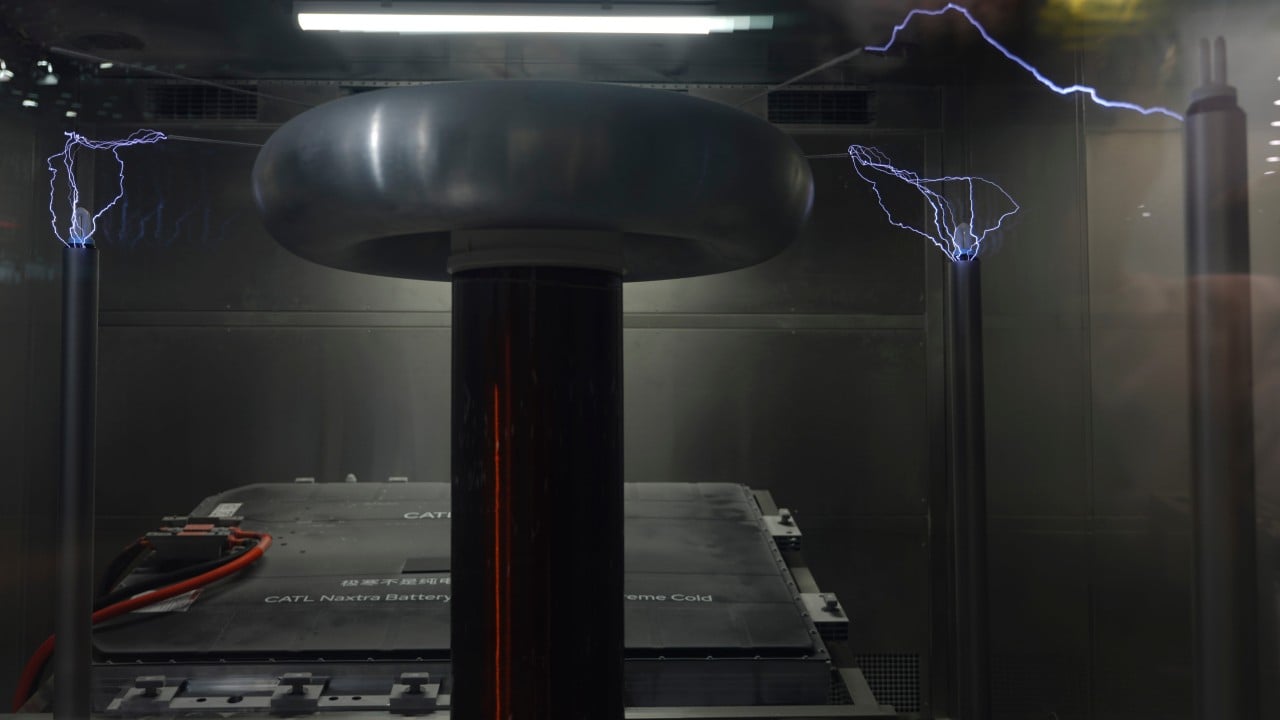
For decades, the battery industry has been held hostage by the volatile price and scarcity of lithium. Sodium-ion technology was always the promised alternative—cheaper, more abundant, and far more resilient in extreme cold. But it remained stuck in a laboratory bottleneck, hampered by issues like moisture sensitivity and lower cycle life. The HyperStrong deal is the definitive signal that those engineering hurdles are gone. CATL is now demonstrating large-scale delivery capabilities for cells that can operate at -40°C and retain 90% of their capacity, a feat lithium iron phosphate (LFP) cannot match.
The engineering breakthrough behind the scale
Moving from a lab sample to a 60 GWh order required CATL to overhaul the material science of the anode. Historically, sodium ions are larger than lithium ions, causing traditional battery materials to "swell" and degrade rapidly during charge cycles. CATL solved this by utilizing a hard carbon material with a unique porous structure that allows sodium ions to move more freely without damaging the lattice.
They also had to tackle the "foaming" issue—a chemical reaction where sodium cells would generate gas during production, leading to battery failure. By mastering extreme moisture control in the manufacturing plant, CATL successfully neutralized the outgassing that previously made mass production a nightmare. This isn't just a win for chemistry; it is a win for high-precision manufacturing.
Why energy storage is the first target
While the media often focuses on electric cars, the real war for battery supremacy is happening on the power grid. Energy storage systems (ESS) do not require the extreme energy density needed to propel a sports car. They require low cost per kilowatt-hour and the ability to survive for 15,000 cycles.
| Feature | Sodium-Ion (CATL Naxtra) | Lithium Iron Phosphate (LFP) |
|---|---|---|
| Abundance | 1,000x more than lithium | Limited by ore deposits |
| Low-Temp Performance | 90% at -40°C | Rapid drop-off below 0°C |
| Target Cost Reduction | 30% lower than LFP | Baseline |
| Safety | Higher thermal stability | High (but lower than Na) |
The math for a grid operator is simple. If you can build a massive battery farm using salt-based chemistry that costs 30% less than lithium and doesn't catch fire in a heatwave, you take that deal every time. CATL’s energy storage cells now boast a cycle life exceeding 15,000 cycles, putting them on par with the best LFP cells currently in operation.
The passenger vehicle friction point
The transition to passenger vehicles is where the narrative hits a speed bump. Sodium cells currently hover around 160-175 Wh/kg, which is roughly 20-30% lower than high-end lithium cells. This limits their use in long-range luxury EVs. However, CATL is targeting the "value" segment—vehicles priced under $15,000 where battery cost is the primary barrier to adoption.
The first mass-produced sodium-ion passenger car, a joint venture with Changan Automobile, is already hitting the streets. These aren't meant to compete with long-distance cruisers. They are designed for the urban commuter who needs a reliable car that won't lose half its range during a harsh winter. By combining sodium and lithium cells into a single pack—an "AB battery" solution—CATL can hide the weaknesses of sodium while benefiting from its low cost and cold-weather reliability.
Geopolitical insulation
There is a hard truth that Western manufacturers are slow to admit: lithium is a geopolitical liability. The supply chain is concentrated, and the refining process is brittle. Sodium is everywhere. It is in the oceans and the earth's crust in virtually infinite supply. By moving to sodium, CATL isn't just lowering prices; it is insulating itself from trade wars and mineral export bans.
This is the "DeepSeek moment" for batteries. Just as the DeepSeek AI model proved that a leaner, more efficient architecture could challenge the heavy-weights of the software world, sodium-ion is proving that "good enough" performance paired with massive scale and lower costs can disrupt a market dominated by lithium.
The survival of the Tier 1s
The industry is currently flooded with "Tier 3" startups promising revolutionary sodium chemistries. Most of them will fail. The HyperStrong deal underscores that the winner in the sodium race won't be the one with the best lab result, but the one who can actually deliver 60 GWh of reliable hardware.
CATL has already invested nearly 10 billion yuan into this supply chain. They aren't just making batteries; they are building the machinery that makes the batteries. For competitors to catch up, they don't just need a better chemical formula—they need a decade of manufacturing experience and the capital to build gigafactories that don't exist outside of China.
The era of lithium dominance was a necessary bridge. It proved that electric power was viable. But lithium was never going to be the chemistry that powered the entire world’s grid and every low-cost vehicle on the planet. There simply isn't enough of it. Sodium-ion is the inevitable successor for the mass market, and with the HyperStrong order, the transition has officially begun.
The next step is the global rollout of the Tectrans II light commercial vehicle solution. This will put sodium batteries into delivery vans and freight trucks across Europe and Asia. When the local delivery van in London or Berlin is powered by salt instead of lithium, the disruption will be complete.