The kitchen in the Chaoyang district of Beijing smelled of scalded soy milk and burnt scallion pancakes. It was six in the morning, and Lin stood at the tiny gas stove, staring into a porcelain bowl. His phone rested on the counter, glowing with the sterile, green light of his banking app. The numbers flickered, then settled. A number that grew larger by the month, and a life that felt increasingly small.
He was thirty-four. He worked in software logistics, a sector that hummed with the manic energy of a city built on perpetual motion. Yet, Lin moved very little. He bought his vegetables at the discount hour after eight in the evening. He walked past the gleaming malls in Sanlitun without glancing at the glass facades where luxury coats hung like museum pieces. He did not buy because he did not trust tomorrow.
Economists in high-rise offices across the globe watch these numbers with a cold, analytical fascination. They call it the high savings rate. They draw charts on whiteboards, pointing at the massive pools of household capital sitting quietly in state banks, wondering when the giant will finally wake up and spend. They ask a simple question in boardrooms and policy briefs: How likely is Beijing to walk the talk on boosting consumption?
The question sounds clinical. It sounds like a math problem involving interest rates, subsidies, and fiscal stimulus packages. But in Lin's kitchen, it sounds like a heavy iron door locking from the inside.
To understand why the world's second-largest economy struggles to get its people to shop, you have to look past the macroeconomics and smell the cold grease in Lin's apartment. You have to understand fear.
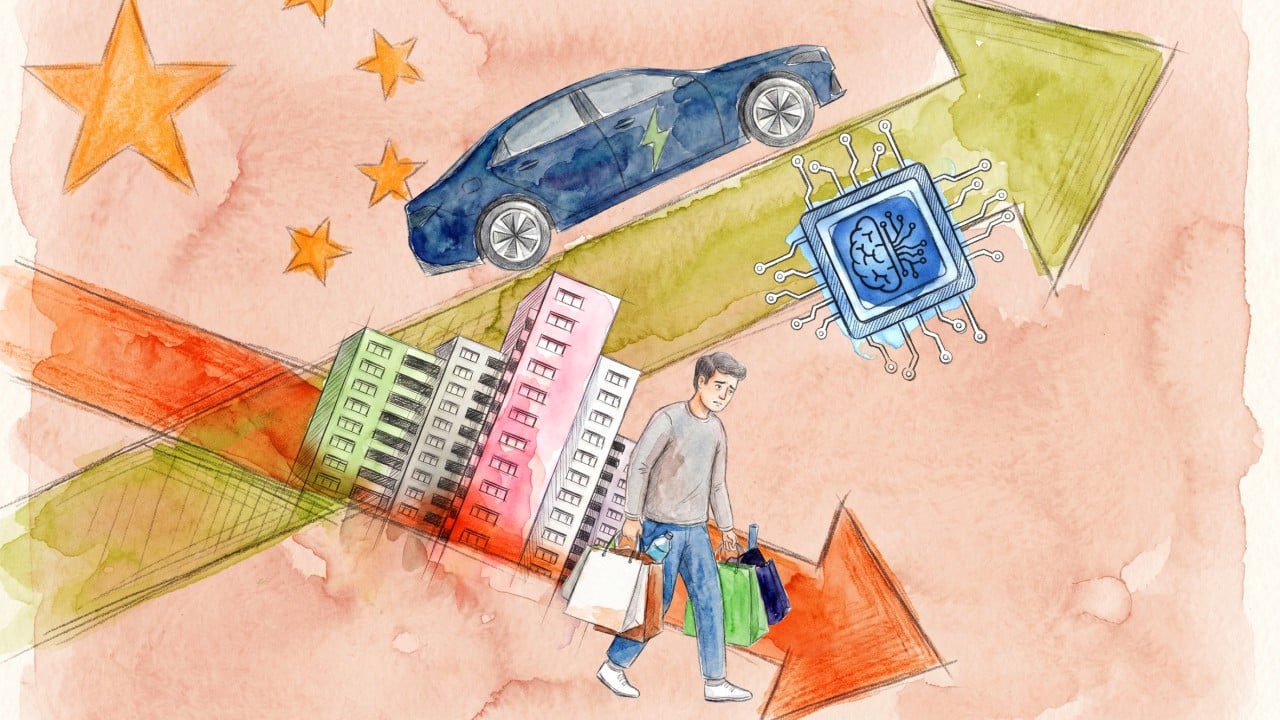
For decades, the engine of modern China roared because people built things. They poured concrete, manufactured smartphones, and shipped plastic toys across oceans. The state commanded the cranes, and the cranes shaped the horizon. But that model hit a wall. The real estate market, once the glittering vault where every middle-class family parked their dreams and savings, fractured. Apartment towers stood half-finished like concrete skeletons against the gray smog.
When the floor drops out from under the housing market, people stop buying sofas.
Lin remembers his parents talking about the iron rice bowl of the past. It was a myth, perhaps, but it was a comforting one. You worked for the collective, and the collective caught you when you fell. Today, Lin feels the vertigo of free-fall. Healthcare costs creep upward like ivy on a brick wall. Education for a child is an Olympic-level financial sprint through cram schools and tutoring fees. Pension funds whisper warnings of future shortfalls.
So, what does a rational human being do when the future is a blurred question mark? They hold onto their cash like a drowning sailor clutching a piece of driftwood.
The government in Beijing knows this. The policy speeches are clear. The official communiques from high-level meetings ring with a singular urgency: consumption must become the primary driver of growth. They roll out trade-in programs for old refrigerators and electric cars. They whisper encouragement to local banks to ease credit. They want Lin to buy a new television, take a vacation to Yunnan, and order takeout without checking the delivery fee.
Yet, policy is not a magic wand. It is a heavy wheel, and right now, it is stuck in the mud of structural anxiety.
Consider what happens when a government hands out consumption vouchers. On paper, it looks like fuel on a fire. In reality, people like Lin take the voucher, buy their monthly rice and cooking oil with it, and quietly tuck their actual cash deeper into their savings accounts. The coupon substitutes for money they would have spent anyway. It does not create new desire. It merely subsidizes caution.
Trust is the invisible currency of commerce. You cannot print it. You cannot mandate it through a five-year plan.
I sat in a teahouse in Chengdu last autumn, listening to an elderly merchant named Uncle Chen pour dark, earthy liquid from a long-spouted bronze kettle. He had weathered three economic cycles, watched neighborhoods rise and turn to dust, and buried two brothers.
"People think we are hoarders," Chen told me, his hands scarred from decades of retail trade. "They think we have pillows stuffed with hundred-yuan notes because we are greedy. We are not greedy. We are frightened. When you have seen the river overflow its banks twice in your lifetime, you do not build your house out of paper."
That is the psychological baseline of the consumer economy in China today. The state wants a consumption-led miracle, but the social safety net remains a patchwork quilt with too many holes. If you do not know who will pay for your hospital bed when you are old, you do not buy a smart-home system today. If you worry that your company might trim its workforce tomorrow to meet quarterly targets, you cancel your subscription to the streaming service.
The pivot from investment-driven growth to consumption-driven growth is the economic equivalent of turning an aircraft carrier in a narrow canal. It requires changing not just the flow of capital, but the psychology of fourteen hundred million people.
Beijing has the levers. It can lower reserve requirement ratios. It can subsidize green appliances. It can encourage wage growth in the service sector. But these are mechanical adjustments to a biological problem.
The real test is structural reform of a profound order. It means building a robust pension system that does not leave rural migrant workers behind. It means funding public healthcare to the point where a cancer diagnosis does not mean bankruptcy for an entire extended family. It means untangling the local government debt crisis so municipal services can actually deliver on their promises.
Until those foundations are poured, every call to boost consumption will bounce off the walls of household banks like rubber bullets.
Back in Beijing, the sun finally cuts through the morning haze, casting sharp, angular shadows across the concrete courtyard. Lin finishes his soy milk, washes the bowl, and puts on his jacket. He steps out the door, locking it twice.
He walks past a newly opened cafe with minimalist wooden chairs and espresso machines imported from Italy. The barista wipes down the counter, waiting for customers who do not come before nine. Lin pauses for a fraction of a second, smells the crushed coffee beans, and then keeps walking toward the subway station.
He has a budget to keep. He has a future to insure against the dark. And until the world changes its mind about tomorrow, his money stays where it is, quiet, vigilant, and profoundly still.