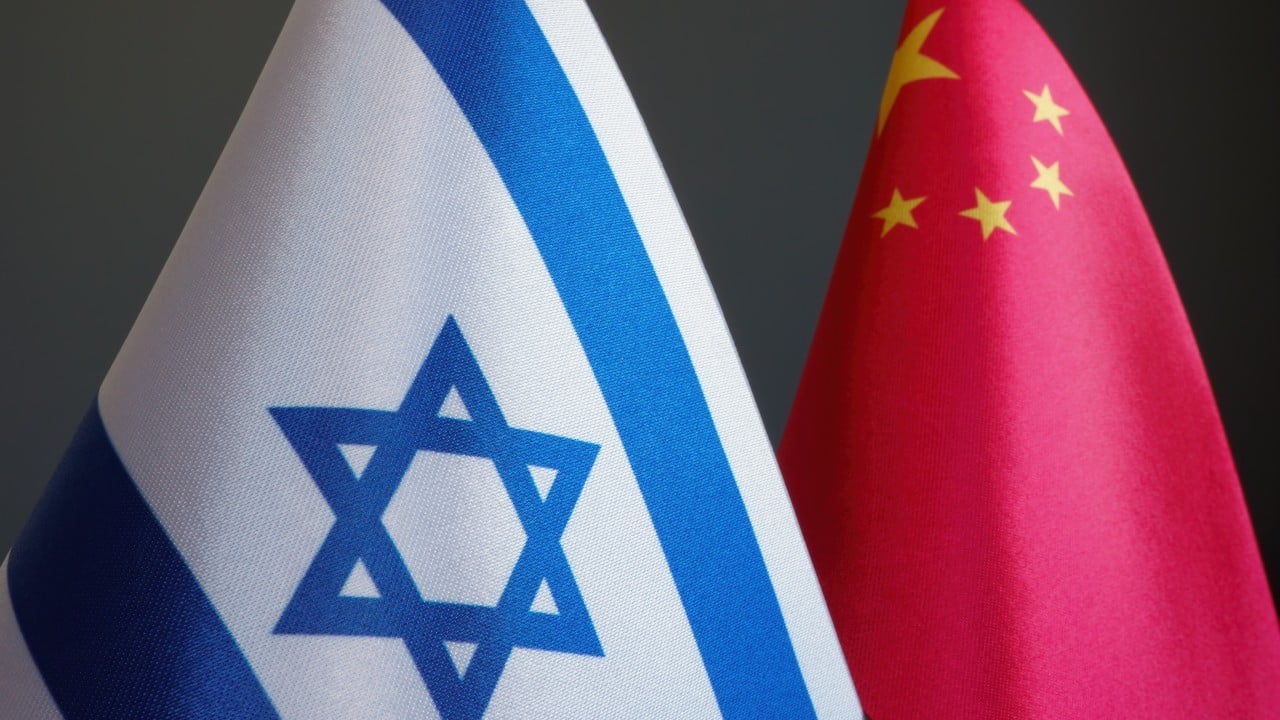
The air in Chengdu smells of damp stone, Sichuan pepper, and the perpetual, heavy mist that rolls off the Sichuan basin. On any given afternoon, a walk down Renmin South Road reveals a city hurtling toward tomorrow. Neon signs flash against gray concrete, and the low hum of electric scooters forms a constant urban soundtrack. But there is a specific street corner where the noise fades.
It is quiet there now.
To understand what happened when China and Israel adjusted the chess pieces on their diplomatic board, you do not start in Beijing or Jerusalem. You start with an empty desk.
Diplomacy is often sold as a grand theater of flags, handshakes, and velvet-roped summits. We picture leaders standing shoulder-to-shoulder, signing parchment under chandeliers. But real diplomacy is lived in the mundane. It lives in the rubber stamps, the visa queues, the frantic phone calls at three in the morning when a cargo ship carrying medical tech is stuck in customs, and the quiet cup of tea shared between a consul and a local university dean trying to figure out how to fund a joint environmental laboratory.
When the Israeli consulate in Chengdu closed its doors, the physical sign came down. Yet the true loss was not metal and glass. It was the severing of the local pulse.
Consider a hypothetical mechanical engineer named Zhang, living right there in the capital of Sichuan province. Six years ago, Zhang spent three weeks pacing the floor of his cramped apartment, clutching his passport like a winning lottery ticket. He had secured a fellowship at a water-conservation startup in Haifa. He needed a visa, and he needed it fast.
He didn't fly to Beijing. He walked down the street to the Israeli consulate on Renmin South Road. A consular officer named Eli, who drank too much instant coffee and knew every noodle stall within a three-block radius, processed Zhang's paperwork. They talked about irrigation systems and spicy hot pot. Zhang got his visa. He went to Israel, learned how desert agriculture wrests life from barren soil, brought those techniques back to western China, and spent the next decade helping design drought-resistant farming grids across arid pockets of Yunnan.
That connection was personal. It was localized. And when the Chengdu consulate closed—a casualty of diplomatic restructuring, budget realignments, and shifting geopolitical winds—that frictionless human bridge vanished.
Now, Zhang’s spiritual successor in Chengdu must look toward Beijing. Two thousand kilometers away. Through digital portals and impersonal queues.
Why does this matter? Because the story of China-Israel relations is routinely flattened into a binary ledger. Headlines treat it like a scoreboard. Did Beijing criticize a policy? Did a tech acquisition go through? Did a port contract get signed in Haifa?
The reality is far messier. It is a story of economic gravity pulling two very different civilizations together, even as the tectonic plates of global power shift beneath their feet.
To grasp this, you have to look at the map not as a collection of borders, but as a web of survival.
China is a continent-sized engine of manufacturing, scale, and relentless industrial appetite. It needs innovation, efficiency, and advanced agricultural science to feed and power its massive population sustainably. Israel is a laboratory of necessity. Surrounded by hostility and constrained by geography, it was forced to invent its way out of scarcity. Desalination, drip irrigation, cyber defense, precision medicine—these were not luxury exports born in a vacuum. They were born of survival.
For three decades after diplomatic ties were officially established in 1992, these two realities danced. It was a romance of convenience that blossomed into something deeply practical. Chinese construction firms laid tracks for the Tel Aviv light rail. Israeli agrotech companies found a limitless market for their water-saving wizardry in China's parched northern plains. University presidents swapped labs. Students crossed oceans.
Then came the friction.
Global politics is rarely a straight line. As the strategic competition between Washington and Beijing deepened into a cold economic war, small nations found themselves caught in a tightening vice. Israel, bound by deep historical and security alliances with the United States, began to feel the squeeze. Every major infrastructure deal, every high-tech acquisition, became a test of loyalty.
The closure of the Chengdu consulate in late 2023 was framed by bureaucrats as a routine administrative consolidation. Budgets were tight. Diplomatic priorities were shifting. But in the grand architecture of international affairs, administrative choices are rarely just about math. They are signals. They are whispers across a crowded room.
When a consulate shuts its doors in a booming western Chinese megalopolis of twenty million people, it says something about ambition scaling back. It says the physical footprint of engagement is contracting.
Yet, beneath the contraction, the underlying gravity remains.
I remember sitting in a dimly lit teahouse in Chengdu years ago, speaking with a trade liaison who split his time between Tel Aviv and Sichuan. He poured boiling water from a long-spouted copper kettle into my ceramic cup with a theatrical flick of his wrist.
"People think nations trade because they like each other," he told me, the steam rising between us. "Nations trade because math demands it. But people stay connected because individuals find a common language."
He pointed to a smartphone on the table, its screen flashing with a notification from a joint agricultural software platform developed jointly by engineers in Shenzhen and Rehovot.
"The politicians can rearrange the furniture," he said, smiling faintly. "They can close buildings. But try telling the code to stop talking to itself."
That is the hidden truth of the matter. While diplomatic channels narrow, commercial and academic inertia possesses a stubborn life of its own. Private capital, venture funds, and technological interdependence do not vanish overnight simply because a diplomat packs their bags. Instead, they go underground, or rather, they bypass the traditional state apparatus entirely, flowing through private networks, encrypted chats, and decentralized partnerships.
Consider what happens next in this evolving dynamic.
The relationship is maturing past the honeymoon phase of easy wins and grand infrastructure projects. The era of a Chinese firm managing a major Israeli port without triggering severe geopolitical alarms is likely over. The guardrails are up. The security reviews are harsher. The scrutiny from Western allies is unyielding.
And yet, look at the sectors where partnership is not only surviving, but deepening: medical technology, environmental remediation, and digital health. These are areas where the moral imperative of saving lives or preserving resources frequently transcends the immediate chess match of geopolitics. When a hospital in Xi'an implements an AI-driven diagnostic tool developed in Tel Aviv to catch early-stage oncology markers, no one at the border cares about a closed consulate. They care about the patient breathing on the table.
This is the dichotomy of modern statecraft. Governments pull apart while markets and minds keep finding ways to bridge the gap.
The empty desk in Chengdu stands as a monument to this transition. It reminds us that diplomacy is fragile, vulnerable to the shifting winds of global hegemony and superpower friction. It teaches us that nations can pull back their physical flags when the storms get too loud.
But it also tells a story of human stubbornness.
The engineers will keep coding. The scientists will keep sharing data across encrypted servers. The students will still find a way to study across borders, even if the visa office is now a thousand miles away.
The stone on Renmin South Road is quiet today. The plaque is gone. But the invisible lines drawn by decades of shared ingenuity, mutual need, and human curiosity are not so easily erased by a bureaucratic decree.
They are etched into the soil of two ancient civilizations that looked across the map, recognized a reflection of their own survival instincts, and decided to build a bridge. Even now, long after the lights in the consulate went out, that bridge is still humming in the dark.