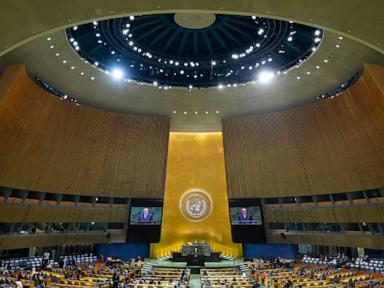
The coffee in the glass pitcher on the side table had gone cold three hours ago. Outside the tall, bulletproof windows of the United Nations headquarters, the East River caught the gray glare of an October afternoon, chopping it into dull, jagged silver. Inside, under the low hum of translation headsets and the heavy scent of wool and damp raincoats, men and women in dark suits were shaking hands.
They smiled for the cameras. They adjusted their cuffs. They spoke of cooperation, of shared destinies, of a planetary commitment to keep the thermostat from rising past the breaking point.
Then they packed their briefcases and went back to their motorcades.
And the question remained, suspended in the sterile air of the plenary hall like dust motes in a beam of light: How does that actually work?
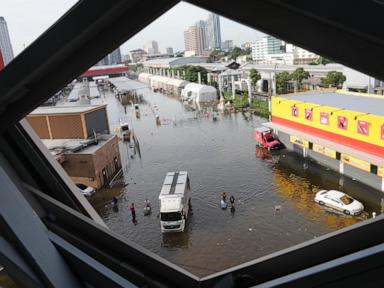
To understand why global climate summits so often feel like theater, you have to look away from the podium and down at the municipal water treatment plant in a mid-sized town two thousand miles from New York. Let us call it Oakhaven—though it could just as easily be a coastal village in the Philippines bracing for the next storm surge, or a wheat farm in Kansas staring down its third consecutive year of cracked, thirsty soil.
In Oakhaven, the city council is staring at a ledger. They want to replace their diesel bus fleet with electric alternatives. They want to reinforce the seawall. They want to upgrade the storm drains that currently back up into suburban basements whenever the sky opens up for twenty minutes.
The price tag for these three items alone exceeds the town’s entire operating budget for five years.
When the mayor of Oakhaven turns on the television and watches a head of state stand at a mahogany lectern in Manhattan and pledge a reduction in carbon emissions by forty percent over the next decade, she does not feel inspired. She feels exhausted. Because the pledge comes without an invoice, and the invoice comes without a signature.
This is the great chasm of our historical moment. We live in a world where global problems have outgrown local budgets, yet local governments remain the only entities legally and practically required to pick up the pieces.
Consider what happens when a treaty is signed. It is an act of diplomatic alchemy. Representatives from nations with competing ideologies, vastly different historical responsibilities, and violently asymmetric economic capacities sit in a room until they can agree on a shared set of verbs. We will endeavor. We will strive. We will mobilize.
Verbs are cheap. Concrete is expensive.
During the landmark Paris climate agreements, and later echoed in the repetitive cycles of the UN General Assembly, the phrase solidarity became the currency of the realm. Leaders talked about the global community as a single organism. If one limb is poisoned, they argued, the body dies.
It is a beautiful metaphor. (And it is explicitly a metaphor: humanity is not a single biological entity, but a fractured mosaic of eight billion distinct consciousnesses, each trying to pay their electricity bill before Friday.)
When you tell a coal-dependent region in Eastern Europe or a manufacturing belt in the American Midwest that they must abandon their primary source of livelihood for the greater planetary good, they do not experience themselves as a limb of a body. They experience themselves as a casualty of someone else's philosophy.
This is where the grand architecture of international law hits the jagged rocks of human psychology.
We are biologically wired for tribalism. Our evolutionary software prioritizes the tribe directly in front of us—our family, our neighborhood, our immediate economic survival—over the abstract, statistical future of a grandchild we will never meet, living in a zip code we cannot pronounce. When a politician asks voters to accept immediate economic pain for a distant, unprovable environmental gain, they are fighting millions of years of natural selection with a PowerPoint presentation.
And usually, they lose.
Yet, to dismiss the United Nations gatherings as mere hypocrisy is to misunderstand their strange, subterranean utility. The UN is not a government. It has no army, no tax code, and no police force. It is the world’s most expensive psychiatric couch. It is a place where nations go to confess their collective dread and negotiate their mutual survival under the watchful eye of history.
When leaders look each other in the eye across those long tables, something subtle shifts. Even the most cynical authoritarian feels the gravity of peer pressure when every other nation in the room points out that the glaciers are melting, the insurance markets are collapsing, and the financial cost of doing nothing is finally eclipsing the political cost of doing something.
The mechanics of how it works—how a speech in New York translates into a seawall in Oakhaven—is not a straight line. It is a messy, agonizingly slow diffusion of norms.
It works the way a cultural taboo shifts. First, polluting becomes gauche. Then, it becomes expensive. Then, insurance companies refuse to underwrite coastal properties. Then, banks stop lending for fossil fuel extraction not because bankers have found religion, but because the risk models scream red. The moral argument fails, but the actuarial table succeeds.
We are watching the painful birth of a global nervous system. Just as an individual organism cannot survive if its kidneys do not communicate with its brain, a globalized industrial civilization cannot survive when its financial markets operate in total defiance of its ecological limits.
The tragedy is that the nervous system is forming while the house is already on fire.
Back in the plenary hall, the last microphone is switched off. The translators close their notebooks. The cleaning crew rolls out large gray bins to sweep up discarded notes written in six official languages.
Outside, the river keeps flowing, indifferent to protocols, communiqués, and targets.
The real work was never going to happen in the grand hall. It was always going to happen in the quiet, unglamorous rooms where local leaders look at impossible ledgers and decide to build anyway. It happens when an engineer redesigns a bridge not for the 100-year flood of the past, but for the storm that is coming tomorrow.
The speeches are finished. The microphones are dead. The room is dark.
Now, the bill is due.