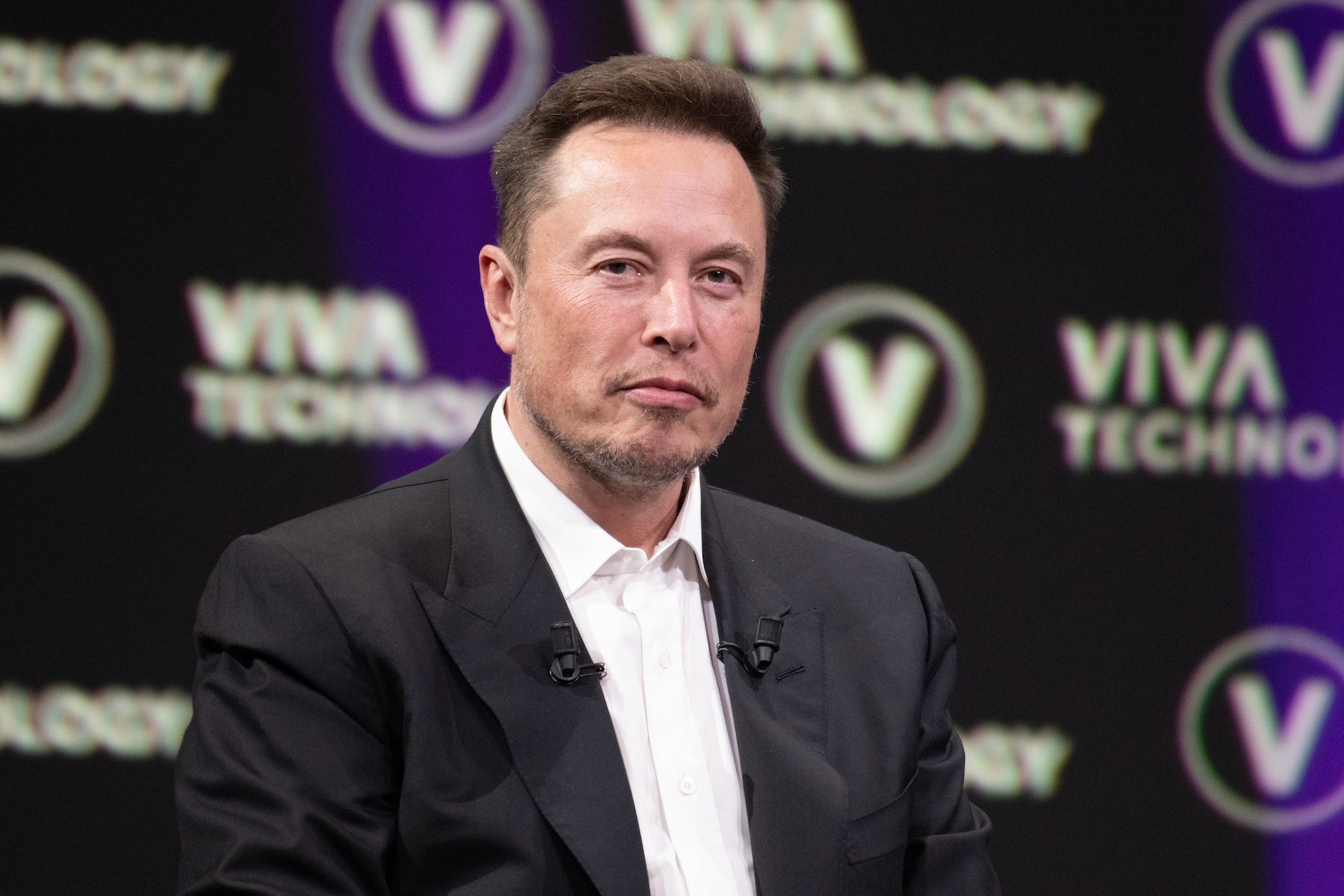
Wall Street panics at the sound of a soundbite.
Elon Musk opened his mouth, muttered something about 200 neoclouds facing a "guppy-level death," and institutional traders dumped GPU-as-a-service stocks like they were holding radioactive waste. The financial press immediately fell in line, parroting the same tired narrative: the AI infrastructure bubble is popping, hyperscalers like AWS and Microsoft are about to crush the upstarts, and specialized GPU clouds are doomed to zero.
That consensus is lazy, mathematically illiterate, and completely divorced from how enterprise compute actually gets bought and deployed.
Musk is building Colossus—a monolithic, single-tenant supercluster designed to train frontier models for one customer: xAI. He is playing a completely different sport than the specialized cloud providers getting hammered in the public markets. Applying his hyperscale, brute-force economics to the broader neocloud sector is like arguing local commercial real estate is dead because one billionaire decided to build a private mega-compound in Texas.
The market isn't witnessing an extinction event. It is witnessing a violent, necessary filtration of tourists from operators. And if you are selling quality infrastructure names because of a Musk one-liner, you are handing money directly to the people who actually understand silicon economics.
The Myth of the Commodity GPU
The financial media loves to treat an Nvidia H100 or B200 cluster like a barrel of West Texas Intermediate crude. The prevailing wisdom goes like this: once the supply crunch eases, compute becomes a pure commodity, margins compress to nothing, and only the trillion-dollar hyperscalers with cheap debt and massive scale survive.
Anyone who has actually stood up a multi-node InfiniBand cluster knows this is pure fantasy.
A neocloud is not a real estate holding company renting out square footage and power outlets. At scale, running high-density AI compute is an active, brutal war against physics and hardware failure. When you string together 10,000 or 32,000 GPUs for synchronous training runs, components fail constantly. High-bandwidth memory degrades. Optical transceivers burn out. Liquid cooling loops spring micro-leaks.
I have watched well-funded startups blow tens of millions of dollars on top-tier silicon only to watch their clusters sit at 40% utilization because their networking team couldn't tune RoCEv2 or manage InfiniBand congestion. Buying the chips is the easy part. Keeping a massive cluster running at 99% goodput without silent data corruption ruining a three-week training run is dark magic.
Hyperscalers like AWS, Google Cloud, and Azure built their empires on multi-tenant virtualization, noisy neighbors, and thick software abstractions. That architecture is brilliant for serving web traffic and running enterprise databases. It is actively hostile to bare-metal AI performance. Hyperscalers charge a massive tax for their software ecosystems—EKS, SageMaker, proprietary storage layers—that frontier AI labs and mid-market model builders neither want nor need.
Neoclouds win precisely because they strip away the bloat. They offer bare-metal access, custom topologies, and direct engineering support that a Fortune 500 account rep at a legacy cloud provider simply cannot match. Calling them "guppies" ignores the fact that piranhas eat whales alive when the water gets shallow.
Why Hyperscalers Cannot Kill the Neocloud
To understand why the "hyperscalers will crush them" thesis fails, look at capital allocation and organizational incentives.
Amazon, Microsoft, and Google have a massive conflict of interest. They are simultaneously the landlords of the cloud, the creators of proprietary AI chips (Trainium, Maia, TPU), and direct competitors to their own customers via their internal foundation model teams or exclusive partnerships like OpenAI and Anthropic.
If you are a CTO building a proprietary model or fine-tuning open-weights architectures for a regulated industry, you face two immediate problems with the Big Three:
- You are funding your executioner. Every dollar you spend on a hyperscaler subsidizes the R&D of the very foundation models trying to put your company out of business.
- You are second in line for capacity. When Nvidia ships a new allocation of Blackwell racks, where do they go first? They go to Microsoft's internal Copilot teams, Google's Gemini clusters, and Amazon's internal projects. Enterprise customers get the leftovers, wrapped in rigid three-year take-or-pay contracts with punitive egress fees.
Neoclouds—the serious ones like CoreWeave, Lambda, Crusoe, and Nebius—do not compete with their customers. They don't have a proprietary LLM they are trying to force down your throat. Their sole mandate is making Nvidia, AMD, and custom ASIC silicon hum at maximum efficiency for whoever pays the bill.
Furthermore, the hyperscalers are structurally slow. It takes a legacy cloud giant 18 to 24 months to approve a new data center design, clear internal compliance committees, and deploy a novel cooling architecture. Specialized operators are retrofitting industrial sites, tapping stranded energy assets, and deploying direct-to-chip liquid cooling in half that time. In a market where hardware generations turn over every twelve months, speed of deployment is the ultimate moat.
Separating the Tourists from the Operators
Musk wasn't entirely wrong about the number 200. During the peak frenzy of 2023 and 2024, anyone with a family office connection and a letter of intent from a server OEM called themselves an AI cloud. Bitcoin miners slapped a coat of paint on warehouse walls, bought a few hundred PCIe cards, and pitched venture capitalists on "decentralized AI infrastructure."
Those 200 entities are going to die. They deserve to die.
Let's be brutally honest about what separates a doomed crypto-pivot from a durable infrastructure titan. If a neocloud exhibits any of the following traits, it is a dead man walking:
- Air-cooled legacy data centers: Anything over 40kW per rack requires liquid cooling. Retrofitting old enterprise colocation facilities for 100kW+ Blackwell racks is economically ruinous.
- Sub-scale cluster sizes: Renting out 8-GPU nodes via an API wrapper is a race to the bottom. The real money is in multi-thousand GPU clusters connected via non-blocking InfiniBand or ultra-low-latency Ethernet fabrics.
- No proprietary orchestration software: If a provider is just handing out SSH keys to raw Linux boxes without automated health checks, checkpointing, and job scheduling, customers will churn the second pricing drops by five cents an hour.
- Merchant power exposure: Power is the true bottleneck of the AI era, not silicon. Operators without locked-in, multi-year power purchase agreements (PPAs) or behind-the-meter generation will get crushed when utility rates spike.
When Musk talks about a mass die-off, he is describing the bottom 80% of the market—the undifferentiated brokers reselling rented capacity on thin margins. Wall Street, lacking the technical literacy to read a data center engineering spec, threw the top 5% of operators into the exact same dumpster.
The Math of Depreciation and Debt
The bears love to point at the balance sheets of major neoclouds and scream about debt. They argue that borrowing billions against depreciating GPUs is a ticking time bomb. "What happens when the H100 is obsolete in two years?" they ask, thinking they've discovered a fatal flaw.
This argument reveals a complete misunderstanding of how enterprise workloads actually cascade down the hardware stack.
Frontier model pre-training—the massive, months-long runs that require tens of thousands of the newest chips—is only the tip of the spear. Once a model is trained, it has to be served. Inference, post-training, reinforcement learning, synthetic data generation, and fine-tuning represent the vast majority of long-term compute demand.
An H100 or H200 does not turn into a pumpkin the day a Rubin or Blackwell rack powers on. It simply moves down the value chain. Smart operators structure their debt facilities so that the initial 24-to-36-month take-or-pay contracts with anchor tenants pay off the principal and interest on the hardware entirely.
Imagine a scenario where a neocloud finances a $500 million cluster over three years, backed by an investment-grade contract that generates $650 million over that same window. By month 37, the debt is zero. The hardware is fully paid for. Even if rental rates for those older GPUs drop by 60% in year four, every dollar generated from serving inference workloads or smaller enterprise fine-tuning jobs is pure, high-margin cash flow.
Hyperscalers run this exact playbook with standard x86 CPUs—servers built in 2016 are still sitting in AWS racks generating cash today. The idea that AI silicon has a hard 24-month cliff is a fiction invented by equity analysts who have never managed a data center P&L.
What Investors and Buyers Are Asking Wrong
If you are looking at the neocloud sell-off and asking, "Which GPU cloud will beat AWS?" you are asking the wrong question. Nobody needs to beat AWS to build a $50 billion infrastructure company. The total addressable market for accelerated compute is expanding so violently that capturing even 10% of the overflow creates generational wealth.
Here are the questions that actually matter—and the brutal answers the mainstream press won't give you:
Are GPU rental prices crashing?
Spot prices for on-demand, unreserved GPUs are dropping. Good. Spot pricing was artificially inflated by panic-buying and supply bottlenecks. Long-term reserved contract pricing—where 85% of institutional revenue actually lives—remains remarkably sticky because power and substation transformers cannot be conjured out of thin air. A dip in spot rates hurts margin-hunting day traders, not contracted infrastructure providers.
Won't custom ASICs from Google and Amazon make Nvidia-based neoclouds obsolete?
No. Software lock-in is undefeated. CUDA is not just a driver; it is a fifteen-year moat of libraries, compiler optimizations, and developer muscle memory. Enterprise CTOs are not going to rewrite their entire ML pipeline to run on AWS Trainium just to save 15% on compute, especially when doing so traps them inside Amazon's ecosystem forever. Portability is king, and Nvidia remains the universal standard.
What is the real downside risk to owning neocloud operators?
Let's not pretend this is risk-free. The real danger isn't Elon Musk; it is customer concentration. Many top neoclouds derive 50% to 70% of their revenue from two or three massive clients—usually Microsoft, Meta, or a top foundation model lab. If one of those whales decides to pull workloads in-house or delays a data center acceptance milestone due to a transformer shortage, quarterly earnings will miss wildly. You are underwriting construction execution and counterparty risk, not tech adoption.
How to Play the Fallout
Stop reacting to billionaire tweets and start looking at physical bottlenecks. Silicon supply is normalizing, which means the choke point has permanently shifted to megawatts and interconnects.
If you are an enterprise buyer negotiating compute contracts right now:
- Never sign a multi-year deal with a hyperscaler for bare-metal GPU capacity unless they are offering massive credits across your existing cloud bill. You are overpaying for orchestration layers you will bypass anyway.
- Demand SLAs on network fabric performance, not just uptime. A GPU that is powered on but dropping packets across an InfiniBand switch is useless. Make the provider guarantee collective communication benchmarks (like NCCL tests) before the billing clock starts.
- Lock in multi-year pricing on last-generation silicon for inference. Let the frontier labs bleed cash fighting over the newest racks while you run quantized models on paid-off H100s at a fraction of the cost.
If you are an investor watching neocloud equities bleed out:
- Ignore revenue growth and look at contracted backlog versus committed power. Anyone can project revenue. Only companies with signed utility interconnect agreements and energized substations can actually deliver it.
- Buy the infrastructure, short the wrappers. Sell the companies that just rent servers from third-party colocation facilities and slap a dashboard on top. Buy the operators that own the land, control the power generation, and design their own thermal infrastructure.
Elon Musk wants you to believe that the future of AI belongs exclusively to a handful of trillion-dollar monopolies building gigawatt-scale fortresses. Of course he does—he is trying to raise tens of billions of dollars to fund his own.
Don't confuse a competitor's fundraising pitch with market reality. The guppies are dying, just as they always do when the tide goes out. The sharks are just getting hungry.