Five seconds.
That is all it takes for a concentrated chemical compound to strip away decades of memory, erase the architecture of a human face, and turn a routine vacation afternoon into a lifelong medical sentence. We read headlines about violent street crime and our eyes glide right over the numbers. Eight years. One teenager. One tourist. The brain files the tragedy away under a neat, clinical label—assault, sentencing, court report—and moves on to the weather forecast or the morning coffee. Learn more on a related topic: this related article.
We do this because the reality is too sharp to hold without gloves.
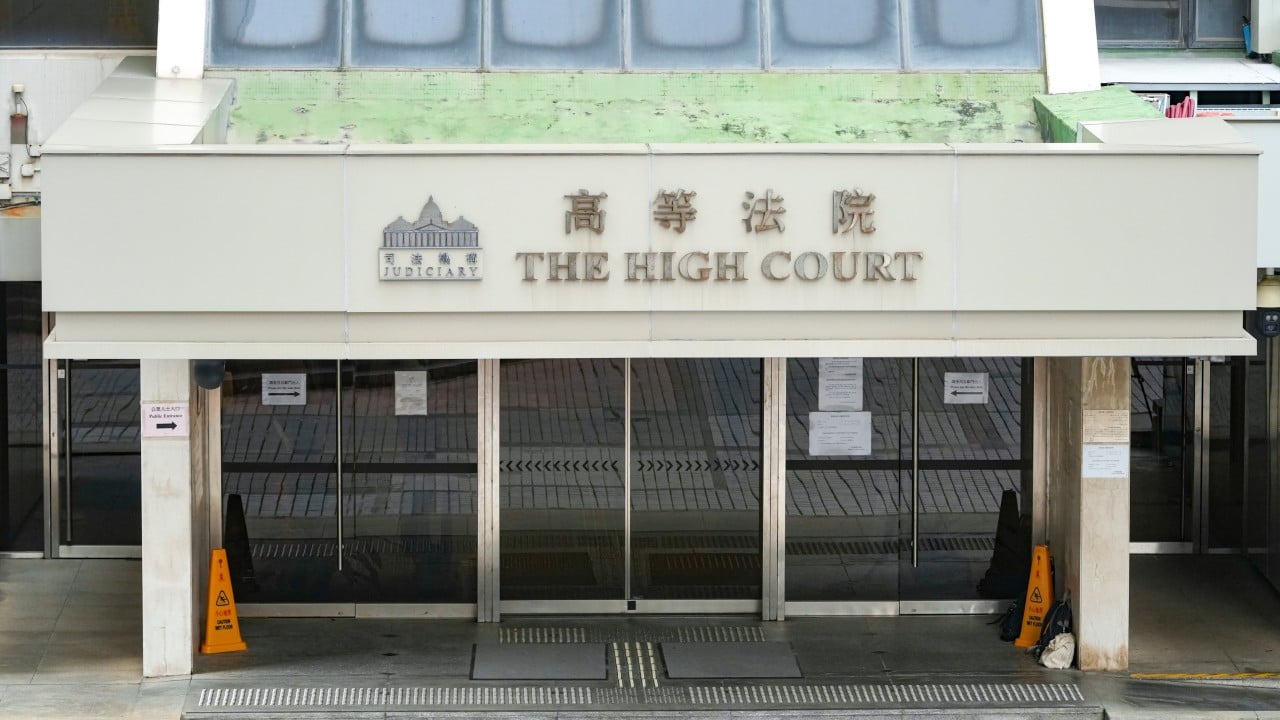
Yet behind the sterile legal language of a Hong Kong courtroom lies a story that refuses to stay locked inside a police docket. When a seventeen-year-old boy was sentenced to eight years behind bars for hurling corrosive liquid onto a visiting Singaporean tourist, the gavel did not bring closure. It merely marked the end of the beginning. To understand what actually happened on that pavement, we have to look past the courthouse steps and examine the anatomy of an impulsive act, the invisible mechanics of trauma, and the quiet terror of being a stranger in a city you trusted to keep you safe. Further reporting by The Guardian delves into related perspectives on this issue.
The Geography of an Ordinary Afternoon
Travel carries an unspoken contract. You pack a suitcase, step off a plane into a bustling metropolis famous for its neon-lit efficiency and low violent crime rates, and trade your hyper-vigilance for wonder. You look up at the glass towers of Victoria Harbour, follow the scent of roasted chestnuts and exhaust down crowded side streets, and assume that the people brushing past your shoulders are bound by the same basic rules of human coexistence.
Imagine—purely as a way to step inside those shoes—what that afternoon felt like just moments before the bottle was raised.
The air in Hong Kong has a specific weight to it, a thick blend of harbour humidity, cooling air-conditioning spilling from luxury storefronts, and the rhythmic clatter of pedestrian crosswalk signals. For a visitor from Singapore, a city with its own meticulous order and vertical ambition, Hong Kong feels like a louder, more chaotic cousin. You are checking a map on your phone. You are deciding whether to catch the Star Ferry before sunset or duck into a cha chaan teng for milk tea. Your guard is entirely down because nothing in your immediate environment signals war.
Then comes the splash.
At first, the brain does not register acid as fire. Survivors of chemical assaults across the globe—from London to Phnom Penh to Kowloon—consistently describe a split second of pure confusion. It feels like cold water. Or hot grease. A clumsy accident from an overhead air-conditioning unit or a spilled drink from a third-floor balcony. You reach up to wipe your cheek, expecting moisture, and instead your fingers meet something slick, heavy, and violently reactive.
The heat arrives a heartbeat later. It is not the dry, surface burn of a flame, which stops the moment you step away from the stove. Corrosive acid is an active predator. Until it is neutralized or diluted with massive volumes of water, it keeps eating. It breaks down proteins, dissolves lipids, and turns living tissue into necrotic slurry.
Panic does not just enter the body in that moment; it hijacks every circuit. Screaming in a crowded street where thousands of commuters are rushing to make the next train produces a strange, surreal isolation. People freeze. Bystanders pull back, unsure if they are witnessing a targeted hit, a medical emergency, or an ongoing threat. For the person standing on the concrete, the vibrant, cosmopolitan city instantly shrinks to the size of their own burning skin.
Anatomy of a Bottle
Why acid? Why does a teenager—someone barely old enough to vote, still navigating the clumsy transition between adolescence and adulthood—carry a container of industrial chemical onto a public street?
To answer that, you have to understand how easy it is to buy a weapon that does not look like a weapon. Hardware stores and household supply aisles across every major city stock drain cleaners, rust removers, and industrial solvents. In a plastic bottle, sulfuric or hydrochloric acid looks indistinguishable from mineral water or sports drink. It passes through bag checks without setting off metal detectors. It sits quietly in a backpack until anger, desperation, or distorted grievance decides to unscrew the cap.
Consider what happens next in the mind of a young offender. criminologists who study youth violence point out a terrifying cognitive gap in the teenage brain: the inability to simulate permanence. When a seventeen-year-old throws a punch, or even swings a blunt object, the impulse is rooted in immediate dominance—a desire to make someone hurt right now. Chemical violence operates on a completely different timeline, even when the perpetrator is too blinded by rage or recklessness to grasp it.
You cannot take acid back. You cannot pull the punch halfway through the swing. Once the liquid leaves the container, physics and chemistry take over from human intent.
In the Hong Kong courtroom, the prosecution laid out the cold trajectory of the attack and the severity of the injuries inflicted on the Singaporean visitor. Judges in the city have long treated corrosive liquid attacks with extreme gravity—a precedent forged in the dark memory of the 2008 and 2009 Causeway Bay and Mong Kok acid-throwing incidents, when bottles hurled from rooftops rained down on dozens of innocent shoppers. Those historical scars taught Hong Kong’s legal system a hard lesson: a bottle of drain cleaner in a crowded district is functionally no different from a grenade.
Eight years in prison is a massive slice of a young life. At seventeen, eight years means missing your twenties. It means emerging into the world at twenty-five with a permanent criminal record, estranged from peers who have built careers, started families, and moved on. Yet when placed beside the victim's reality, those eight years suddenly look fragile, almost symbolic.
The Arithmetic of Recovery
We talk about prison sentences in fixed units of time because the law demands symmetry. A crime is weighed, a number is assigned, and the ledger is declared balanced.
Medicine knows no such symmetry.
I remember speaking years ago with a burn unit nurse who worked with chemical trauma patients, and one sentence she uttered has stayed lodged in my ribs ever since: “Fire takes what it wants in seconds, and then you spend years trying to build a house on the ashes.”
When severe chemical burns hit the face, neck, or hands, survival is only the opening chapter of an exhausting, expensive, and deeply lonely ordeal. Let us trace what happens after the ambulance doors close and the press releases fade from the news cycle.
First comes the acute phase—the sterile rooms, the aggressive debridement where surgeons must scrape away dead tissue so infection does not claim the patient's life. Dressing changes alone require heavy sedation because the exposed nerve endings scream at the slightest brush of air. For a tourist injured thousands of miles from home, this nightmare unfolds in a foreign hospital system, separated from the familiar comfort of family beds, neighborhood doctors, and native routines.
Then comes the repatriation, and with it, the true financial and emotional toll. Medical evacuation, specialized reconstructive surgeries, skin grafts harvested from the thighs or back to patch a ruined cheek or eyelid—these procedures do not happen once. They happen in cycles over three, five, ten years. Scar tissue does not grow or stretch like healthy skin; as it tightens, it pulls at the corners of the mouth, restricts the movement of the neck, and can even prevent an eyelid from closing completely during sleep.
And there is the psychological tax that no insurance policy fully covers.
Think about the simple, unthinking vanity we all carry—the glance in the bathroom mirror before leaving the house, the ease of walking into a restaurant without wondering if the table next to you is staring. An acid attack is uniquely cruel because it targets identity itself. It turns a person's own reflection into a daily reminder of a stranger's malice. Every morning becomes a negotiation with grief. Every crowded street triggers a spike in cortisol, a sudden flinch at the sound of footsteps approaching too fast from behind.
When the headline says a tourist was attacked, the word tourist makes it sound temporary, as if the victim simply packed up their injuries along with their souvenirs and went back to normal life in Singapore. Nothing could be further from the truth. The vacation ended on the pavement; the exile from their former life lasts forever.
The Myth of the Safe City
Whenever violent crime strikes a visitor in a notoriously safe Asian metropolis—whether in Hong Kong, Singapore, Tokyo, or Seoul—a wave of quiet disbelief ripples through the public. Residents feel a sting of civic shame; travelers feel a sudden chill of vulnerability. We like to believe that low crime statistics act like an invisible dome over a city, filtering out chaos and irrationality.
That belief is a comforting illusion.
Safety is never an absolute state; it is a statistical probability. Millions of people move through Hong Kong's transit corridors every single day without incident. Millions of tourists walk down Nathan Road, Tsim Sha Tsui, and Central, capturing photos and eating street food in complete peace. Yet high-density cities also act as pressure cookers. Economic anxiety, social isolation, untreated mental health struggles, and fractured family structures simmer quietly beneath the gleaming skyline.
When those pressures erupt, they rarely target the powerful or the protected. They spill onto whoever happens to be standing in the wrong square meter of concrete at the wrong second.
Does this mean we should lock our doors, cancel our flights, and view every passing teenager on a city sidewalk as a threat? No. Surrendering to paranoia gives random violence a victory it has not earned. If fear dictates where we walk and how we live, the attacker's reach extends far beyond the street corner where the bottle was thrown.
What it does demand is a clearer-eyed understanding of both accountability and prevention.
Beyond the Gavel
Look closely at the two lives ruined in those five seconds, and you see a failure that stretches in two directions.
On one side stands the victim, whose right to walk unharmed through a public street was violated in the most grotesque way imaginable. For them, justice requires unmistakable societal condemnation. A lenient sentence—one that treats youth as a blanket excuse for permanent mutilation—would tell every citizen and every visitor that human bodies are cheap. The court's eight-year sentence sends a necessary, unambiguous signal: youth may explain impulsivity, but it does not erase consequence. Corrosive violence will be met with the full weight of the law.
On the other side stands a seventeen-year-old boy who will spend the formative years of his adulthood inside a concrete cell. It is easy to write him off as a monster, and doing so feels emotionally satisfying. Monsters are simple. If he is a monster, then the rest of us are safe simply by virtue of not being him.
The harder, more uncomfortable truth is that very few seventeen-year-olds wake up one morning inherently wired to destroy a stranger's life. Behind almost every juvenile act of extreme violence lies a trail of missed warning signs—school truancy, online radicalization or desensitization, unaddressed rage, easy access to hazardous materials, and adults who looked away until the sirens started wailing.
Prison will lock him away from the public for eight years, and right now, that separation is essential. Yet if those eight years consist solely of punishment without deep psychological intervention, education, and behavioral reconstruction, the calendar will eventually turn, the cell door will slide open, and society will simply inherit a twenty-five-year-old version of the same broken boy.
What Remains on the Pavement
We are drawn to dramatic stories of crime and punishment because we crave neat endings. We want the villain caught, the judge to speak sternly, the victim to heal, and the city to scrub the sidewalk clean before rush hour begins again.
Real life refuses to tidy itself up for the morning edition.
Somewhere in Singapore, a person who once boarded a plane looking forward to a few days of rest and exploration still wakes up to the tight, unyielding pull of scarred skin, navigating doctor appointments and crowded sidewalks with a caution they never asked to learn. Somewhere in a Hong Kong correctional facility, a young man counts down days that stretch ahead like an endless grey corridor, reckoning with five seconds of madness that cannot be undone by apology, remorse, or time served.
The rainwater eventually washes the concrete clean. The neon signs flicker back on at dusk. Commuters rush past the exact spot without slowing down, eyes fixed on their screens, trusting the unwritten pact that holds a city together—never knowing how thin the glass really is until it shatters.