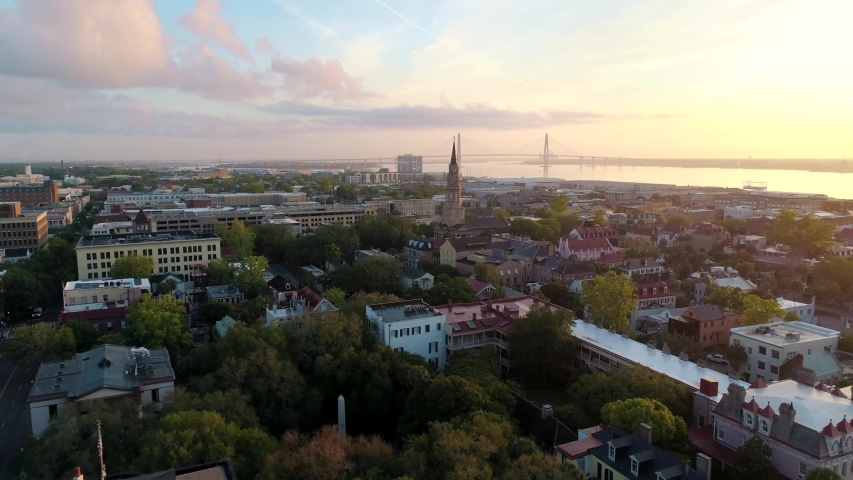
The wind in Reykjavik does not merely blow; it strips the pretense from the stone. Standing on the harbor edge, looking out toward a slate-grey Atlantic where trawlers rise and fall against the swell, you feel the distinct vertigo of an island that is simultaneously everywhere and nowhere. For decades, Iceland has mastered a lonely kind of choreography. It dances with Europe through the European Economic Area, absorbing the rules, adopting the standards, buying the goods, and paying the invisible toll of integration. Yet, when the music stops, it pulls its blankets tight around its shoulders and insists on sleeping alone.
Now, the island stands at an abrupt crossroads.
Consider what happens next: a nation of fewer than four hundred thousand souls preparing to look into the mirror and answer a question that has haunted its modern identity since the ashes of the 2009 financial collapse. Should the sleeping application for European Union membership be nudged back to life?
To understand the weight of this choice, you have to talk to people like Einar, a retired skipper whose hands look like they were carved from driftwood. He remembers the cod wars, the fierce, uncompromising defense of territorial waters against British trawlers, and the absolute conviction that an independent Iceland must control its own ocean floor.
"When you give up the tiller, you don't get it back," Einar says, leaning against a rusted winch on the dock, his eyes fixed on the horizon. "Brussels is far away. The fish are right here."
It is a sentiment etched into the national DNA. Having gained full independence from Denmark as recently as 1944, Iceland treats sovereignty not as an abstract political theory, but as a fragile, hard-won heirloom. To walk into the European Union is to fear the dilution of that identity, to worry that the intricate quotas of the Common Fisheries Policy will treat local coastal villages as footnotes in a continental ledger.
Yet, the ground beneath the North Atlantic is shifting, and the old isolation feels increasingly like a ghost story told to frighten children.
The world outside has grown teeth. Global trade is battered by sudden tariff storms, geopolitical tremors shake the Arctic, and great-power competition presses in from every side. The illusion of absolute detachment is colliding with the reality of economic vulnerability. Iceland already implements a vast majority of EU single market directives through its EEA membership, meaning it swallows the medicine without ever sitting at the table to help write the prescription. It pays into the union's coffers, aligns its laws, and binds its commerce to the continent, all while holding a permanent seat in the hallway rather than the room.
Voice. That is what the proponents of renewal are whispering in the warm, brightly lit kitchens of Reykjavik and the wind-scoured farmhouses of the south.
Imagine sitting in a classroom where everyone else decides the curriculum, and your only job is to study the textbook they hand you. That has been Iceland's quiet compromise. The coalition government, forged through political turbulence, recognized that the question could no longer be swept under the parliamentary rug. Instead, it opted to throw the doors open to direct democracy, setting the stage for a nationwide referendum.
The arguments on the street are tangled in passion and pragmatism. On one side, the guardians of tradition point to the króna, the domestic currency that, for all its volatility, remains uniquely Icelandic—a monetary heartbeat that belongs to Reykjavik alone. They argue that full integration could mean trading away autonomy over agriculture and maritime wealth, swallowing rules designed for Mediterranean olive groves or Central European plains rather than volcanic black sands and freezing fjords.
On the other side, younger professionals, tech entrepreneurs, and scientists look at the map and see an increasingly hostile world where small nations survive only by pooling their strength. They point to the erratic currents of global power, where leaning on solitary isolation is no longer a shield, but a blindfold. They argue that currency stability and a direct vote in Brussels are the only logical evolution for a modern, outward-looking democracy.
The friction between these worldviews is electric. It splits families across dinner tables. It turns radio talk shows into fierce, emotional debates about what it means to be Icelandic in the twenty-first century.
Brussels watches with quiet anticipation. European officials note that unlike many candidate states lining up in the East and Southeast, Iceland is already an advanced, prosperous democracy that would seamlessly integrate its institutional machinery. Technically, the application frozen back in 2013 never truly vanished from the registry; it merely gathered digital dust. Dust that could be blown away with a single affirmative ballot.
And yet, numbers and legal chapters fail to capture the melancholic poetry of the choice.
Icelanders are a people shaped by fire and ice, by centuries of enduring volcanic winters and economic isolation through sheer, stubborn communal grit. They know how to survive the dark. The fear is not that they will fail inside the European Union, but that in succeeding, they might wake up one day and find that the distinct, salt-heavy flavor of their independence has been quietly absorbed into something vast, uniform, and indistinct.
The tide rolls back against the volcanic rocks, leaving white foam trembling on the black sand. The debate in the North continues beneath an endless summer sky that refuses to get dark.