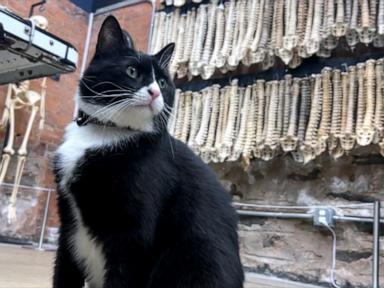
The deployment of domesticated quadrupeds—specifically Felis catus—within institutional security frameworks represents a calculated optimization of facility management, rather than a mere novelty or public relations maneuver. While mainstream media frequently frames the appointment of a cat to a museum security team through an anthropomorphic lens, a rigorous operational assessment reveals a highly functional alignment of predatory biology, cost-efficient pest management, and localized risk mitigation.
Museums and cultural heritage sites face a perpetual, compounding threat vector: organic degradation caused by rodents and insects. Traditional mitigation strategies rely heavily on chemical interventions and mechanical trapping. However, these methods introduce secondary risks, including chemical off-gassing that can damage sensitive artifacts, and high recurring labor costs for trap maintenance. Integrating a biological deterrent addresses these vulnerabilities at a fundamental level.
The Dual-Utility Operational Framework
The utility of an institutional feline relies on two distinct functional pillars: active biological pest suppression and passive territorial deterrence.
Active Suppression Mechanics
Rodents present a severe threat to archival materials, textiles, and wooden artifacts due to their nesting habits and gnawing behaviors. A feline asset operates as an autonomous, self-correcting sensor and eradication system. Unlike static mechanical traps, a feline dynamically adjusts its search parameters based on real-time sensory inputs—specifically high-frequency auditory cues and olfactory tracks that human operators and electronic systems cannot detect.
Passive Deterrence and Olfactory Scent Mapping
The physical elimination of pests is secondary to the psychological barrier established by a feline's presence. Felines naturally deposit apex-predator pheromones via scent-gland rubbing and urine marking. This creates an invisible, persistent olfactory barrier across the facility floor plan. Rodents actively avoid environments characterized by these chemical signatures, effectively shifting the pest baseline toward zero without requiring physical contact or termination events.
Cost-Benefit Matrix of Biological vs. Synthetic Security
Evaluating the integration of a feline security asset requires a strict analysis of capital expenditure (CapEx) against ongoing operational expenditure (OpEx).
+--------------------------+-----------------------+-----------------------+
| Metric                   | Synthetic/Chemical    | Biological (Feline)   |
+--------------------------+-----------------------+-----------------------+
| Initial Setup (CapEx)    | Moderate to High      | Minimal               |
| Maintenance Labor (OpEx) | High (Weekly/Monthly) | Low (Daily Feeding)   |
| Asset Lifecycle          | 2–5 Years (Hardware)  | 10–15 Years           |
| Artifact Risk Profile    | Chemical Exposure     | Low (Supervised)      |
+--------------------------+-----------------------+-----------------------+
The financial baseline for commercial pest control services involves recurring monthly fees, structural modifications (sealing entry points), and the deployment of toxic baits. The biological alternative swaps high variable service fees for predictable, fixed maintenance costs, primarily veterinary care and nutritional inputs.
The structural risk profile drops significantly when shifting away from chemical deterrents. Rodenticides introduce the risk of secondary poisoning if a target dies within a wall cavity or ceiling plenum, which attracts secondary pests like dermestid beetles—insects that cause catastrophic damage to organic museum collections. A feline asset neutralizes the target immediately, preventing hidden decay within the facility infrastructure.
Operational Constraints and Risk Mitigation
Deploying an animal within a controlled environment containing high-value, fragile assets introduces specific operational risks that require strict managerial protocols.
Behavior and Asset Interaction Risks
Felines possess inherent behaviors—such as jumping, scratching, and climbing—that directly conflict with the preservation of open-display artifacts. To mitigate the risk of physical damage to collections, facilities must enforce spatial zoning laws.
- Access Restricting Zones: High-value galleries featuring unsecured textiles, fragile ceramics, or open-air canvases must remain strictly off-limits via physical barriers or automated access-control doors.
- Primary Deployment Zones: The asset should be restricted to sub-structures, subterranean archives (contained within sealed cabinets), storage facilities, entryways, and perimeter pathways where structural integrity takes precedence over cosmetic fragility.
Environmental Control and Allergen Management
Air quality is a critical metric in public facility management. The introduction of pet dander can negatively impact visitor experience and staff health. Institutions must upgrade HVAC filtration systems to MERV 13 or higher to capture airborne allergens effectively. Regular grooming protocols and designated off-duty containment zones ensure that dander accumulation remains below the threshold of public discomfort.
The Attention Economy and Unearned Media Valuation
Beyond physical facility maintenance, a feline security asset functions as an involuntary high-yield marketing instrument. In traditional corporate frameworks, driving public engagement requires significant ad spend and agency retainers. A security-titled feline capitalizes on ingrained digital consumer behaviors, generating organic impressions, media mentions, and sustained public interest.
This organic reach converts directly into tangible institutional value:
- Foot Traffic Acceleration: The novelty of a working animal transforms a static educational institution into an interactive destination, altering visitor demographics and increasing repeat attendance rates.
- Gift Shop Monetization: The asset's likeness can be rapidly commercialized through proprietary merchandise, creating a high-margin revenue stream that frequently exceeds the total lifecycle cost of the animal within the first quarter of deployment.
Systemic Integration Protocol
For an institution seeking to replicate this framework, execution must follow a structured phased implementation rather than an ad-hoc adoption.
Phase 1: Environmental Asset Auditing
Before procurement, a complete structural audit must identify existing pest pathways, vulnerability points in high-value galleries, and potential hazards to the animal (e.g., exposed electrical wiring or historical chemical treatments on floors).
Phase 2: Specimen Selection and Temperament Profiling
Not all felines are suited for institutional environments. The selection process must prioritize high prey-drive, low human-aggression, and a calm disposition under variable auditory stimuli (such as large tour groups or maintenance equipment). Working lines or feral-born individuals transitioned to managed environments often exhibit the necessary physiological resilience.
Phase 3: Perimeter Orientation and Habituation
The asset must be introduced to the facility incrementally. Initial containment within a central command zone allows the animal to establish a psychological baseline before expanding its territory to secondary and tertiary zones. This controlled expansion ensures complete scent-mapping across the designated footprint without overwhelming the asset's spatial navigation.
Institutions facing tightening operational budgets and escalating environmental maintenance challenges must look past the novelty of working animals and evaluate them through a lens of pragmatic utility. Replacing rigid, high-overhead mechanical contracts with a self-sustaining biological asset optimizes facility security, reduces chemical vulnerabilities, and unlocks parallel marketing efficiencies. The integration of a feline security asset represents a highly logical, multi-faceted solution to a permanent infrastructure vulnerability.