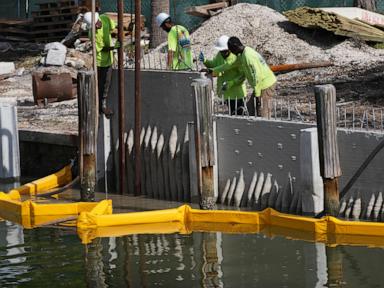
Coastal municipalities face an escalating fiscal deficit as chronic tidal flooding outpaces the structural lifespan of legacy civil engineering. The baseline mechanics governing this vulnerability are straightforward: low-lying topography, porous limestone substrata that render traditional seawalls structurally porous to groundwater infiltration, and high-density coastal asset accumulation. Capital allocation strategies historically relied on reactive defense mechanisms. Modern exposure models mandate a transition toward anticipatory capital deployment, weighing the marginal cost of protection against the inevitable depreciation of unviable real estate portfolios.
The Tripartite Municipal Expenditure Matrix
Local governments allocate capital across three distinct operational tiers to manage inundation risks. Understanding the boundaries of each tier clarifies why standard municipal budgets are straining under current climatic pressures. If you liked this piece, you should read: this related article.
Defensive Gray Infrastructure
Traditional defenses—bulkheads, tidal gates, and reinforced concrete seawalls—represent the baseline of municipal response. These assets operate on a fixed engineering threshold. When storm surge energy or high-tide baselines exceed design specifications, structural failure occurs via overtopping or subsurface hydrostatic pressure. The primary limitation of gray infrastructure is its linear cost curve relative to exponential sea level rise. Maintenance expenditures compound annually, while the protected asset base experiences diminishing protection efficiency.
Nature-Based Interventions
Ecosystem-based mitigations, including mangrove restoration, intertidal wetland expansion, and artificial oyster reef deployment, introduce variable wave-attenuation dynamics. Dense mangrove stands dissipate wave energy through frictional drag, absorbing up to significant percentages of incoming hydraulic force depending on spatial depth. These systems offer self-healing properties and lower lifecycle maintenance costs than concrete counterparts. However, their physical implementation is spatially constrained. Highly urbanized waterfronts lack the footprint required to deploy horizontal buffer zones of adequate scale. For another angle on this story, see the recent update from Al Jazeera.
Strategic Managed Retreat
When the capital cost of maintaining structural or natural defense exceeds the projected tax revenue and economic output of a given coastal zone, municipalities must execute managed retreat. This tier involves property acquisition, zoning restrictions, and the relocation of critical municipal utilities. Relocation avoids the compounding liabilities of emergency disaster response, yet it triggers immediate political friction and municipal bond devaluation risks.
The Cost Function of Capital Depreciation
The economic exposure of low-lying regions is governed by a capital depreciation function tied directly to tidal frequency. Real estate valuation models traditionally price location utility based on waterfront proximity. As nuisance flooding transitions from an episodic anomaly to a predictable monthly event, the net present value of coastal assets degrades.
Municipal bond markets increasingly price this physical risk into debt issuance costs. Cities with low reserves and inadequate capital improvement plans face credit rating downgrades. This dynamic restricts their borrowing capacity precisely when capital expenditure requirements for pump stations, raised roadways, and electrical grid hardening reach their peak. The cost of inaction is no longer measured in single storm recovery cycles, but in the structural impairment of municipal balance sheets.
Regional Divergence and Policy Friction
Geographic fragmentation in regulatory oversight produces stark operational discrepancies across neighboring jurisdictions. Regional compacts attempt to standardize baseline sea level projections for infrastructure design life, yet implementation remains decentralized.
Smaller municipalities often lack the administrative bandwidth to execute complex hazard mitigation grants, relying instead on emergency declarations that fund temporary repairs rather than systemic overhauls. Conversely, metropolitan centers with dedicated tax bases deploy capital-intensive engineering programs, such as massive stormwater pump installations and large-scale raising of public thoroughfares.
This uneven distribution of resilience capital creates micro-markets of disparate vulnerability. Insurance availability contracts in zones lacking systemic defenses, transferring the financial burden directly to property owners through prohibitive premium adjustments or policy cancellations. Capital flows organically away from unprotected sub-markets, accelerating property devaluation long before physical inundation permanently removes land from the tax digest.
Capital Deployment Protocol
Shift municipal capital improvement programs from static hazard mitigation to dynamic asset valuation models.
- Audit all coastal infrastructure assets against a fifty-year probabilistic inundation curve, categorizing them by net present value versus maintenance liability.
- Establish strict elevation and structural standards for all new public capital projects, utilizing localized tidal data rather than historical averages.
- Formulate transparent abandonment thresholds for low-lying municipal assets where structural defense costs exceed three times the baseline replacement value of the protected zone.
- Divert routine maintenance subsidies away from repetitive loss zones, redirecting those funds toward inland infrastructure acquisition and receiving-zone density incentives.


