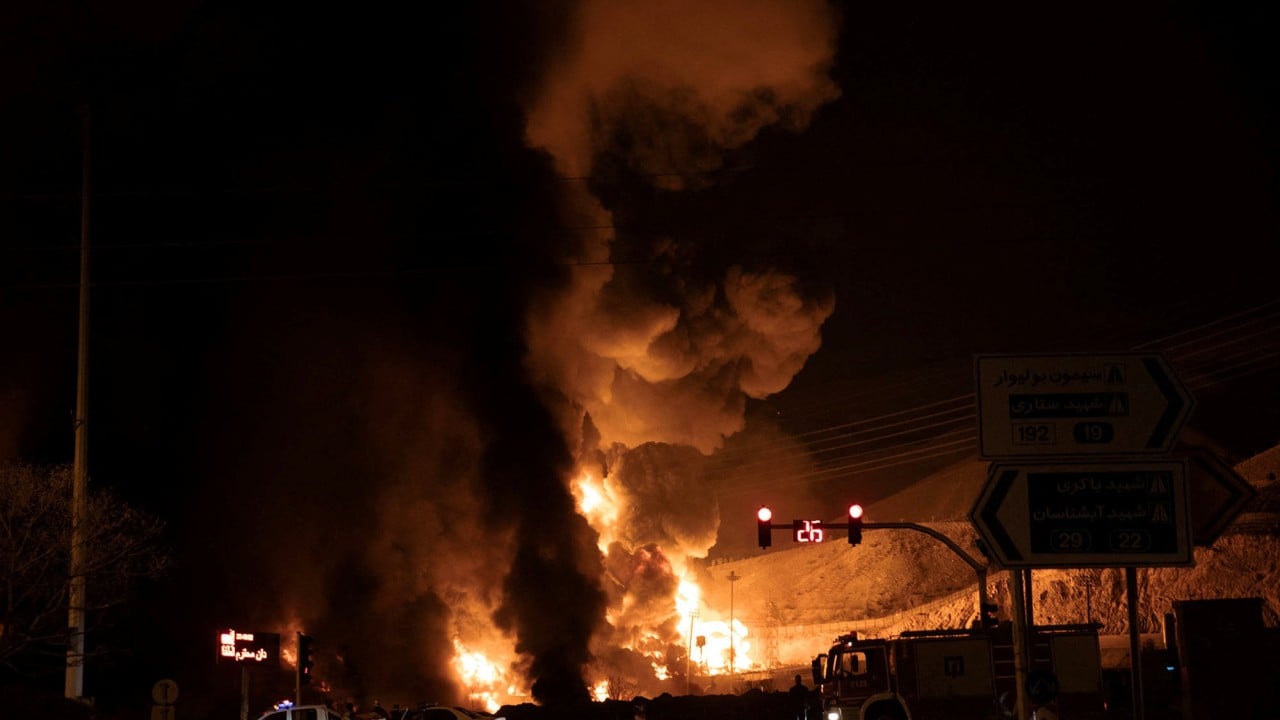
Statecraft frequently encounters a hard operational ceiling when kinetic military power fails to alter a sovereign adversary's calculus. When aerial bombardments and naval blockades stall against entrenched state structures, strategy must shift from physical destruction to systemic financial depletion. This dynamic defines the current American approach to the Iranian conflict, where the White House has transitioned from direct military campaigns to an intensified economic attrition model known as Operation Economic Fury. Understanding this pivot requires breaking down the mechanics of state-level financial strangulation, the structural limits of kinetic coercion, and the asymmetric costs borne by both participants.
The Limits of Kinetic Coercion
Aerial campaigns and precision missile strikes possess clear operational boundaries. They degrade surface infrastructure, deplete physical stockpiles, and disrupt immediate command chains, but they rarely induce political capitulation from centralized authoritarian regimes.
The primary failure mode of exclusive military escalation is its inability to dismantle decentralized ideological apparatuses or compel immediate behavioral change. When an administration relies solely on kinetic force, it enters a diminishing-returns curve. Munitions inventories dwindle, replacement costs escalate, and domestic political tolerance for protracted military expenditures drops.
In the current theater, the physical blockade of the Strait of Hormuz—a maritime chokepoint handling roughly twenty percent of global oil supplies—demonstrates the limits of naval positioning alone. While military assets can restrict movement, they simultaneously generate secondary shockwaves across global energy markets, inflating domestic fuel prices and triggering political blowback for the executing power without guaranteeing the adversary's surrender.
The Architecture of Financial Attrition
Faced with diminishing military returns and depleted precision munitions inventories, state strategies typically pivot to financial instruments. The objective shifts from destroying physical assets to cutting off the liquidity required to sustain state functions, military payrolls, and illicit trade networks.
The mechanism relies on three distinct layers:
- Primary export constriction: Drastically reducing hydrocarbon throughput. Treasury Department metrics indicate that Iranian oil loadings fell from 1.8 million barrels per day down to fewer than 500,000 barrels per day. This structural drop starves the central budget of foreign exchange reserves.
- Secondary sanctions enforcement: Threatening international financial institutions and third-party trading partners with exclusion from Western clearing systems if they maintain commercial ties with the target state. This isolates the target from alternative liquidity pools and secondary transit hubs like the United Arab Emirates.
- Domestic currency destabilization: Suppressing import capacity until severe scarcity triggers hyperinflation, public sector wage defaults, and internal friction that consumes the regime's administrative bandwidth.
By executing this financial squeeze, the strategy attempts to achieve the equivalent of a continuous bombing campaign through balance-sheet degradation rather than ordnance expenditure.
The Asymmetry of Pain Tolerance
A core miscalculation in economic statecraft involves misjudging the target population's capacity to absorb fiscal shock relative to the initiating state's political vulnerability. Authoritarian governance models absorb civilian economic pain far more effectively than democratic systems. While sanctions induce severe societal contraction—exemplified by International Monetary Fund projections of economic shrinkage and extreme inflation spikes inside Iran—the ruling apparatus insulates its core security enablers from immediate collapse.
Conversely, the initiating state operates under strict democratic feedback loops. Rising global energy costs, inflationary pressures, and mounting fiscal outlays for military operations directly impact the incumbent executive's domestic approval ratings. The strategic bet rests on whether Tehran runs out of financial reserves before Western electorates exhaust their patience with prolonged economic friction.
Strategic Execution
To force an adversary to alter its nuclear development trajectory or relinquish control over vital maritime corridors through economic pressure alone, the executing administration must maintain absolute discipline over secondary enforcement mechanisms. Diplomatic flexibility must remain subordinate to strict compliance monitoring across third-party shipping and banking sectors. Future outcomes depend entirely on whether the Treasury Department can sustain total export isolation long enough to neutralize the adversary's capacity to subsidize proxy networks and military operations, bypassing the physical limitations of kinetic intervention.
Trump demands compensation from Tehran for Americans killed by Iranian roadside bombs
This video provides context on the diplomatic demands and compensation claims complicating the ongoing economic and political standoff between the United States and Iran.
http://googleusercontent.com/youtube_content/1