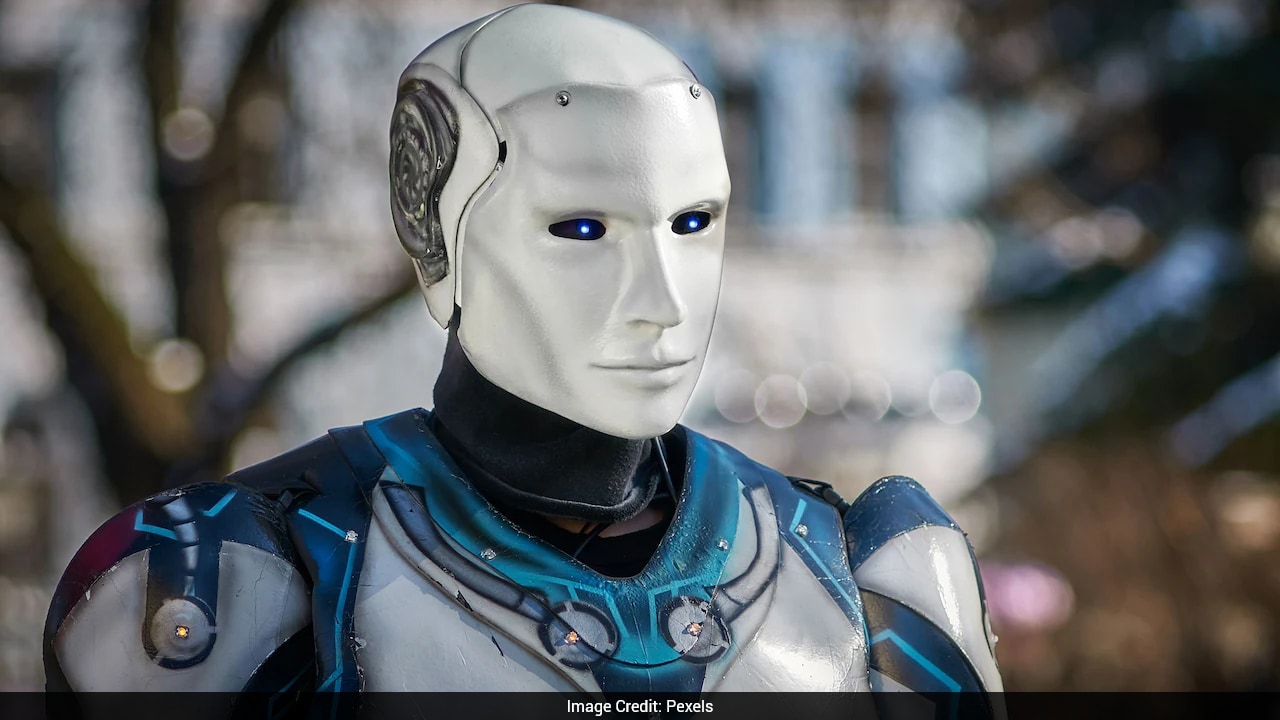
The deployment of AI-powered humanoid robots into American K-12 classrooms represents a fundamental shift from informational automation to behavioral automation. While early pilot programs treat these machines as interactive novelty devices, a rigorous operational analysis reveals that their true utility lies in solving the core bottleneck of public education: the structural scarcity of individualized feedback loops.
To evaluate whether humanoid robots can legitimately scale instructional capacity, we must look past the aesthetic appeal of a physical machine and deconstruct the intervention into its component operational realities. The success or failure of integrating anthropomorphic hardware into a school district is governed by three primary variables: the cognitive load transfer, the hardware reliability framework, and the socio-emotional feedback loop.
The Tri-Partite Architecture of Robotic Instruction
To assess the operational validity of a humanoid robot in a classroom, the technology must be disaggregated into three distinct functional layers. When districts fail to differentiate between these layers, they misallocate capital, purchasing expensive physical hardware when a localized software agent would achieve the identical instructional outcome.
1. The Physical Interface Layer
The physical chassis—comprising the actuators, synthetic outer shell, and stereoscopic vision systems—serves a distinct psychological purpose rather than a computational one. In early childhood and special education environments, physical presence alters student engagement dynamics. The physical interface layer converts digital instructions into physical presence, using eye-gaze tracking and spatial positioning to mimic human attention cues. The operational utility of this layer is strictly behavioral; it anchors the student's visual and physical focus, reducing the rate of off-task task-switching.
2. The Localized Perception Model
Before a robotic partner can deliver an instructional intervention, it must process multimodal environmental inputs in real time. This requires a specialized edge-computing array capable of executing three simultaneous processes:
- Acoustic Isolation: Separating an individual student’s voice from background classroom noise reaching 70 decibels.
- Affective State Detection: Analyzing micro-expressions and postural changes to detect cognitive friction, or frustration, before a student disengages.
- Spatial Mapping: Maintaining safe operational boundaries while navigating changing physical classroom layouts.
3. The Pedagogical Inference Engine
This is the core software layer, typically driven by a fine-tuned large language model (LLM) combined with a deterministic retrieval-augmented generation (RAG) system. It maps student responses against a verified district curriculum database. Unlike generic consumer AI models, a pedagogical inference engine cannot operate purely on probabilistic text generation. It requires strict guardrails to prevent hallucination, ensuring that a math explanation or historical fact aligns perfectly with state standards.
The Cost Function of Mechanical Integration
The implementation of physical robotics introduces structural capital expenditures (CapEx) and operational expenditures (OpEx) that do not exist within pure-play software interventions. Districts frequently miscalculate the Total Cost of Ownership (TCO) by evaluating only the upfront hardware acquisition cost. A realistic cost function must account for the high depreciation rate of physical actuators operating in high-friction classroom environments.
Total Cost of Ownership = Chassis Acquisition + (Annual License x t) + (Maintenance Overhead x t) + Latency Depreciation
The final variable, latency depreciation, represents the instructional time lost due to hardware calibration, battery charging cycles, and software system errors. In a standard 50-minute instructional block, if a robot requires five minutes of setup and troubleshooting, it suffers a 10% operational efficiency penalty.
Furthermore, mechanical maintenance introduces a physical bottleneck. If a software platform crashes, a patch can be deployed over the air globally within minutes. If a humanoid robot experiences a servo motor failure in its elbow joint, the unit is physically sidelined for days or weeks, forcing the human teacher to abruptly re-absorb the entire instructional load. This unpredictability disrupts classroom scheduling and degrades the reliability of the learning environment.
Instructional Scaling and the Asymmetric Feedback Loop
The core pedagogical argument for introducing humanoid teaching partners is the democratization of one-to-one tutoring. Educational research has long established Bloom’s 2 Sigma Problem, which demonstrates that an average student taught one-to-one using mastery learning techniques performs two standard deviations better than a student taught via conventional instructional methods. Human labor costs make universal one-to-one human tutoring economically impossible for public school districts.
Humanoid robots attempt to close this gap by functioning as infinitely patient, scalable instructional partners. However, this creates an asymmetric feedback loop. While the robot can provide infinite repetitions of a conceptual explanation, it lacks the broader contextual awareness of a human educator.
The second limitation is the difference between explicit input and implicit behavior. A student may articulate the correct answer to a fraction problem, satisfying the robot’s programmatic check, while displaying subtle signs of systemic confusion that a human teacher would identify via intuition and long-term observation. The robot operates on a closed transactional loop: input received, accuracy validated, next module unlocked. The human teacher operates on a holistic developmental loop, factoring in a student's long-term behavioral trends, home environment, and emotional volatility.
Consequently, the optimal deployment strategy is not the substitution of labor, but a strict division of cognitive tasks.
+------------------------------------+------------------------------------+
| Task Allocation: Human Educator    | Task Allocation: Robotic Partner   |
+------------------------------------+------------------------------------+
| • Macro-curriculum design          | • Micro-targeted skill repetition  |
| • Diagnostic behavioral assessment | • Real-time fluency assessment     |
| • High-stakes emotional management  | • Structured programmatic drill    |
| • Interventions for outlier cases  | • Baseline dataset collection      |
+------------------------------------+------------------------------------+
Systemic Risks and Operational Vulnerabilities
Deploying autonomous behavioral hardware into public infrastructure introduces severe operational risks that school boards routinely underestimate during initial procurement phases. These risks span data liability, instructional homogenization, and systemic deskilling.
Data Privacy and the Edge-to-Cloud Vulnerability
Humanoid robots require continuous video and audio recording to function effectively as conversational partners. Under the Family Educational Rights and Privacy Act (FERPA), this data is highly protected. If a robotics vendor processes this multimodal data via cloud-based servers to improve their models, the district faces massive legal liability.
To mitigate this, districts must demand zero-data-retention architectures or fully self-contained edge-processing hardware. However, running complex vision and audio models purely on local hardware increases the unit cost and shortens battery life, creating a direct conflict between data security and operational longevity.
The Risk of Instructional Homogenization
When a centralized software architecture dictates classroom interactions across thousands of schools, it creates a single point of failure for instructional quality. If the pedagogical inference engine contains a subtle bias, a logical flaw, or a rigid interpretation of a concept, that error is replicated at scale. This eliminates the natural, localized teaching variations that allow different human educators to reach different types of learners. The classroom environment risks shifting from a dynamic social ecosystem to a highly standardized, mechanistic data-processing center.
Teacher Deskilling and Accountability Drift
The introduction of a highly capable robotic partner can create an unintended psychological dependency. If a human teacher relies on an autonomous machine to manage a subset of students, the teacher's own diagnostic skills may atrophy over time.
This creates accountability drift. When a student fails to hit reading or math benchmarks, who bears the operational responsibility? The human teacher can point to the automated partner's metrics, while the robotics vendor can claim their hardware was improperly deployed. This dilution of accountability erodes the foundational feedback loop between school administrators, teachers, and parents.
Deployment Blueprint for District Administrators
School districts looking to pilot humanoid robotic partners must avoid the common pitfall of open-ended, unmonitored integration. To protect capital and ensure measurable academic returns, deployment must follow a highly structured phasing protocol.
First, restrict initialization to localized, high-density needs—specifically, English Language Learner (ELL) acceleration and foundational math recovery modules. These fields feature objective, highly measurable feedback loops where structured repetition delivers maximum returns.
Second, decouple hardware procurement from software licensing. Hardware platforms depreciate rapidly; software models iterate at an exponential rate. Committing to a multi-year, bundled hardware-and-software contract locks a district into obsolete physical chassis and outdated underlying models. Contracts must stipulate that software upgrades remain independent of physical form factors.
Third, establish strict metrics for operational discontinuation. If the localized perception models fail to maintain an active engagement rate that exceeds standard software-only applications by at least 25% within the first two quarters, the physical deployment should be terminated. The district should pivot those resources back to cloud-based software agents, stripping away the unnecessary capital overhead of physical humanoid shells.