Twenty-five years after the towers fell, lower Manhattan still carries the quiet, heavy gravity of a scar that refuses to fully fade. September air turns crisp, and the annual cycle brings back the names, the reading of the rolls, and the hollow ache of a city suspended in time. But as the quarter-century mark approaches, the sacred ground of remembrance has collided with a bitter, modern political crossfire.
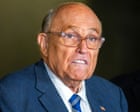
Consider the friction currently playing out on cable news and local street corners. On one side stands Rudy Giuliani, the man who wore the city's grief like armor back in 2001, defining an era of resilience. During a weekend broadcast on Newsmax, the former mayor launched into a convoluted, incendiary tirade. His target was New York’s current mayor, Zohran Mamdani. Giuliani argued that because Mamdani is a practicing Muslim, and because the 2001 hijackers acted in the name of extremist jihad, the city's first Muslim mayor should fundamentally skip the upcoming memorial service.
The words cut deep, reopening old fissures that time was supposed to have healed.
Imagine standing on a Staten Island pier or walking through a Brooklyn firehouse where boots still sit empty in lockers, decades after their owners rushed up concrete stairwells they would never descend. For many families of the victims, the grief is intensely personal, untangled from partisan politics. Yet, division has crept in. A petition circulated by some grieving relatives has gathered close to one hundred thousand signatures, arguing that Mamdani’s presence at the podium would draw unwanted political theater to ground zero. Some family members have voiced raw anguish, questioning whether they can stomach the added tension.
Yet, to understand the current storm is to look past the talking points and examine the timeline of a city caught between its past and its changing demographics. Mamdani was only a schoolboy when the planes struck. In the shadow of that tragedy came a second, quieter wave of trauma for New York's Muslim communities—an era of surveillance, suspicion, and pervasive Islamophobia that turned many neighbors into perpetual strangers in their own home.
Instead of retreating from the hostility, the current mayor responded with policy. Ahead of the anniversary, Mamdani signed executive orders establishing September 11 as an official municipal Day of Remembrance and Service, mandating moments of silence and reinforcing emergency preparedness taskforces. It was an attempt to anchor the date back to civic duty rather than political weaponization.
When asked about the calls for his absence, Mamdani’s stance remained fixed. He announced he would attend multiple events and stand shoulder-to-shoulder with first responders and victim families, just as he did before taking office. He stated he loves this city and wants the focus returned entirely to the souls lost twenty-five years ago.
History teaches us that collective trauma is rarely processed in a straight line. Every leader who has stepped into City Hall since 2001 has had to navigate the delicate tightrope of memorializing a national wound without exploiting it. When figures from the past attempt to draw theological lines around who is permitted to mourn, they evoke a dark brand of exclusion that runs counter to the very diversity that defines New York.
The names carved into the bronze parapets around the twin pools do not ask for a citizen’s creed or background. They simply list human lives extinguished in an instant. As the bell tolls this week over lower Manhattan, the true test for the city will not be who stands at the podium, but whether the living can finally look across the aisle and see each other's grief through a lens cleared of prejudice.