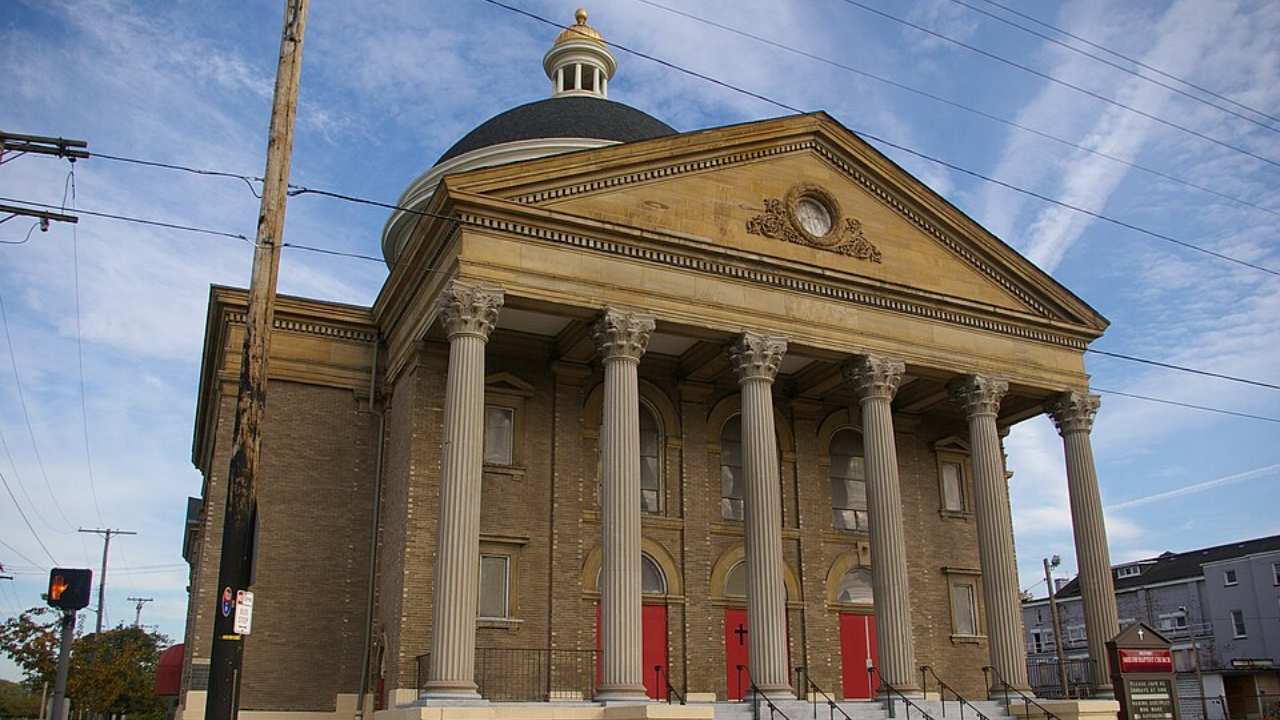
The dust motes in Shiloh Baptist Church do not just settle; they linger, suspended in amber shafts of afternoon light like tiny, stubborn witnesses. If you press your hand against the dark wooden pews, the grain feels worn down by decades of heavy wool coats, nervous palms, and the resonant vibrations of voices raised in song.
In the spring of 1967, that wood shook violently. Martin Luther King Jr. stood behind the pulpit. He did not merely speak; he summoned a reckoning, his voice rolling through the nave with the steady, unstoppable force of a rising tide. The room was packed shoulder-to-shoulder, thick with the scent of floor wax, damp wool, and an electric, collective yearning. People wept openly. They nodded until their necks ached. They believed, with a fierce and desperate clarity, that the arc of the moral universe was bending right there, right then, inside those walls. You might also find this similar story interesting: Why UK Universities Are Suddenly Canceling Admission Offers for International Students.
Then the calendar pages turned. The decades bled together.
Cities shift. Industry bleeds out into the suburbs. Roofs leak silently in the dark of winter. Paint peels in long, curling ribbons. By the time the twenty-first century arrived, the grand old sanctuary in Trenton, New Jersey, looked less like a monument to a movement and more like a casualty of time. The congregation fought hard, week after week, holding bake sales, passing the collection plate, and patching plaster with sheer grit and prayer. But grit does not buy copper flashing. Determination does not replace rotting floor joists. As extensively documented in detailed coverage by NPR, the results are widespread.
History is heavy. It requires maintenance.
Consider what happens when a community treasure begins to fray at the edges. The ceiling stains grow into dark maps of neglect. The basement pipes groan and surrender to rust. Every Sunday, the faithful gather, their eyes drawn upward not just in reverence, but in quiet anxiety whenever a heavy rain rattles the stained glass. You cannot eat history, and you certainly cannot keep out a New Jersey nor'easter with good intentions alone.
Then came a check. Three-quarters of a million dollars.
To a federal bureaucrat, a $750,000 grant from the Historic Preservation Fund administered by the National Park Service is simply a line item in a spreadsheet. It is a grant allocation, categorized, stamped, and filed. But walk into the sanctuary on a Tuesday morning when the contractors arrive, and the numbers transform into something visceral.
That money translates directly into scaffolding. It means scraping away decades of lead paint, stabilizing compromised timber, and restoring the mortar between bricks laid by hands that have long since turned to dust. It means ensuring that when a young child sits in those very same pews fifty years from now, the floor beneath them will not give way.
We often talk about heritage as if it were a ghost—weightless, ethereal, existing only in textbooks and anniversary speeches. We treat civil rights history as a monument carved in white marble, distant and untouchable. But true history is physical. It lives in plaster, in timber, in the sweat of laborers hauling drywall, and in the acoustics of a room designed to catch a prophet's whisper and turn it into a roar.
When Dr. King stood at Shiloh's pulpit in 1967, he was talking about the fierce urgency of now. He was warning that being lulled into the quiet valley of complacency is a slow death for any movement. Ironically, the physical structures that sheltered those warnings are now the ones facing their own urgent hour.
Buildings remember.
They remember the cadence of footsteps pacing the aisle. They remember the collective intake of breath before a congregation breaks into a soaring hymn. When a roof caves in, a piece of communal memory dies with it. We lose the sensory anchors that keep our collective story tethered to reality. Without the physical space, history becomes a myth, a bedtime story we tell ourselves to feel better about the present.
The injection of federal preservation funding into Shiloh Baptist Church changes the equation. It is an acknowledgment that ordinary neighborhood churches—not just grand presidential estates or monumental national battlefields—are the true bedrock of the American story. The civil rights movement was not hatched in marble halls in Washington; it was forged in basement fellowship halls, over lukewarm coffee and folding tables, under flickering fluorescent lights, protected by the sturdy walls of urban Black churches.
Walking through the sanctuary today, the sound of a hammer echoing against brick is jarring, yet deeply comforting. It is the sound of survival. It is the sound of the past refusing to be swept quietly into the attic of forgotten things.
The grants do not erase the systemic neglect that led to the disrepair in the first place. They do not fix the fractured economics of the surrounding neighborhood or heal every historical scar. But they buy time. They buy structural integrity. They provide a fighting chance for a building that once held the conscience of a nation to stand tall through another century of storms.
The dust motes still dance in the shafts of light at Shiloh. Only now, the roof above them holds strong. The floor beneath them is steady. And the voice that once shook the rafters in 1967 is still there, waiting in the grain of the wood, daring us not to forget how hard the climb was, and how much further we still have to go.