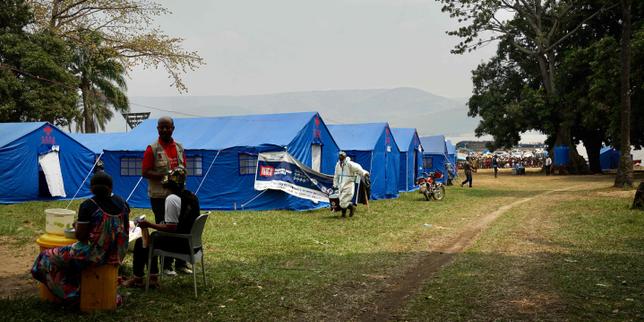
Epidemiological crisis management relies on the speed at which clinical countermeasures bypass traditional regulatory friction. When the Democratic Republic of Congo confronted its most severe outbreak of Ebola virus disease, the response strategy shifted from passive containment to aggressive pharmaceutical intervention under emergency protocols. Managing viral hemorrhagic fever at scale requires an operational framework that balances experimental vaccine deployment with targeted therapeutic administration within fragile public health infrastructure.
The Operational Mechanics of the Democratic Republic of Congo Epidemic
The magnitude of the outbreak necessitated a departure from standard clinical trials toward compassionate use models and multi-drug evaluations. Ebola virus transmission dynamics depend heavily on direct contact with bodily fluids, funerary practices, and nosocomial exposure. In the eastern provinces of the Democratic Republic of Congo, security instability compounded these vectors, restricting contact tracing and creating zones of epidemiological darkness.
Standard containment relies on three distinct variables: case detection speed, isolation efficacy, and trace-to-quarantine ratios. When armed conflict or community mistrust disrupts these variables, the reproduction number rises above the critical threshold of one. To arrest transmission under these conditions, response teams deployed ring vaccination strategies alongside monoclonal antibody treatments.
The Therapeutic Portfolio and Clinical Efficacy
Medical countermeasures historically offered limited palliative support, leaving mortality rates between fifty and ninety percent. The operational shift during the North Kivu and Ituri outbreaks introduced specific investigational therapeutics designed to target the viral glycoprotein or disrupt viral replication machinery.
Monoclonal Antibodies and Small Molecules
Therapeutic evaluation focused on neutralizing antibody formulations and nucleotide analogues. The mechanism centers on blocking viral entry into host cells or halting intracellular RNA synthesis.
- mAb114: A single monoclonal antibody derived from a human survivor, engineered to bind the viral glycoprotein and prevent host cell attachment.
- REGN-EB3: A triple-monoclonal antibody cocktail that targets distinct sites on the viral surface, minimizing the risk of viral escape mutants.
- Remdesivir: An intravenous nucleotide analogue originally evaluated for broad-spectrum viral inhibition, acting as an RNA polymerase inhibitor.
Comparative trials demonstrated that targeted immunotherapy significantly altered survival curves. Patients presenting early in the disease course with lower viral loads exhibited markedly improved recovery rates when treated with monoclonal antibodies compared to historical controls receiving only supportive care.
Vaccine Deployment Under Constraints
Preventive intervention during an active epidemic demands ring vaccination strategies to build immunological barriers around confirmed cases. The primary candidate, rVSV-ZEBOV-GP, uses a recombinant vesicular stomatitis virus vector expressing the Ebola glycoprotein to elicit rapid humoral and cellular immune responses.
Deploying a vaccine requiring ultracold chain storage across a region lacking reliable electrical grids introduces severe logistical bottlenecks. The operational solution required specialized dry-shipper tanks capable of maintaining sub-zero temperatures at the village level.
- The prophylactic window requires an estimated ten days for seroconversion, meaning vaccination must outpace the incubation period of exposed contacts.
- Target populations were categorized into primary contacts, secondary contacts, and frontline healthcare personnel to maximize the utility of constrained vaccine stockpiles.
- Acceptance rates varied by community, requiring local civil society integration to counteract rumors regarding the provenance and intent of the intervention.
Supply Chain Bottlenecks and Cold Chain Vulnerabilities
The structural failure point of the response architecture resided not in the science of the vaccines or therapeutics, but in the physical logistics of last-mile delivery. Cold chain maintenance failure results in vaccine degradation and loss of potency.
[Central Depot]
      │ (Ultracold Transport)
      ▼
[Regional Hub]
      │ (Dry-Shipper Management)
      ▼
[Frontline Point of Delivery]
      │ (Immediate Ring Administration)
      ▼
[Targeted Individual]
This pipeline requires uninterrupted telemetry and inventory tracking. When transport routes face ambushes or community blockades, contingency protocols must activate alternative air-drop or motorcycle transport vectors. The cost function of these interventions scales exponentially with the deterioration of regional security.
Strategic Resource Allocation for Future Outbreaks
Mitigating future hemorrhagic fever surges requires institutionalizing the operational lessons learned from the Democratic Republic of Congo response. R&D pipelines must prioritize thermostable formulations that reduce reliance on extreme cold storage infrastructure. Furthermore, regulatory frameworks must pre-position clinical trial protocols with local ethics committees before an epidemic declaration, eliminating administrative latency during the critical expansion phase of viral transmission. Decentralize diagnostic testing to point-of-care platforms to reduce turnaround times from days to hours, ensuring therapeutics reach index cases before systemic organ failure occurs.