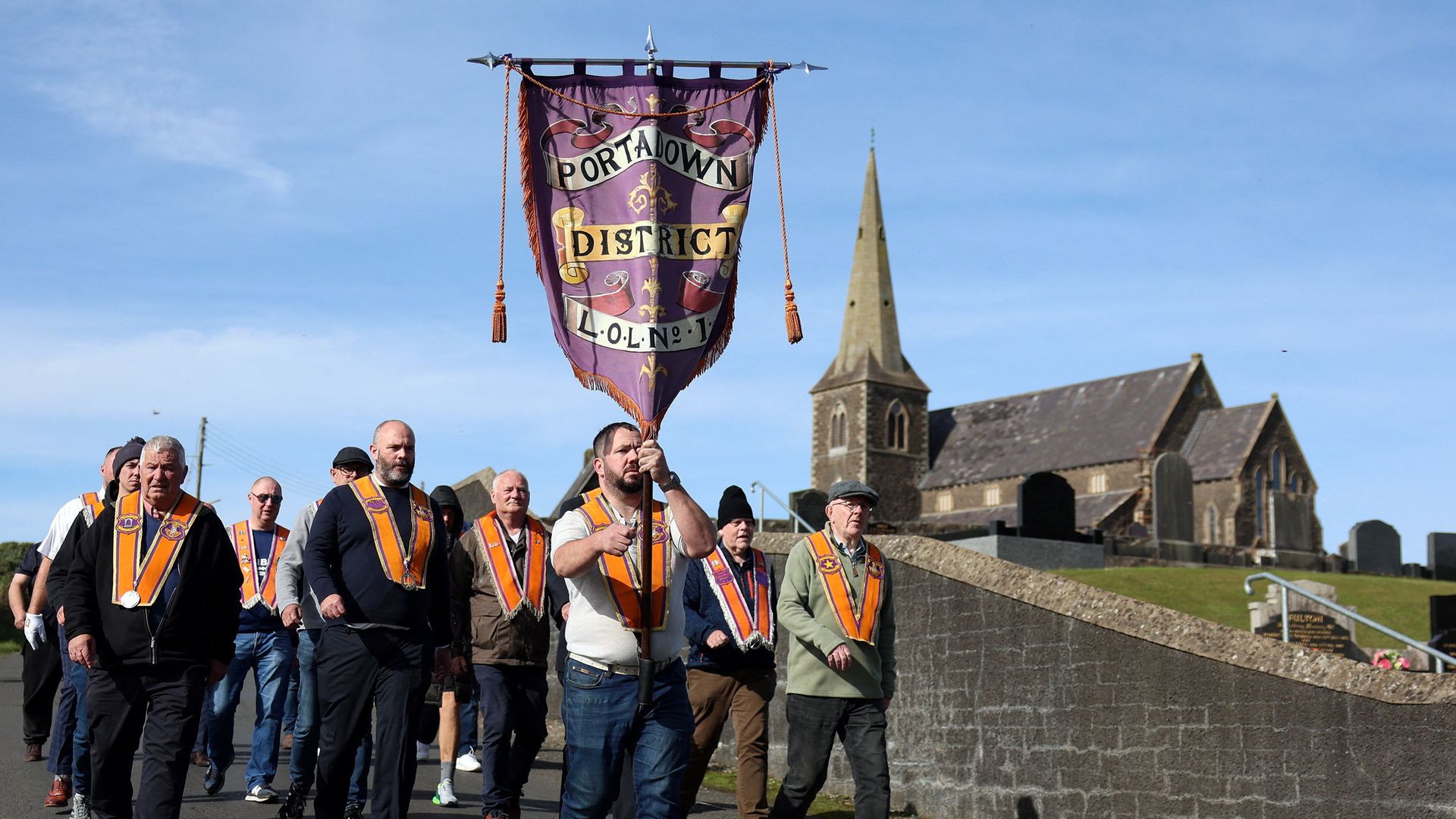
Every July, the media machine grinds into motion with clockwork predictability. Cameras point at the earthen berms of Portadown, microphones capture the rhythmic thumping of lambeg drums, and commentators wringing their hands talk about ancient hatreds, intractable divisions, and the eternal clash of cultures over the Drumcree parade ban. The Orange Order issues its ritualistic calls for urgent meetings. Politicians issue stern, hollow appeals for calm.
It is the oldest form of political theater in Western Europe. And almost everyone commenting on it is looking at the wrong thing entirely.
The lazy consensus treats Drumcree as a religious dispute, a stubborn community row over a strip of asphalt known as the Garvaghy Road. That narrative is comforting because it fits neatly into the historical box marked Northern Ireland Conflict. It suggests that if we just had better cross-community dialogue, or more sensitive mediation, or a different formula for parading rights, the problem would dissolve.
That view is entirely wrong. Drumcree has ceased to be about religion or even traditional heritage. It is a managed friction point, an annual stress test for political leverage where both institutional leadership and local actors maintain a controlled burn to serve entirely modern institutional incentives.
Let us look at the mechanics of how this apparatus actually functions.
When the Parades Commission blocks the march down the Garvaghy Road, the immediate reaction from the Orange Order hierarchy follows a rigid script. Outrage is expressed. Meetings are demanded. The rhetoric invokes civil rights, cultural suppression, and the erosion of British identity. To the casual observer watching from London or Dublin, it looks like a genuine crisis of minority rights.
Examine the structural reality beneath the surface. The leadership of the Institution does not want an unmanaged riot, nor do they genuinely expect a sudden capitulation from the state. A riot erodes middle-class suburban support and hands narrative control straight to opponents. Complete capitulation, on the other hand, removes the annual mobilizing crisis that keeps local lodges active, funded, and emotionally invested. The standoff occupies a precise sweet spot of perpetual grievance. It is a pressure valve that converts abstract cultural anxiety into concrete organizational cohesion.
On the other side of the barricades, the dynamic is identical. Resident groups and nationalist political operators treat the annual blockade not as a security challenge, but as an indispensable mobilization tool. A quiet summer on the Garvaghy Road is a nightmare for organizers who rely on the threat of sectarian encroachment to maintain community discipline and electoral loyalty.
This is why calling for urgent meetings is an exercise in political pantomime. You cannot negotiate a solution to a problem that neither side actually wants solved.
To understand why this ritual persists, we have to strip away the sentimental veneer of heritage preservation. The Orange Order loves to frame its right to march as an ancient liberty, stretching back centuries across the Ulster landscape. Historically speaking, mass marching as a synchronized, confrontational display through contested territory is largely a nineteenth-century invention designed to assert territorial dominance, not preserve ancient liturgy. The modern institution inherited a complex political legacy, but it calcified its tactics in an era before mass communication, when controlling physical space was the primary way to project political power.
Today, controlling physical space for three hours on a Sunday morning in Portadown changes zero economic realities, creates no jobs, and alters no constitutional statutes. Yet millions of pounds in policing costs are burned annually to secure a stretch of suburban grass and wire.
The real cost of this perpetual motion machine is the economic stagnation of the very towns where these rituals play out. Look at Portadown town center or the surrounding districts. While leadership corps argue over parade routes, commercial investment bypasses areas branded as permanent flashpoints. Capital hates unpredictability. When global or even domestic investors see annual images of barbed wire, armored Land Rovers, and confrontation, they allocate their funds elsewhere. The irony is staggering: an organization nominally dedicated to defending a specific political status quo actively harms the local prosperity of its own rank-and-file members through theatrical instability.
Let us dismantle another persistent myth: the idea that younger generations are stepping up to inherit this specific brand of grievance with the same fervor. They are not. Walk through the housing estates of mid-Ulster, and you will find that digital economies, global entertainment, and everyday economic survival have largely crowded out the obsessive parochialism that kept older generations locked into the marching calendar. The crowd at Drumcree grows older every single year. The leadership knows this. That is precisely why the rhetoric becomes more desperate, the press releases more urgent, and the demands for immediate meetings more theatrical. When a movement realizes its cultural monopoly is expiring, it turns up the volume on its loudest amplifier.
The state apparatus is equally complicit in maintaining this loop. The Police Service of Northern Ireland spends millions every July canceling leave, deploying specialist units, and managing traffic diversions around a single church hill. It is institutional capture by inertia. No Chief Constable wants to be the person who breaks the mold and radically alters the security posture, because the blame for any resulting unrest falls squarely on their desk, while the credit for long-term peace is distributed among politicians who contributed nothing. So the choreography repeats.
If you want to fix the crisis at Drumcree, you stop treating it as a political dispute requiring mediation and start treating it as an organizational relic past its expiration date. You stop granting it front-page oxygen. You let the meetings happen in empty rooms, away from microphones.
Until the participants on both sides realize that the drama is the disease, the ritual will continue to eat the future to feed the past. The drums will roll, the statements will fly, and nothing will change—because in the economy of grievance, keeping the wound open is the only way to stay in business.