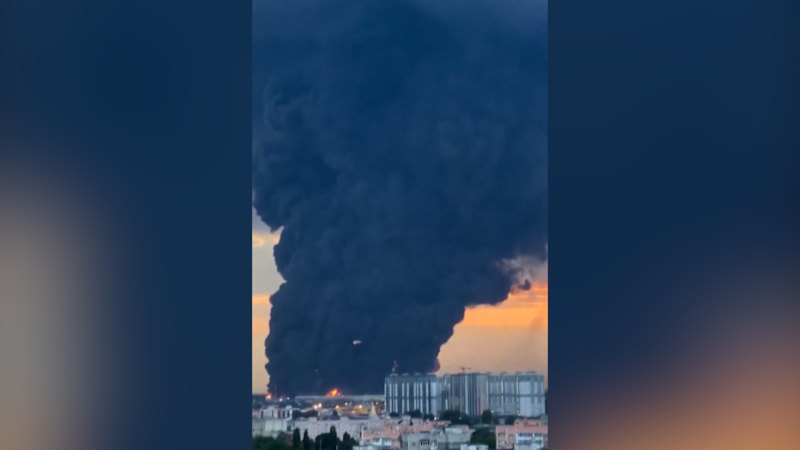
Western media loves a David versus Goliath narrative. A Ukrainian military drone swarm hits the warehouse infrastructure of Russia's largest online retailer, Wildberries or Ozon, and instantly the headlines scream about economic crippling, supply chain collapse, and the impending failure of the Russian consumer economy.
It makes for great clickbait. It fits neatly into a comfortable geopolitical narrative. It is also a fundamental misunderstanding of modern logistics, digital resilience, and how wartime consumer markets actually operate.
I have spent decades analyzing supply chain infrastructure and the mechanics of digital trade during crisis events. When you look past the sensationalized headlines and examine the actual operational data, a radically different picture emerges. Cyberattacks and physical drone strikes on e-commerce giants do not cripple state power. In fact, they inadvertently force these platforms to build bulletproof distribution models that make them far more resilient than their Western counterparts.
Stop looking at these attacks as strategic victories that bring an adversary to its knees. They are operational speed bumps—and expensive lessons in industrial hardening.
The Lazy Consensus on Supply Chain Disruption
The mainstream narrative relies on a single, flawed assumption: e-commerce platforms are fragile, hyper-centralized domino setups where knocking out one massive fulfillment center triggers a total operational freeze.
That logic belongs in 2005.
Modern e-commerce architecture, particularly in regions operating under severe economic pressure, is built on extreme redundancy. When a strike impacts a major fulfillment hub in Western Russia, the immediate public reaction is to assume millions of citizens are suddenly cut off from goods, sparking domestic unrest.
Here is what actually happens within two hours of an impact:
- Dynamic Rerouting: The platform’s logistics algorithms automatically reroute incoming inventory to secondary regional hubs outside the strike radius.
- Micro-Fulfillment Activation: Decentralized pick-up points (PVP Networks)—which populate almost every block in major Slavic cities—become localized distribution nodes, drawing from smaller regional caches rather than mega-warehouses.
- Inventory Absorption: Top-tier retailers hold redundant safety stock across hundreds of distributed facilities. The loss of a single site rarely destroys more than 2% to 4% of active regional stock.
The media focuses on the smoke rising from a warehouse roof. They ignore the code executing in the background that shifts order fulfillment to three neighboring facilities before the fires are even extinguished.
Why Physical Damage Fails to Break Digital Marketplaces
Imagine a scenario where a drone strike completely obliterates a 100,000-square-meter fulfillment center, destroying tens of millions of dollars in inventory. The headline writers call it a devastating blow.
To a platform generating tens of billions in gross merchandise value (GMV), that loss is an annoying write-off, fully covered by state-backed or private war-risk insurance frameworks created specifically for this operating environment.
The Myth of Consumer Panic
The broader strategic argument claims that striking consumer infrastructure breaks civilian morale. If people cannot get their electronics, clothes, or household goods, they will grow disgruntled with the war effort.
This completely misjudges consumer psychology under conflict.
When a nation's primary retail platform experiences a localized outage or delivery delay:
- Demand Shifts, It Does Not Disappear: Buyers do not revolt; they refresh the app. If Wildberries is down for six hours, traffic spills over to Ozon or Yandex Market.
- Friction Is Normalized: Populations living in conflict environments adapt instantly to extended delivery windows. A delay shifting from one day to three days does not provoke political outrage; it is treated as normal life.
- Local Sellers Adapt: The hundreds of thousands of independent third-party sellers on these platforms do not stop operating. They simply split their inventory across multiple regional marketplaces to hedge risk.
By treating consumer e-commerce like a military target, attackers are attempting to play an asymmetric game with a symmetric asset. You cannot decapitate a cloud-based network with a physical warhead unless you can strike every server rack, distribution hub, and delivery vehicle simultaneously.
The Real Winner: Platform Hardening
Here is the uncomfortable truth that military strategists and defense analysts refuse to admit: targeted strikes on commercial infrastructure act as a forced evolutionary stress-test.
Every time a marketplace faces a physical or cyber disruptor, it identifies every single point of failure in its system and fixes it.
Attack Occurs ➔ Localized Damage ➔ System Shock ➔ Automatic Rerouting ➔ Protocol Hardening
When you attack an e-commerce giant, you do not destroy its capability; you force its engineering teams to build better fault tolerance. They migrate database clusters away from targeted physical zones. They diversify logistics partners. They automate supply chain rerouting to a degree that peacetime Western retailers like Amazon or eBay have never had to attempt.
I have watched Western firms spend hundreds of millions trying to simulate supply chain disasters in controlled environments to test their contingency protocols. Russia’s marketplace operators are receiving those real-world stress tests every single week—for free. The result is not an industry on the verge of collapse, but a hyper-hardened logistics ecosystem capable of operating under conditions that would completely paralyze European or American retail networks.
The Downside of the Hardened Marketplace
To be fair, this forced evolution is not free. The contrarian view must acknowledge the massive hidden costs absorbed by the broader economy.
Hardening a digital and physical supply chain requires enormous capital expenditure:
- Soaring Logistics Costs: Distributing inventory across dozens of smaller hubs instead of one centralized mega-warehouse inherently lowers operational margins.
- Labor Shortages: Constant rerouting and manual oversight require more human oversight in a labor market already strained by military mobilization.
- Inflationary Pressures: Increased insurance premiums, security costs, and redundant shipping channels inevitably get passed down to the end consumer.
This model is inefficient. It sacrifices maximum profit for raw survival. But that is precisely the point mainstream analysts miss: in war, efficiency is replaced by survivability. Expecting an e-commerce network to fail because its profit margins shrink or its logistics become clunky is a fundamental misread of wartime economics.
The Strategic Miscalculation
The insistence on viewing strikes on online retailers as major economic victories reflects a broader conceptual failure in modern conflict analysis. Western commentators confuse commercial inconvenience with strategic paralysis.
If the goal of hitting a nation’s largest online retailer is to break its economic engine, the strategy is a failure. You do not stop a wartime economy by temporarily disrupting the distribution of consumer electronics and fast fashion. You merely force the market to reorganize, adapt, and build stronger armor for the next strike.
The headlines will keep celebrating every strike on a distribution center as a game-ending blow. The data, however, tells a very different story. The marketplace continues to process orders, the trucks keep running, and the infrastructure grows tougher with every hit.
Stop measuring economic damage by the size of the fire in the warehouse. Start measuring it by whether the system boots back up the next morning. It almost always does.