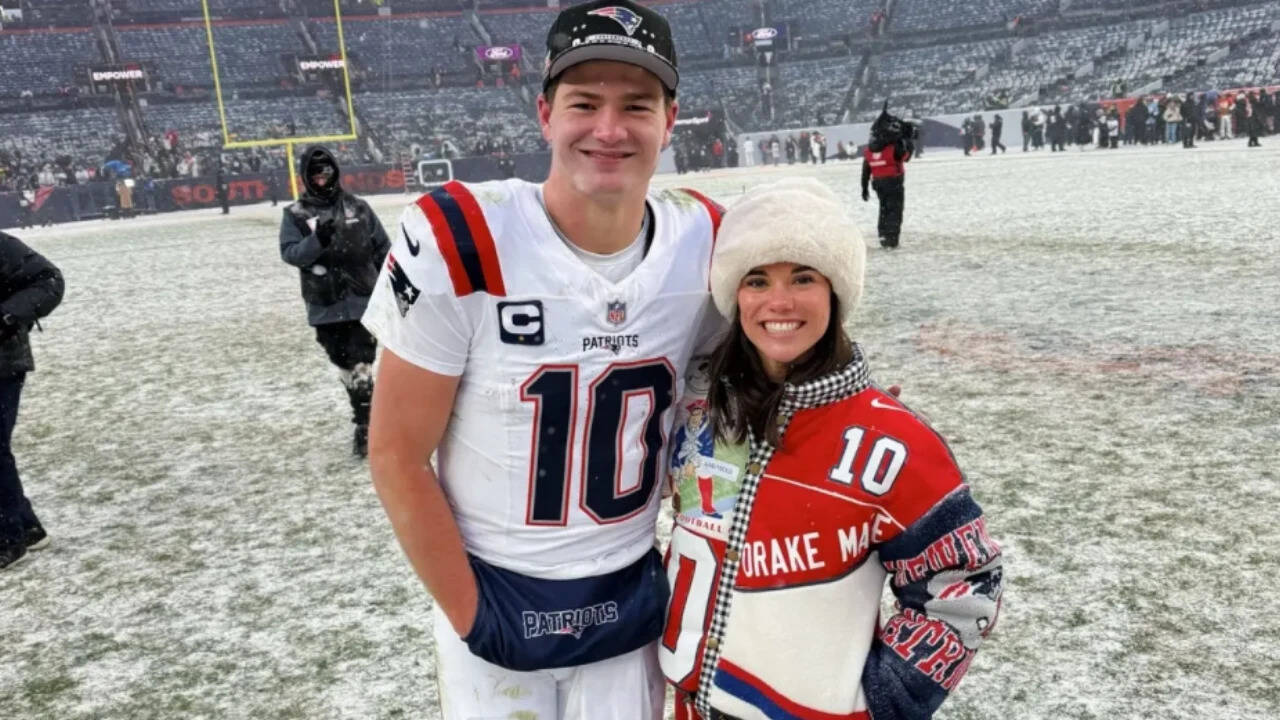
Principal Tonya Costa stared at her email inbox and assumed it was spam. When you have spent decades running a public school, random messages offering money usually turn out to be too good to be true. This one wasn't. New England Patriots quarterback Drake Maye and his wife, Ann Michael, wanted to clear out every single classroom wish list at Alfred Lima Sr. Elementary School in Providence.
They didn't want a massive press conference. They didn't demand cameras rolling for a viral TikTok. They just quietly dropped $15,000 to cover all 54 teachers and support specialists.
Let's look at why this kind of intervention matters, what it says about modern public education funding, and how athletes are shifting their community impact.
The Reality Behind Alfred Lima Sr. Elementary
If you think teachers buying their own dry-erase markers and tissues is an exaggeration, you haven't stepped foot in a Title I school recently. At Alfred Lima Sr. Elementary, 98 percent of the students rely on free or reduced-price lunches. Over 400 kids are multilingual learners navigating a curriculum in a language that might not be spoken at home.
School budgets are tight everywhere, but in districts serving low-income families, the funding gap usually gets plugged by the educators themselves. Teachers routinely spend hundreds of dollars out of their own pocketchecks just to make sure kids have basic notebooks, pencils, and sensory tools.
When the MayeDay Family Foundation stepped in, the $15,000 total translated to roughly $200 per educator. That might not sound like a fortune in professional sports terms, but in a primary school classroom, it's the difference between scraping by and having actual resources. Teachers weren't buying luxury items; they were grabbing the core gear needed to teach effectively on day one.
How The Secret Got Out
Costa didn't believe the initial outreach. She forwarded the note to her assistant vice principals, Kelli Goodwin and Elizabeth Melendez, assuming they would all have a good laugh and get back to work. After doing some digging, they realized the contact was legitimate.
Instead of sending an impersonal memo, the administration decided to stage a fake emergency meeting.
Teachers filed into the room expecting bad news or administrative red tape. Instead, they were told that every item on their Amazon wish lists had been fully paid for. Staff members started crying. After decades in the district, Goodwin noted that kind of unprompted, large-scale relief simply doesn't happen every day.
To show their appreciation, the school is already organizing a "Maye Day" event to bring the couple back so the kids and staff can say thank you in person.
Beyond The Gridiron Philanthropy
Athletes starting foundations is nothing new. Too often, though, those non-profits exist as tax shelters or vanity projects that issue vague press releases once a quarter.
Drake and Ann Michael Maye launched the MayeDay Family Foundation with a much more grounded focus. Whether they are hosting celebrity softball games raising half a million dollars or quietly funding supplies for an elementary school in Rhode Island, the pattern points toward direct, pragmatic assistance.
When public figures use their platform to target underfunded urban schools, it shifts the conversation away from empty praise for educators and toward actual resource allocation. Teachers don't need another pizza party or a "Teacher Appreciation Week" social media graphic. They need the financial weight lifted off their shoulders so they can focus on teaching.
If you want to support local educators, skip the generic gift cards and look up specific classroom supply registries for Title I schools in your own backyard. The need is constant, and you don't need a quarterback's salary to make a dent.