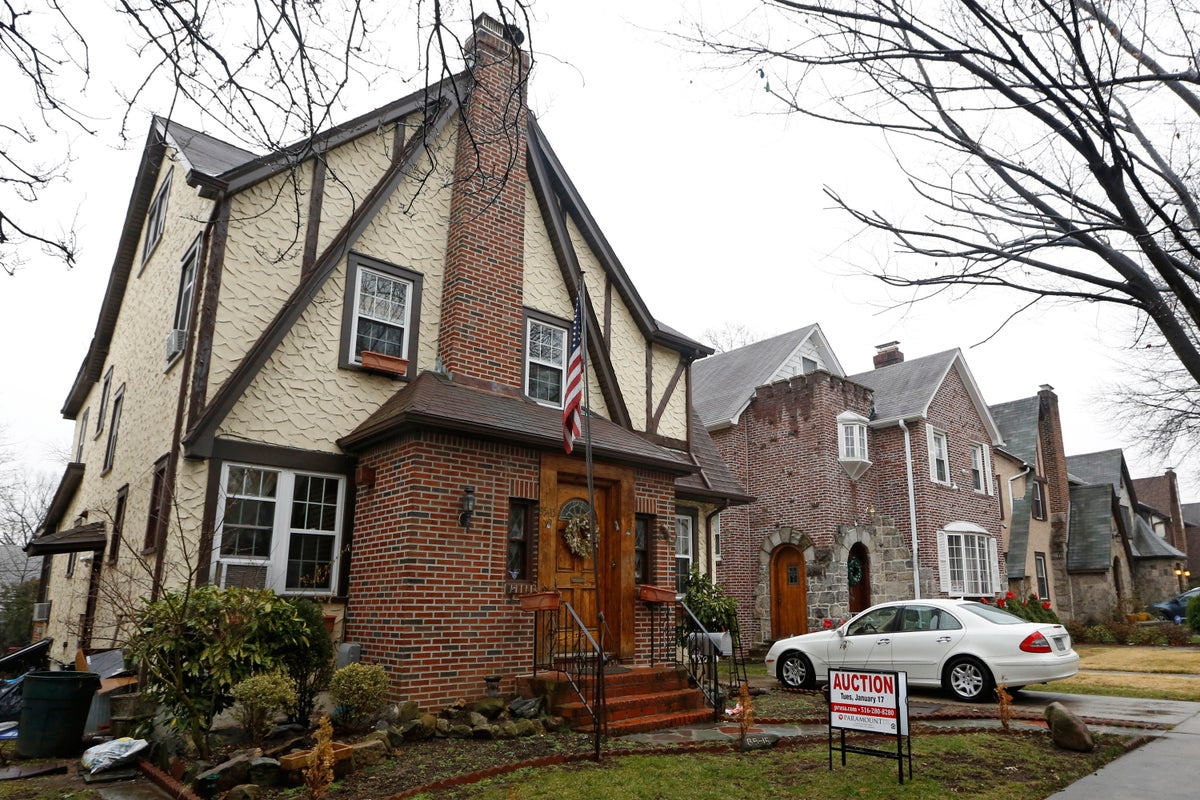
Real estate assets tied to famous figures rarely follow standard market logic, but few properties experience the wild financial whiplash of Donald Trump’s boyhood home in Queens. Located at 85-15 Wareham Place in the affluent Jamaica Estates neighborhood, this five-bedroom Tudor-style house was built in 1940 by the president's father, Fred Trump. Over the last decade, the property has bounced through multiple high-stakes sales, dramatic price plunges, and aggressive modern overhauls.
If you look past the political headlines, the story of this house reveals how celebrity association distorts local housing economics, turning an ordinary suburban New York property into a speculative financial rollercoaster.
The Roots in Jamaica Estates
Long before it became a political curiosity, the house sat quietly in Jamaica Estates, a Queens enclave known for its winding streets and upscale Tudor and colonial homes. Fred Trump constructed the house before moving the family to a larger mansion nearby. Donald Trump spent his early childhood years here, later describing the neighborhood in interviews as a quiet, safe oasis compared to other parts of the city.
For decades, the property changed hands quietly through ordinary suburban transactions. That all changed the moment Trump launched his political ascent. Speculators realized that anything tied to his upbringing carried intrinsic novelty value for collectors and investors.
Wild Price Swings and Speculative Flips
The property’s market trajectory reads like a case study in speculative mania. Shortly after the 2016 election, the house sold for $1.39 million before flipping again for $2.14 million on Inauguration Day in 2017. Investors hoped the presidential connection would turn the suburban house into a high-yield tourist asset or a museum-style trophy piece.
Reality eventually set in. By early 2025, the market pendulum swung hard in the opposite direction. The house dropped significantly, selling for just $835,000, shocking market observers who remembered its peak valuation. Years of sitting as a short-term rental property and inconsistent maintenance had taken a toll, leaving the interior in desperate need of revival.
The Half Million Dollar Rescue
Real estate developer Michael Lin stepped in after the steep 2025 drop, purchasing the neglected structure. According to reports from the time, the building lacked functioning utilities and proper upkeep. Lin poured roughly $500,000 into an extensive eight-month interior overhaul.
The renovation stripped away aging components to install luxury finishes designed to appeal to modern buyers. Crews leveled floors, laid down herringbone hardwood patterns, built spa-style bathrooms, and installed a chef-caliber kitchen equipped with multiple ovens.
Following this heavy investment, the house bounced back onto the market and recently sold for $1.93 million. While it didn't quite eclipse its 2017 high-water mark of $2.14 million, the sale proved that combining architectural updates with strong historical novelty can rescue even a severely depreciated asset.
Properties tied to historic figures live in a strange gray zone between traditional real estate valuation and pure memorabilia. Buyers aren't just paying for square footage or neighborhood school districts; they're paying for a tangible piece of political history. Whether the new owner treats the Wareham Place house as a quiet suburban residence or holds onto it as a unique piece of American presidential lore, the house remains one of the most eccentric footnotes in New York real estate history.