Every time Washington commentators start hyperventilating about Donald Trump dropping the hammer on Tehran, the script gets predictable. The mainstream pundits trot out the same tired talk about carrier strike groups, phantom red lines, and imminent military annihilation. They treat geopolitics like a high school debate club where loud threats automatically translate into kinetic action.
They are missing the entire game board.
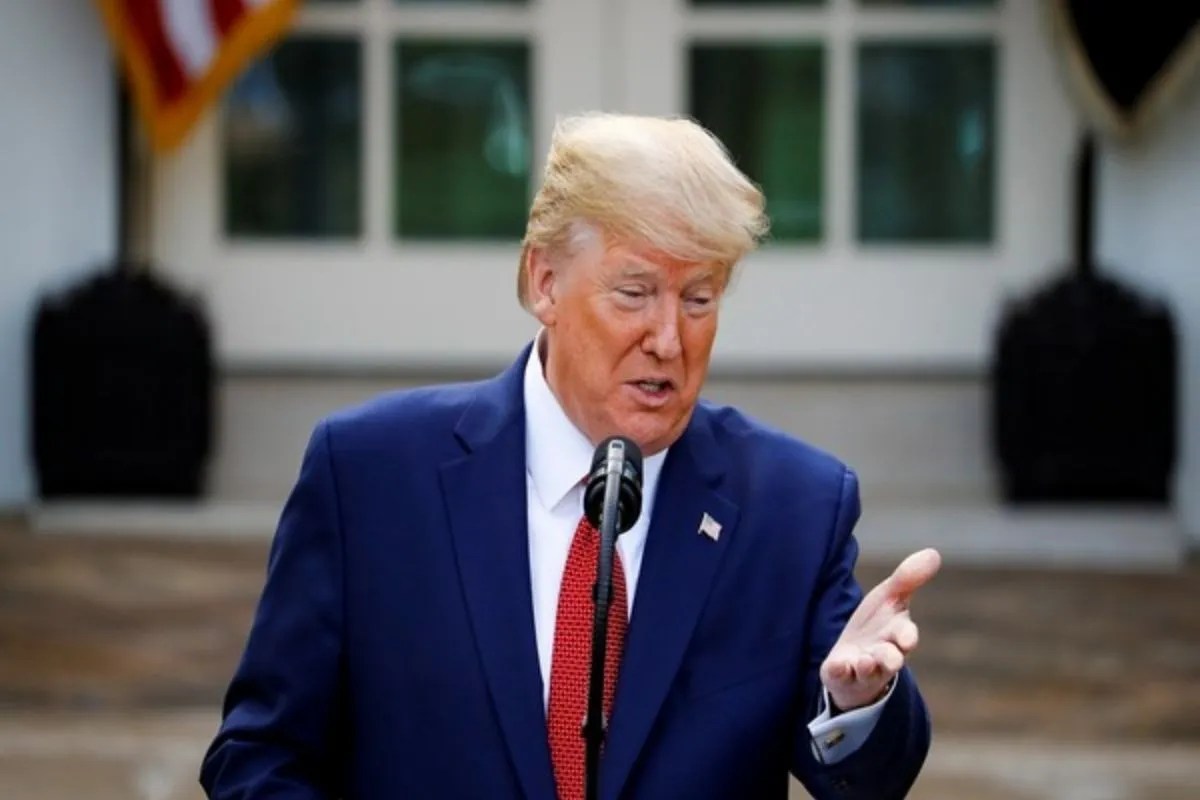
Trump is not a neoconservative ideologue looking to recreate the quagmires of Iraq or Afghanistan. He is a transactional real estate guy who looks at balance sheets, leverage, and cost curves. When he issues sharp warnings to Iran, the consensus treats it as a prelude to war. In reality, it is a masterclass in economic strangulation paired with quiet exhaustion. Tehran does not need to be bombed back to the stone age because it is already being crushed by a mechanism far more surgical than a Tomahawk missile: structural economic isolation married to domestic fracture.
Let us strip away the theater. The lazy consensus assumes that a second Trump administration means immediate escalation, burning oil tankers in the Strait of Hormuz, and full-scale regional conflagration. That narrative sells clicks on cable news, but it collapses the second you examine how modern statecraft actually operates under pressure. Trump knows that kinetic warfare in the Middle East is bad for business, bad for inflation, and terrible for political capital.
Instead, look at the architecture of the maximum pressure campaign. It was never about regime change through shock and awe. It was about draining the regime's foreign exchange reserves until the clerical establishment had to choose between funding proxy militias abroad or keeping bread on the table at home.
The Fallacy of the Military Binary
The Western media loves a binary choice: either you launch airstrikes or you capitulate. This is a false choice designed by defense contractors and think-tank pundits who measure influence in ordnance tonnage.
When Trump tells Tehran that a standoff will end badly for them, he is not signaling an impending invasion. He is signaling the tightening of a financial noose. The Iranian rial has spent years in freefall, driven not just by sanctions, but by systemic structural corruption within the Islamic Revolutionary Guard Corps. The IRGC operates as a parallel economic state, swallowing manufacturing, telecommunications, and smuggling networks. When sanctions bite, they do not hurt the supreme leader or the military elite; they crush the middle class, the shopkeepers, and the youth who are already primed for systemic revolt.
Airstrikes unify a fractured population against an external enemy. Economic strangulation, by contrast, turns the population's anger inward against the ruling mullahs. Trump understood this in his first term, and he understands it now. The threat of force is just the noise; the real weapon is the complete disconnection of Iran's banking sector from global liquidity.
Why Tehran Cannot Afford a Real Fight
Let us look at the structural reality inside Iran. For decades, the regime has subsidized a sprawling regional axis of proxies across Lebanon, Yemen, Syria, and Iraq. That network was expensive when oil was trading at one hundred dollars a barrel. Today, with Chinese demand slowing down, domestic infrastructure crumbling under rolling blackouts, and water scarcity threatening major urban centers, the math is brutal.
The Iranian state is bleeding cash. Every dollar spent maintaining Hezbollah or the Houthis is a dollar pulled away from stabilizing a domestic economy where inflation routinely eclipses fifty percent.
When outsiders look at Iran, they see a monolith chanting "Death to America." When insiders look at Iran, they see a fragile gerontocracy terrified of its own citizenry. The 2022 Mahsa Amini protests were not an aberration; they were a preview of the inevitable collapse of a legitimacy model built entirely on revolutionary nostalgia that the under-thirty demographic simply does not care about.
Trump's posture recognizes this internal rot. You do not need to overthrow a regime that is actively eating itself from the inside out. You simply need to refuse to throw it a lifeline.
The China Variable
The lazy consensus also assumes that China will bail Iran out indefinitely through discounted oil purchases. Beijing buys Iranian crude, sure, but Chinese energy firms are pragmatic. They calculate risk using cold, hard actuarial tables.
Beijing’s primary economic interests lie in global trade stability and access to Western markets. If secondary sanctions on Iranian oil transactions become radioactive enough, Chinese state-owned enterprises quietly scale back. They prefer dealing with Gulf monarchies that offer stable investments and massive infrastructure contracts over a rogue state whose banking system is a black hole of illicit finance.
Iran is a junior partner in Beijing’s grand strategy, useful only insofar as it keeps Washington distracted in the Persian Gulf. The moment Tehran’s instability threatens China's broader economic corridors, Beijing will cut its losses without a second thought.
The Real Danger Is Not Escalation, It Is Irrelevance
The irony of the current geopolitical standoff is that Iran's leverage is shrinking by the month. Its nuclear program has advanced, yes, but enrichment capability without a functioning economy is just an expensive way to boil water.
When pundits warn that Trump's unpredictability will trigger an accidental war, they underestimate the sheer calculation behind his bluster. Unpredictability is a deterrent strategy, not a suicide pact. By keeping Tehran perpetually off balance, guessing whether the next move is economic, diplomatic, or cyber-offensive, Washington forces the Iranian leadership into a state of permanent defensive paralysis.
Tehran cannot afford a massive conventional war, and Washington has zero appetite to fund another endless desert occupation. Both sides know the boundaries of the sandbox.
The real story in the Middle East is not about missiles flying across borders. It is about a fading ideological regime realizing, too late, that the global economy has moved on without them, leaving them trapped behind a wall of their own making while their own people demand the keys back.