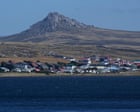
International alliances can fracture over bruised egos and uncooperative foreign policy. Donald Trump's return to the White House has brought transactional diplomacy to a new extreme, where geopolitical support is traded like currency and old grievances are weaponized. Right now, that means the Falkland Islands—known as the Malvinas in Argentina—are suddenly back on the geopolitical chopping block.
If you are wondering why Buenos Aires is suddenly smelling blood in the water, look no further than Washington. President Javier Milei has aggressively seized on comments made by Trump regarding the South Atlantic archipelago. By signaling that the United States might abandon its decades-old neutrality on the sovereignty of the islands, Trump has handed Argentina a diplomatic weapon. More importantly, he has delivered a sharp warning shot to London.
The Anatomy of a Grudge
Why would the White House upend a decades-long diplomatic stance over a collection of windswept islands thousands of miles from the US mainland? The answer is simple: payback.
British leadership declined to join US military actions against Iran, staying strictly outside the desired coalition. To a leader who views foreign policy through absolute loyalty, that hesitation was unforgivable. Trump's foreign policy relies heavily on personal alignment and transactional compliance. When allies step out of line, penalties follow.
Internal Pentagon discussions earlier leaked a telling strategy: Washington views its neutral posture on the Falklands as prime leverage. If Britain won't play ball on broader defense initiatives or NATO financial burdens, long-standing security arrangements suddenly become negotiable. Trump openly dodged questions about whether the US would come to Britain's aid in a renewed South Atlantic conflict, calling the whole dynamic "pretty sad".
Milei Seizes His Moment
For Javier Milei, this friction is an absolute gift. Domestically, his libertarian economic reforms and harsh austerity measures have taken a political toll, and his approval ratings have slipped. Rallying the public around the flag over the Malvinas is the oldest trick in the Argentine political playbook.
Milei used a nationally televised address, flanked by his entire cabinet in classic strongman fashion, to announce sweeping sanctions against companies involved in the Sea Lion oil project. This deep-sea drilling initiative, spearheaded by British firm Rockhopper Exploration and Israel's Navitas Petroleum roughly 140 miles north of the islands, represents a massive economic threat to Argentina's long-term claims.
By threatening to bar any corporate entity, supplier, or shareholder connected to the oil project from doing business within Argentina, Milei is trying to choke off the islands' financial independence. He also pledged funding for a new naval base in Tierra del Fuego. He wants a permanent military posture in the South Atlantic, betting that Washington's shifting stance will keep Britain isolated.
The Reality of the Special Relationship
The "special relationship" between Washington and London has weathered plenty of storms over the decades, but the current strain is different. It is deeply personal and entirely unpredictable.
British officials insist that sovereignty rests with the UK and that the right of the roughly 4,000 islanders to self-determination is non-negotiable. They point to the 2013 referendum where the population overwhelmingly voted to remain a British overseas territory. Downing Street knows Argentina lacks the military capability for a successful amphibious invasion today, but economic strangulation and diplomatic erosion are entirely different threats.
When a global superpower withdraws its tacit backing, the power dynamic shifts. London is currently facing compounding domestic, economic, and demographic pressures, leaving the Treasury scrambling to meet defense targets while managing foreign friction.
Diplomacy rarely operates in a vacuum. When a US administration decides that loyalty trumps historical alliances, even undisputed islands thousands of miles away can become collateral damage in a transatlantic feud. Keep an eye on how corporate investors respond to Buenos Aires' new sanction threats, because the economic squeeze on the South Atlantic has only just begun.