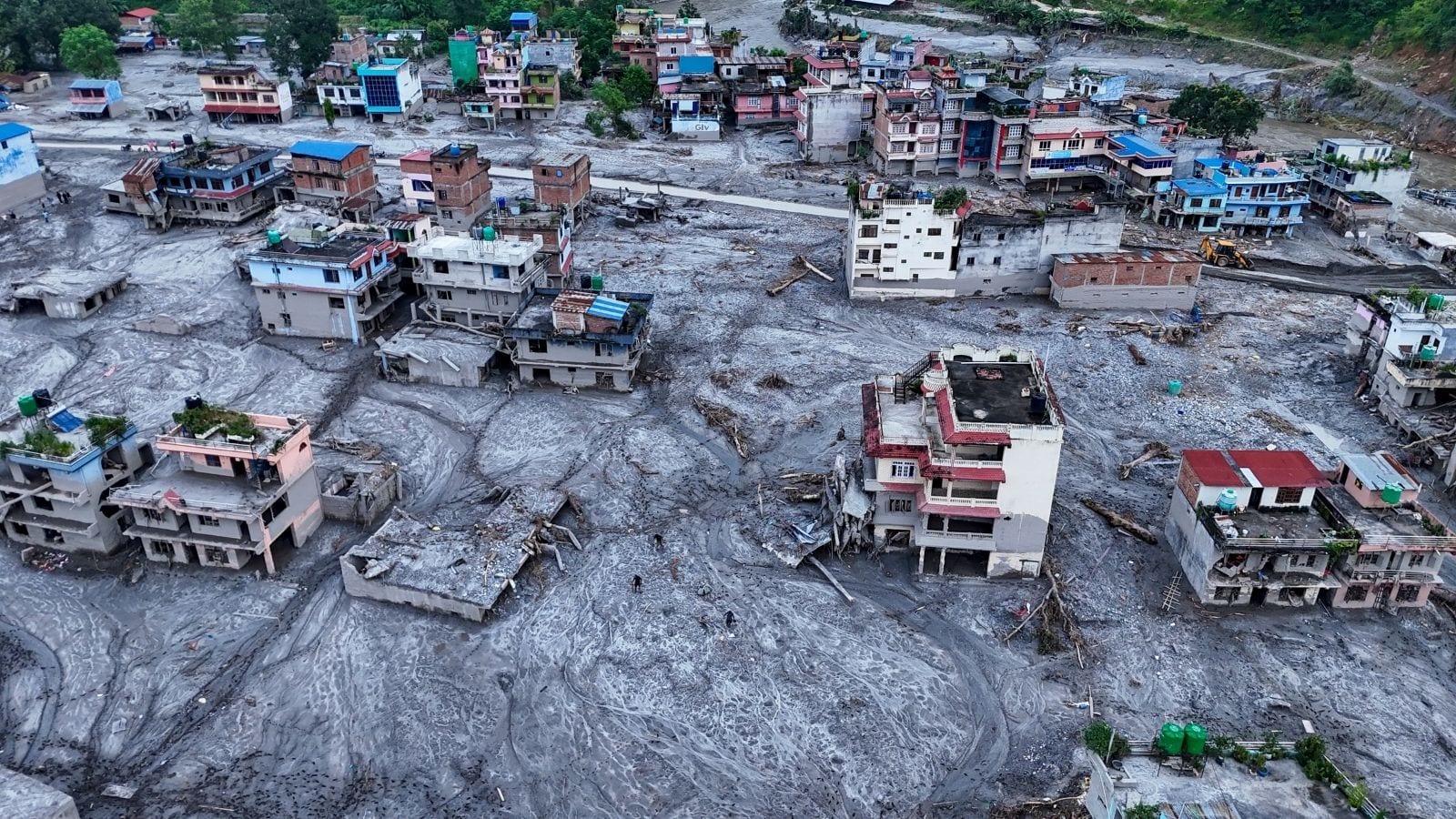
The catastrophic flash floods of late August across northern and central Nepal exposed critical vulnerabilities in regional disaster management systems, recording a death toll of 939 alongside nearly 4,000 missing individuals. Triggered by an ice-and-rock avalanche near the Nepal-Tibet border, the disaster transformed narrow river valleys into high-velocity debris flows that systematically disabled infrastructure nodes. Analyzing this event requires moving beyond surface-level casualty reporting to examine the structural mechanics of high-altitude glacial failures, the operational bottlenecks of subterranean rescue missions, and the macro-logistics of international disaster response.
The Physical Vector and Hydraulic Force Multipliers
The initiating event occurred at high altitude, where an ice-rock mass collapse descended into the Bhotekoshi and Lhende Khola river systems. This mechanism acts as a hydraulic force multiplier. Unlike standard monsoon riverine flooding, which accumulates gradually through continuous precipitation, a glacial lake outburst or ice avalanche introduces an instantaneous mass of solid and liquid volume into a constricted topographic channel.
As the torrent cascades through steep gradients, it entrains sediment, boulders, and pulverized infrastructure, transforming water into a high-density debris flow. The kinetic energy scale increases exponentially with velocity and mass. When this slurry impacts downstream river corridors, it exerts lateral shear stresses capable of severing reinforced concrete bridge pylons, eroding highway foundations, and overwhelming sediment traps at engineering facilities.
Engineering assets situated within these narrow corridors operate under a high-risk cost function. Hydropower installations, by necessity, occupy bottom-valley locations adjacent to riverbeds to maximize head and flow redirection. Consequently, these facilities function as primary impact sinks during extreme alpine events. The destruction of multiple stations and the entrapment of hundreds of project workers inside subterranean infrastructure corridors highlight the structural conflict between geographic energy harvesting and flash flood vulnerability.
The Subsurface Bottleneck in Engineering Rescues
Rescue operations following high-altitude debris flows face distinct operational constraints, most notably in subterranean extraction zones. When floodwaters breached regional hydropower project sites, hundreds of workers were trapped inside access tunnels and maintenance chambers.
Subsurface rescue protocols present three compounding operational variables:
- Atmospheric degradation, including oxygen depletion and toxic gas accumulation behind blocked portals.
- Structural instability, where seismic or hydraulic pressure shifts compromise tunnel integrity, risking secondary collapses during extraction.
- Logistical isolation, as damaged arterial roads prevent heavy excavation and lifting machinery from reaching remote valley mouths.
In response to blocked portals, emergency management agencies deployed controlled blasts to fracture obstructions and clear entry points. This approach requires high technical precision. Detonation shockwaves inside confined rock formations can destabilize adjacent geological strata, threatening both trapped personnel and rescue teams. The reliance on specialized heavy equipment—such as LiDAR for subterranean mapping, high-capacity drones for aerial reconnaissance, and specialized technical clearance gear—demonstrates how modern disaster response depends on advanced asset deployment under compressed timelines.
Forensic Logistics and Identification Impediments
As search operations transition from immediate extraction to recovery, municipal infrastructure faces severe operational strain. With an official death toll reaching 939 and thousands remaining unaccounted for, local medical institutions encounter critical capacity limits.
Extended exposure to high-velocity, sediment-laden water accelerates tissue decomposition and physical mutilation, rendering standard visual identification methods unreliable. This condition shifts the administrative burden entirely to advanced forensic identification frameworks. Effective Disaster Victim Identification (DVI) protocols require three synchronized components:
- Controlled chain-of-custody transport using specialized airtight containment materials to preserve biological evidence.
- High-throughput genetic profiling infrastructure, including dedicated DNA testing kits and operational laboratory support.
- Centralized data matching systems to cross-reference fragmented remains with external registries provided by foreign embassies and domestic households.
The inclusion of 590 foreign nationals from 39 countries among the missing population introduces diplomatic and consular complexity to the recovery phase. Foreign ministries must coordinate with dozens of distinct national jurisdictions, each maintaining unique legal thresholds for missing persons declarations, repatriation protocols, and forensic verification standards. Deploying specialized international forensic teams helps bridge immediate capacity deficits, yet the systemic lag between body recovery and positive identification remains a primary friction point for affected families.
Macro-Level Resource Allocation and Structural Resilience
The scale of the disaster exposed the limits of domestic disaster risk reduction frameworks, necessitating immediate external resource mobilization through international diplomatic channels. Sovereign disaster response mechanisms typically maintain reserve capacities calibrated for predictable seasonal events, such as monsoonal slope destabilization or localized riverine overflow. Low-probability, high-impact cascading events—such as high-altitude ice avalanches combined with multi-valley infrastructure destruction—exceed the baseline provisioning of local emergency stocks.
Procuring specialized capital assets under emergency conditions—such as portable belly bridges for severed transit links, heavy lift drones, and molecular forensic laboratories—reveals structural dependency on international supply chains. Domestic authorities must balance immediate triage with long-term infrastructure redesign. Rebuilding linear assets along vulnerable river corridors without modifying spatial planning parameters guarantees systemic failure during future high-altitude anomalies.
Future mitigation strategies require institutionalizing real-time satellite telemetry for high-altitude glacial monitoring, establishing automated early-warning sensors tied directly to automated valley siren arrays, and enforcing strict set-back zones for industrial and residential development along primary Himalayan drainage basins. Executing these structural shifts remains the primary operational mandate for regional administrative bodies seeking to insulate mountain economies from recurrent geophysical shocks.