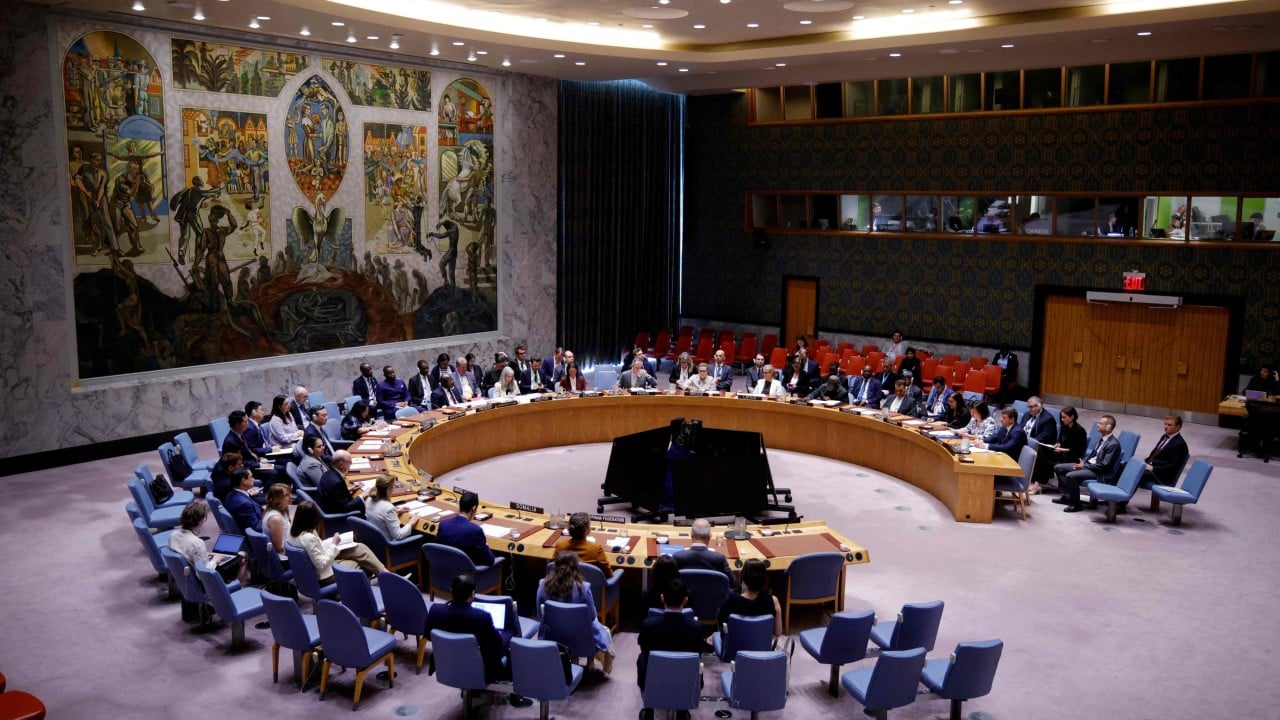
The headlines love a good walkout. They paint global politics like a high school cafeteria where the cool kids leave the table in dramatic huffs over broken rules. When the United States recently packed its papers and walked out on France during a United Nations human rights debate, the media rushed to write the predictable script. They called it a rift. They called it a diplomatic failure. They whispered about crumbling Western alliances.
They are completely wrong.
I have spent years watching the sausage get made behind closed doors in international bodies, and the prevailing narrative is a fairy tale written by people who have never negotiated a treaty higher than a parking ticket. The lazy consensus says that a walkout means communication has broken down. The reality? A walkout is often the only precise tool left when a multilateral forum turns into a theatre of cheap point-scoring.
Let us dismantle the myth.
The Illusion of Consensus in International Bodies
The United Nations is not a church choir. It is a collision chamber of competing sovereign interests, historical grudges, and domestic political survival tactics. When delegates gather in Geneva or New York, the default assumption among commentators is that everyone is striving for a harmonious, unified moral standard.
That is a dangerous delusion.
France wanted to grandstand on specific human rights enforcement mechanisms. The United States recognized that the framework being pushed was legally unworkable, strategically hypocritical, and designed entirely for domestic French political consumption rather than actual human protection. Staying in the room to offer polite, procedural objections lends illegitimate weight to a bad-faith motion.
Walking out is not a tantrum. It is a calculated punctuation mark. It is a refusal to validate a farce.
Imagine a scenario where a corporate board is hijacked by a faction pushing a disastrous restructuring plan based on fraudulent metrics. Sitting there nodding along while offering gentle amendments makes you complicit in the disaster. Standing up, slamming your notebook shut, and walking out sends a violent, unambiguous signal to the shareholders that you refuse to cosign garbage.
The Hypocrisy of Procedural Purity
Critics love to clutch their pearls over decorum. They argue that allies simply do not stage walkouts on each other in public forums. This assumes that an alliance requires absolute conformity of opinion at all times.
That is not an alliance. That is a cult.
Real geopolitical partnerships between major powers are built on shared strategic interests, mutual utility, and brutal realism—not on agreeing about every human rights sub-committee resolution. France and the United States disagree on agricultural subsidies, intelligence sovereignty, defense autonomy, and regulatory overreach every single week. A flashpoint at the UN is just where it bubbles over into the public eye because cameras happen to be rolling.
The real scandal is not that the United States walked out. The scandal is that diplomats spend millions of taxpayer dollars pretending that these procedural shouting matches matter more than real-world power distribution.
What the Critics Miss About Geneva Politics
Let us look at the mechanics of UN human rights bodies.
- Bloc Voting: Votes are rarely cast on the merits of a resolution. They are traded, bartered, and locked down by regional blocs months in advance.
- Moral Hazard: Authoritarian regimes routinely sit on human rights councils to shield themselves from scrutiny, turning the institution into a weapon against open societies.
- Performative Diplomacy: Western nations frequently fall into the trap of drafting resolutions that sound incredible on Twitter but possess zero enforcement teeth, satisfying domestic activists while changing nothing on the ground.
When France pushes a text within this ecosystem that creates perverse incentives or infringes upon operational security standards, Washington has two choices: water it down into meaningless bureaucratic slush, or reject the premise entirely. Walking out is the cleaner option.
The Cost of Polite Inaction
Diplomats are terrified of friction. They live in a culture where ruffled feathers are treated as crises. But history does not care about ruffled feathers. History cares about power, deterrence, and actual outcomes.
I have seen institutions blow millions on protracted committees that achieve nothing because everyone was too polite to tell the chair that their entire strategy was bankrupt. Polite inaction kills. It allows bad policies to fester under the cover of diplomatic consensus.
When the United States walked out, it disrupted the polite equilibrium. It forced every other delegation in that room to stop scrolling on their phones and calculate the actual cost of the resolution on the table. It turned a sleepy procedural rubber-stamping session into an emergency conversation about substance.
The Real Question Nobody Is Asking
People love to ask: "How can the US and France repair this diplomatic rupture?"
That question is fundamentally flawed. It assumes a rupture happened in the first place.
The correct question is: "Why do we continue to pretend that public multilateral bickering reflects the health of a deep, multi-century strategic partnership?"
The transatlantic relationship is not going to fracture because a few diplomats threw procedural elbows in a UN conference hall. Intelligence sharing continues. Joint naval patrols in the Indo-Pacific continue. Economic interdependencies remain locked in place. The diplomatic walkout is a ripple on the surface of a deep ocean.
Moving Beyond the Theatre
We need to stop treating international organizations like moral arbiters and start treating them for what they are: instruments of statecraft. Sometimes statecraft requires a handshake in a back room. Sometimes it requires walking out of the front door in plain view of the world.
The next time you see a headline about allies clashing at an international summit, do not panic about the state of global order. Look at who benefits from the noise, look at what substantive policy was actually being smuggled through the committee, and recognize that a clean break is almost always more honest than a dirty compromise.
Diplomacy is not about making everyone feel comfortable in the same room. It is about protecting your interests when the room catches fire.