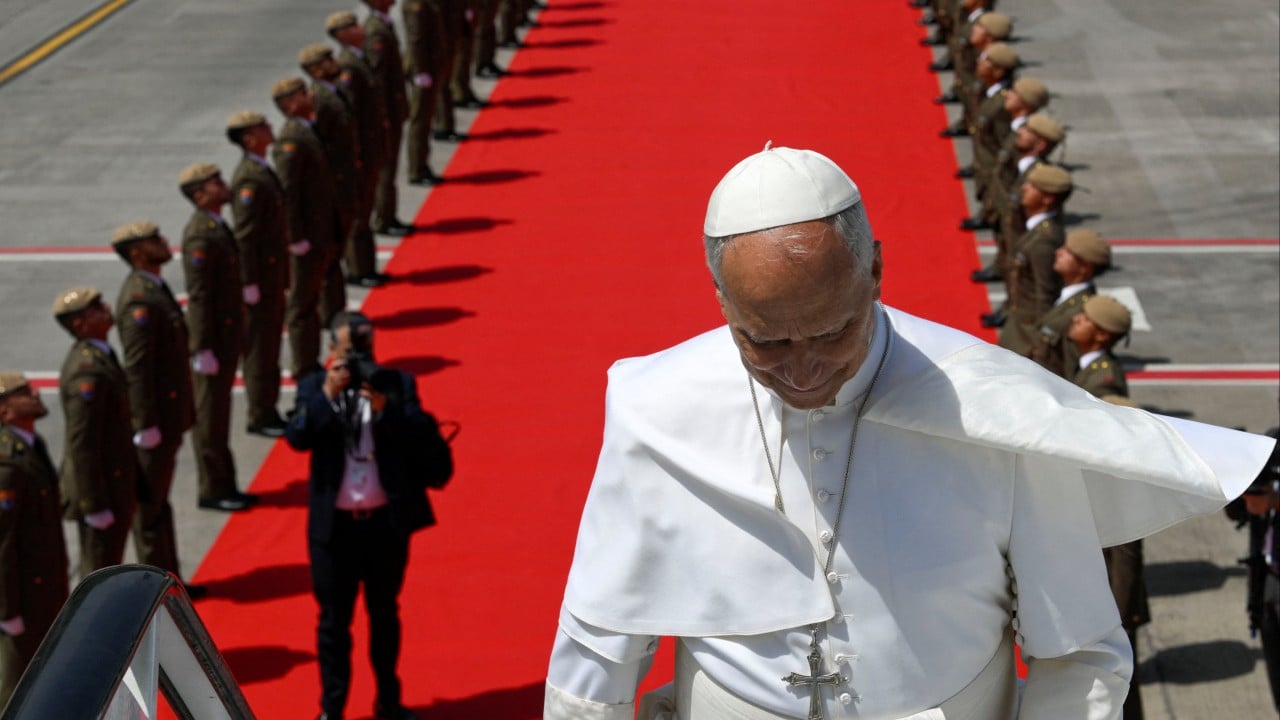
When mechanical failure strands a head of state on an airport tarmac, the ensuing scramble reveals the true state of international relations. The recent grounding of Pope Leo’s official aircraft in Rome could have triggered a logistical nightmare and a grueling delay for the Vatican delegation. Instead, a swift intervention from Madrid altered the itinerary. King Felipe VI of Spain personally authorized the deployment of a Spanish royal military transport to ensure the Pontiff reached his scheduled summit in Toledo on time.
This was not a spontaneous gesture of neighborly goodwill. It was a calculated, highly coordinated exercise in airspace diplomacy. While initial reports framed the incident as a simple act of chivalry, the reality involves complex international aviation protocols, bilateral security agreements, and the unspoken hierarchies of European soft power.
The High Stakes of VIP Aviation Failures
Modern state visits operate on razor-thin margins. When the Vatican’s chartered Airbus suffered a catastrophic hydraulic failure during pre-flight checks, it threw a multi-million-euro security apparatus into chaos. Airspace windows for heads of state are tightly scheduled. Missing a designated slot can disrupt commercial aviation corridors across the entire Mediterranean.
The Vatican maintains no permanent, dedicated long-range military air fleet. It relies on a mix of commercial charters—traditionally through ITA Airways—and agreements with neighboring nations. When those systems fail, the backup plans must activate within minutes.
The Protocol of the Sovereign Offer
An uninvited foreign military aircraft cannot simply land in Italy to collect the leader of the Catholic Church. The logistics behind Spain’s quick response required immediate, high-level clearance.
- Sovereign Immunity: The Spanish royal aircraft operates under military state immunity, meaning it requires explicit diplomatic overflight clearances from every nation along its route.
- The Italian Concession: Italian authorities had to fast-track the entry of a foreign state asset into their domestic airspace with virtually zero notice.
- Security Continuity: Swiss Guard detachments and Italian state security details had to rapidly vet the Spanish aircrew and modify their protection parameters to fit a different airframe.
This was a logistical tightrope. The Spanish Air Force deployed an Airbus A310 from the 45th Group, a unit specifically tasked with transporting the royal family and high-ranking government officials. The transition required shifting secure communication frequencies and transferring encrypted data logs to ensure the Pope remained in constant, secure contact with the Holy See during transit.
Soft Power at Thirty Thousand Feet
Geopolitics thrives in the gaps left by administrative emergencies. By filling the logistical void, Spain reasserted its historical status as a primary defender of the Holy See. This relationship dates back centuries, but its modern application is entirely pragmatic.
Madrid faces ongoing domestic debates regarding state secularism and the tax status of church properties. Providing an immediate, highly visible solution to a Vatican crisis offers the Spanish monarchy a chance to project stability and traditional leadership. It reminds both domestic traditionalists and international observers of Spain's unique access and capability.
The Cost of Spontaneous Diplomacy
An unscheduled flight of this magnitude carries significant financial and operational weight. A standard military transport operation of an A310 incurs thousands of euros per hour in fuel, crew allocation, and handling fees.
| Operational Factor | Standard Protocol | Emergency Royal Deviation |
|---|---|---|
| Flight Authorization | 14 to 30 days advance filing | Approved in 42 minutes |
| Crew Readiness | Scheduled rest cycles | Immediate emergency recall |
| Airspace Priority | Standard commercial/military mix | Absolute priority over commercial traffic |
Spain absorbed these costs entirely from its defense budget. It was an investment in diplomatic capital that money rarely buys directly.
The Operational Risk of the Switch
The decision was not without risk. Moving a high-profile target like the Pope from a vetted, pre-searched civilian charter to a foreign military vessel creates immediate vulnerabilities. Security teams prefer months to study an aircraft layout, establish exit strategies, and brief the cabin crew.
The Spanish crew had to adapt to the specialized needs of the papal retinue, which includes advanced medical equipment and secure communication arrays. The successful execution of the flight proves that NATO-standard interoperability extends beyond combat missions into emergency diplomatic transport.
The grounded Vatican plane remains under investigation in Rome, with engineers focusing on a recurring valve malfunction in the secondary hydraulic loop. That technical failure exposed a deeper truth about international travel for world leaders. No matter how holy the passenger, survival and punctuality in the modern world depend entirely on the readiness of foreign military hardware and the political will of the leaders who control it.