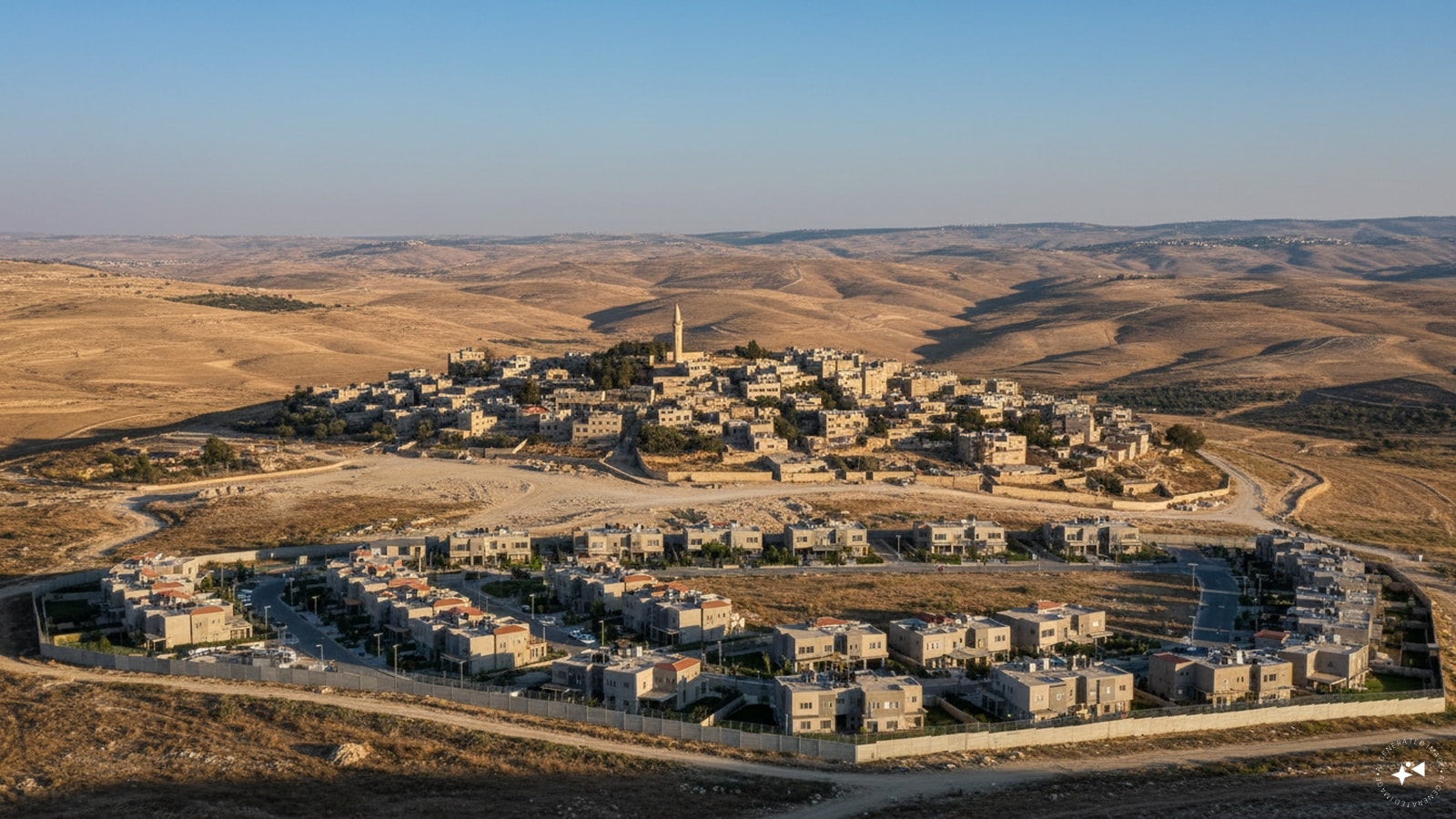
Coordinated punitive measures deployed by the United Kingdom, France, and Canada against specific Israeli West Bank settlers represent a strategic shift from diplomatic censure to targeted financial interdiction. This policy evolution bypasses broad state-level trade restrictions, choosing instead to operationalize individual asset freezes and travel bans. By isolating specific actors within the West Bank ecosystem, these governments attempt to alter the risk calculus of territorial expansion without triggering systemic economic retaliation.
The Architecture of Targeted Sanctions You might also find this similar article interesting: The Iron Lady And The Shadow Lines.
State-level sanctions of this nature rely on administrative law rather than judicial proceedings. When foreign ministries designate individuals or entities, they trigger domestic statutory mechanisms that compel commercial banks, payment processors, and insurance conglomerates to sever ties with the designated targets.
- Extraterritorial Compliance: Financial institutions operating within British, French, or Canadian jurisdictions face severe regulatory penalties if they process transactions originating from or destined for designated persons. This creates an immediate liquidity crisis for the affected parties.
- Asset Immobilization: Real estate holdings, bank accounts, and corporate shares held within the issuing states are frozen, blocking the conversion of assets into liquid capital required for operational logistics.
- Mobility Restrictions: Travel bans deny physical access to Western financial capitals, disrupting international supply chains, fundraising networks, and family or political liaisons.
This mechanism isolates the targeted nodes without harming the broader aggregate economy of the state from which the actors originate. It operates as a surgical instrument designed to puncture specific financing loops rather than inflict macro-level damage. As highlighted in latest coverage by The Guardian, the effects are notable.
The Economic Cost Function of Outpost Operations
Financing unauthorized or extremist outposts in the West Bank requires a steady influx of capital. Funding sources range from private philanthropic donations channeled through opaque non-profit associations to municipal or regional budgetary allocations that indirectly subsidize infrastructure, security, and logistics.
When Western governments target key coordinators within this pipeline, the cost function shifts dramatically.
- Transaction Friction: Traditional banking channels close permanently. Outpost administrators must resort to high-friction workarounds, including cash couriers, unregulated digital asset networks, or complex shell company cascades.
- Insurance Premia and Capital Risk: Suppliers engaging with designated entities must price in the probability of regulatory fines or asset forfeiture, driving up the baseline cost of construction materials, security equipment, and agricultural inputs.
- Personnel Attrition: Leaders and organizers facing personal financial ruin and restricted mobility often find their capacity to recruit, mobilize, and direct operational groups degraded over time.
The objective is not to bankrupt the entire movement through a single decree, but to elevate the transaction costs of maintaining unauthorized territorial footprints to an unsustainable threshold.
Strategic Divergence and Enforcement Friction
While the UK, France, and Canada have synchronized their punitive declarations, the efficacy of these measures depends entirely on domestic enforcement rigor and international cooperation. Discrepancies in legal definitions across jurisdictions create loopholes that sophisticated networks can exploit.
A primary vulnerability lies in the divergence between how different legal systems define complicity in territorial destabilization. For instance, an entity registered as a charitable trust in one jurisdiction might be classified as a paramilitary financing vehicle in another.
- The Shell Company Problem: Designated actors frequently transfer operational control of front organizations to unlisted proxies, relatives, or secondary shell entities. Regulators must constantly update their designated lists to counter these evasive maneuvers, creating a perpetual game of administrative catch-up.
- Jurisdictional Arbitrage: Capital can be diverted through non-cooperative banking sectors that do not recognize Western administrative designations, neutralizing the intended freeze on international wire transfers.
- Domestic Political Counter-Pressure: The enforcement of these sanctions often triggers intense domestic debate within the sanctioning states, leading to inconsistent application depending on shifting political administrations and lobbying pressures.
Systemic Implications for Regional Stability
Imposing targeted sanctions on West Bank actors introduces a new variable into the diplomatic equation. By signaling that individual impunity has an expiration date, foreign ministries are attempting to establish a deterrent baseline that outlasts short-term political cycles.
However, targeted economic coercion rarely produces immediate behavioral modification in ideological or territorial conflicts. Instead, it typically drives the affected networks to adapt by hardening their supply chains, reducing their reliance on formal Western banking, and turning toward alternative domestic political protections. The long-term utility of these sanctions rests less on immediate compliance and more on their capacity to constrain the institutional scale and financial velocity of future territorial expansion.
Redirect enforcement resources toward real-time transaction monitoring of secondary proxy accounts and pressure third-party regional banking hubs to adopt reciprocal compliance standards to close existing regulatory gaps.