Denmark just shattered its own political glass ceiling, but the real story isn't just about gender representation. It's about a fragile, grinding political math that took 69 days of grueling negotiations to solve.
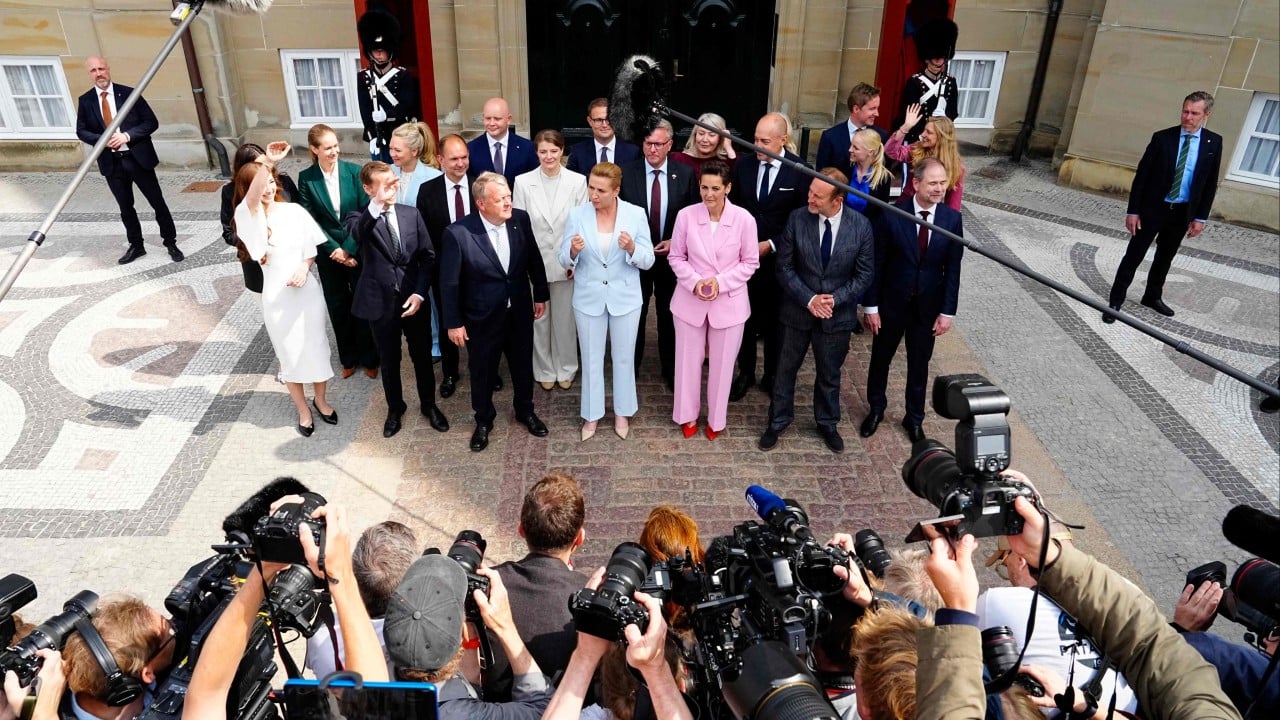
Prime Minister Mette Frederiksen stood outside Amalienborg Palace in Copenhagen to present her third government to King Frederik X. For the first time in Danish history, women outnumber men in the cabinet. Out of 21 ministerial posts, 11 belong to women. It’s a landmark moment for a country that prides itself on gender equality but has surprisingly never hit this specific milestone until now.
But look past the historic headlines. Underneath the optics lies a complicated four-party minority coalition built to survive a deeply splintered parliament. Frederiksen managed to stitch together an alliance between her own Social Democrats, the Socialist People’s Party (Green Left), the centrist Moderates, and the Social Liberal Party (Radikale Venstre).
They control just 82 of the 179 seats in the Folketing. That means this historic female-majority cabinet is walking straight into a political minefield where they must fight for every single vote to pass legislation.
The Power Shifts Inside the New Cabinet
If you think this reshuffle was just about hitting gender quotas, you're missing the strategic chess moves Frederiksen just pulled off. The internal promotions signal exactly who holds the power and who is being set up for the future.
The biggest talking point in Copenhagen right now is Peter Hummelgaard. Frederiksen moved her close party colleague from the Justice Ministry to the highly coveted post of Finance Minister. This isn't a routine lateral move. Political commentators across Denmark are calling it a clear coronation, cementing Hummelgaard as Frederiksen’s preferred successor within the Social Democrats. Nicolai Wammen, the outgoing finance chief, slides into the vacant spot at the Justice Ministry.
Meanwhile, Lars Løkke Rasmussen, the leader of the Moderates and a former prime minister himself, keeps his steady grip on the Foreign Ministry. Rasmussen played the role of kingmaker after the inconclusive March 24 election, and keeping him in the foreign policy seat was part of the price for his party's support.
The female majority isn't just sitting on the sidelines in junior portfolios either. They hold major levers of state power:
- Pia Olsen Dyhr (Leader of the Green Left) steps in as Minister of Economic Affairs and the Interior.
- Christina Egelund takes the reins at the Ministry for Research, Education, and Digitalization.
- Samira Nawa assumes control over the high-stakes Ministry for Climate, Energy, and Utilities.
Why 69 Days of Deadlock Forced this Alliance
Denmark has a long tradition of "negative parliamentarism," meaning a government doesn't need an absolute majority to govern; it just can't have a majority actively voting against it. Even by Danish standards, the road to this cabinet was painfully slow.
The March election left the country paralyzed. The Social Democrats suffered their worst electoral performance since 1903, securing just 38 seats. Neither the traditional left-leaning red bloc nor the right-leaning blue bloc won enough support to claim a clear mandate.
It took 69 days of intense, closed-door bartering—the longest coalition-building process in Denmark's modern history—to finally yield a policy platform. To get four distinct parties to sign off, Frederiksen had to craft a program that attempts to please everyone but risks fully satisfying no one.
The resulting political program balances progressive social policies with cold economic pragmatism. The new government pledged immediate financial relief for pensioners with the lowest incomes and families struggling with sticky inflation. To appease the centrist and right-leaning factions, the platform promises corporate tax cuts designed to spur domestic investment.
The coalition also committed to keeping Denmark's famously restrictive immigration stance, proving that even with a left-of-center tilt, the country's hardline border policy remains untouchable.
The Policy Agenda You Need to Watch
This government isn't easing into office. They face immediate domestic and geopolitical pressures that will test the durability of this historic cabinet within its first 100 days.
Protecting Sovereignty in Greenland
The policy document explicitly calls out recent "unacceptable pressure" directed at Greenland. The new administration vowed to stand firm alongside Greenland’s autonomous government to safeguard territorial integrity, sovereignty, and self-determination. In an era of escalating Arctic geopolitical tension, this is an aggressive signal to global superpowers.
The Social Media Crackdown
In a move that will likely trigger intense debate across Europe, the coalition plans to introduce a strict minimum age of 15 for social media use. Enforcing this will be a logistical nightmare, but it signals a massive shift in how Nordic countries plan to regulate Big Tech and protect youth mental health.
Education Reform and Infrastructure
The government is pivoting back to basics by upgrading public schools and shifting focus toward vocational training. They need to address a growing skilled labor shortage that threatens the country's ambitious green energy transition goals.
What Happens Next for Denmark
The historic nature of this cabinet will buy Frederiksen some initial goodwill, but the honeymoon period will be brutally short. Because they lack a parliamentary majority, the four-party coalition must constantly look to smaller left-wing factions, like the Red-Green Alliance and the Alternative, to move bills forward.
If you want to track whether this government will actually survive its full term, ignore the celebratory photos from Amalienborg Palace. Watch the upcoming parliamentary budget debates instead. That is where the friction between corporate tax cuts and expanded welfare spending will collide, and we will see exactly how much leverage Denmark's first female-majority cabinet truly has.