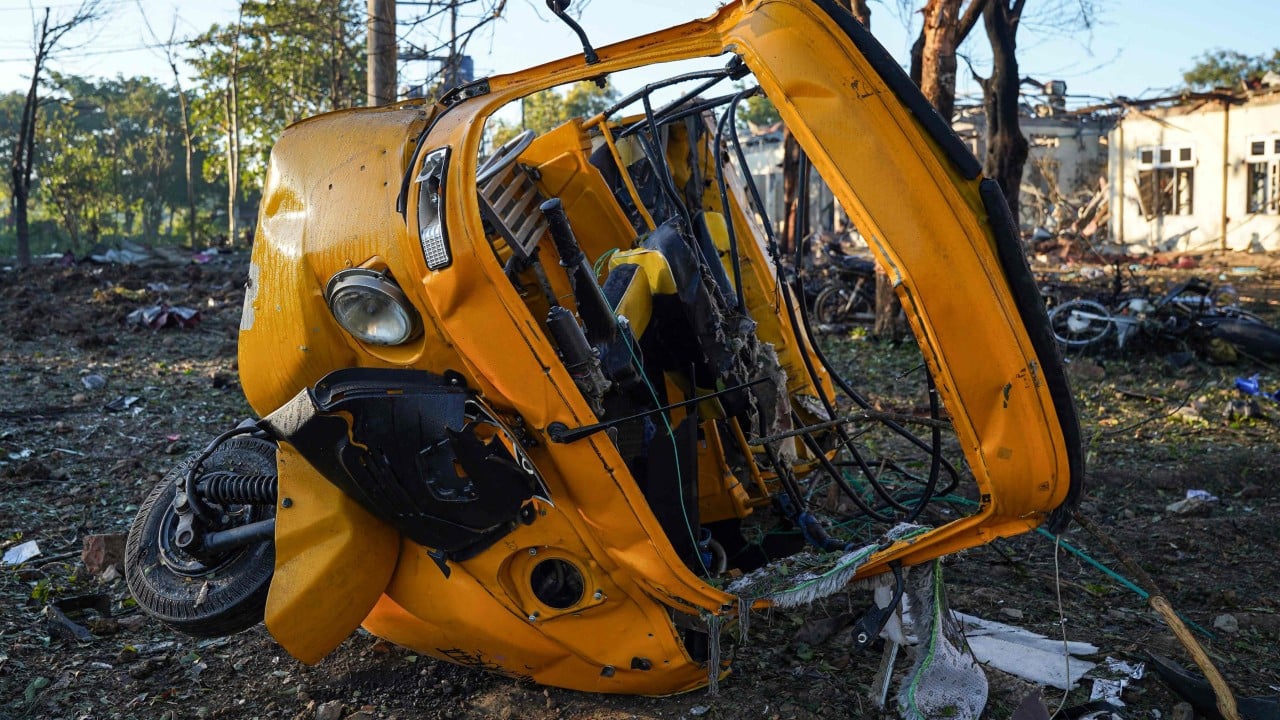
Every few months, a heartbreaking, predictable headline makes the rounds in Western media. A survivor escapes a brutal regime, lands in a peaceful European capital like Copenhagen, and files a legal complaint demanding justice for war crimes. Human rights groups applaud. Journalists write moving profiles. Everyone feels a warm rush of moral clarity.
Then, nothing happens. The generals in Naypyidaw keep their luxury villas, keep flying Russian fighter jets into civilian villages, and keep printing money.
If you believe that universal jurisdiction cases filed in European courts are the path to liberating Myanmar, you are falling for the single biggest comforting lie in modern geopolitics. The competitor’s framing—that individual refugee-led lawsuits in Denmark represent a viable spearhead of accountability—misses the cold, hard mechanics of how power actually works. It confuses moral theater with strategic leverage.
I have spent over a decade watching international accountability mechanisms chew up millions of dollars in legal fees while warlords die peacefully in their beds. The harsh reality is that outsourcing justice to Copenhagen, The Hague, or Geneva does not weaken the Myanmar military. In many ways, it actually helps them survive.
The Illusion of Universal Jurisdiction
Let’s define our terms clearly, because media coverage routinely muddies the water. Universal jurisdiction is a legal principle allowing a national court to prosecute individuals for grave international crimes—like genocide, war crimes, and crimes against humanity—regardless of where the crimes were committed or the nationality of the perpetrators or victims.
On paper, it sounds like an unstoppable net. In practice, it is a net with giant holes.
When a Myanmar refugee in Denmark demands an investigation into the Tatmadaw (Myanmar’s military), the Danish Public Prosecutor for Serious Economic and International Crime faces an immediate, insurmountable wall: enforcement.
A prosecutor in Copenhagen cannot subpoena a general in Naypyidaw. They cannot send Danish police to secure a crime scene in Sagaing Region. They cannot compel witnesses inside a locked-down surveillance state to testify without putting those witnesses' entire extended families in front of a firing squad.
Look at the track record. Even when universal jurisdiction works—such as Germany’s landmark Koblenz trials that convicted former Syrian intelligence officers—it only happens because low-to-mid-level defectors made the fatal mistake of seeking asylum in the very European countries prosecuting them. Senior Myanmar generals do not vacation in Scandinavia. They vacation in Moscow, Beijing, and Singapore. Issuing a warrant in Denmark for Senior General Min Aung Hlaing is the legal equivalent of yelling at a hurricane.
The Lazy Consensus Around "Moral Pressure"
The standard defense of these European legal filings goes like this: Even if we can't arrest them today, creating an official judicial record isolates the regime, delegitimizes them globally, and lays the groundwork for future trials.
This is lazy consensus masquerading as strategy. It assumes that shame is a currency that trades at the same value in Naypyidaw as it does in Brussels.
It does not.
The Myanmar military has spent over sixty years perfecting the art of pariah survival. From Ne Win’s "Burmese Way to Socialism" to Than Shwe’s brutal crackdowns in 1988 and 2007, the Tatmadaw’s entire institutional DNA is built around thriving in isolation. When Western courts condemn them, the generals do not panic; they use those headlines to feed their domestic propaganda machine, painting themselves as the sole defenders of Burmese sovereignty against Western neo-colonial meddling.
Worse, this obsession with European courtrooms drains oxygen, funding, and media attention from the mechanisms that actually hurt the junta. While Western NGOs celebrate a preliminary hearing in a European capital, the junta’s state-owned enterprises continue to pull in hundreds of millions of dollars in natural gas revenues, bypassing weak sanctions through regional banking loopholes.
What People Always Get Wrong About Accountability
If you search for answers on how to hold the Myanmar junta accountable, you will run into the same tired questions—all built on flawed premises.
Does the International Criminal Court (ICC) have the power to arrest Myanmar’s leaders?
No. And pretending otherwise is reckless. Myanmar is not a state party to the Rome Statute. The ICC only managed to open a limited investigation into the Rohingya crisis because Bangladesh is a party, and the forced deportation crossed onto Bangladeshi soil. For the war crimes committed since the 2021 coup against the Bamar majority and ethnic minorities inside Myanmar, the ICC has zero territorial jurisdiction unless the UN Security Council refers the case. China and Russia hold permanent vetoes on that council. They will never allow a referral.
Will a Danish or German court case stop foreign companies from doing business with the junta?
Rarely. Corporations do not pull out of authoritarian regimes because a refugee filed a criminal complaint in Northern Europe. They pull out when their insurance gets canceled, when their access to the US dollar clearing system is threatened, or when their physical infrastructure is blown up by resistance forces on the ground.
Isn't documenting war crimes for future trials still worth the effort?
Yes, documentation matters—if it is done quietly, securely, and by specialized evidence-gathering bodies like the UN’s Independent Investigative Mechanism for Myanmar (IIMM). Turning that documentation into premature, high-profile media spectacles around individual refugee lawsuits in countries with no custody of the suspects does not preserve evidence; it alerts the perpetrators to which witnesses are talking and what leaks exist in their chain of command.
The Uncomfortable Downside of Pursuing Justice Now
I will admit the obvious flaw in my own argument: telling a survivor who lost their family to an airstrike to stop demanding justice in their new home country sounds cold, cynical, and deeply unfair. Humans need closure. Survivors have every moral right to use every legal tool available in the democracies that sheltered them.
Furthermore, there is a non-zero chance that a regime collapses suddenly, and having pre-packaged indictments sitting in European vaults speeds up transitional justice.
I accept that risk. Asserting that European lawsuits are a dead end does not mean survivors should stay silent. It means the international community needs to stop treating a refugee’s court filing in Denmark as a victory, and start recognizing it as a symptom of Western cowardice.
Western governments love universal jurisdiction cases because they are cheap. Allowing a refugee to file a complaint in Copenhagen costs the Danish state almost nothing, requires zero diplomatic friction with Beijing, and lets European politicians deliver soaring speeches about human rights. It is a pressure valve that lets Western democracies look like they are fighting tyranny without actually taking any geopolitical risk.
Where Real Leverage Actually Lives
If you want to dismantle the Myanmar junta—not just score moral points in a European courtroom—you have to abandon the fantasy of long-distance judicial rescue. Power in Myanmar will be decided by kinetic reality and financial strangulation, not Scandinavian jurisprudence.
Here is what actually moves the needle:
- Target the Jet Fuel, Not the Generals. The Tatmadaw’s single greatest asymmetric advantage against the People’s Defense Forces (PDF) and Ethnic Armed Organizations (EAOs) is air superiority. They cannot fly MiG-29s or Yak-130s without specialized aviation fuel and spare parts. Instead of funding another symposium on universal jurisdiction, Western legal teams should be aggressively prosecuting the maritime insurers, shipping registries, and shell companies in Singapore, Dubai, and Hong Kong that facilitate jet fuel deliveries to Thilawa port.
- Weaponize Secondary Sanctions on State Banks. Direct sanctions on individual generals are a joke; they hold their wealth in local crony networks, jade, and regional proxies. Cutting off the Myanma Foreign Trade Bank (MFTB) and the Myanma Investment and Commercial Bank (MICB) from the global financial system actually hurts. Push European and Asian regulators to enforce secondary sanctions on any regional bank that clears transactions for junta-controlled entities.
- Fund Cross-Border Resilience, Not Geneva Conferences. Millions of dollars earmarked for "Myanmar democracy and justice" never leave Western capitals—they pay the salaries of international consultants and legal researchers. Redirect those funds directly to local civil society organizations operating along the Thai, Indian, and Chinese borders who are providing trauma care, secure communications, and basic governance in liberated territories.
- Recognize the De Facto Authorities. You cannot build a post-junta legal system while treating the resistance as a loose collection of victims. Foreign ministries need to establish formal diplomatic and legal channels with the National Unity Government (NUG) and major EAOs like the Kachin Independence Army and the Arakan Army, helping them build legitimate, rule-of-law judicial systems inside the territories they already control.
Stop Confusing a Courtroom With a Battlefield
Imagine a scenario where a Danish court actually issues an arrest warrant for a senior Myanmar commander tomorrow. The press releases go out. The human rights community celebrates a "historic milestone." Meanwhile, in Kayah State, another school is flattened by a 500-pound bomb dropped from a jet fueled by a shipment that cleared customs last week without a single Western bank flagging the transaction.
That is the reality we are living in.
Justice in Myanmar will not be delivered by a judge in a powdered wig or a prosecutor in Copenhagen. It will be delivered when the junta runs out of money, runs out of fuel, and loses control of the territory it terrorizes. Until Western nations are willing to choke the financial arteries keeping Naypyidaw alive, celebrating refugee lawsuits in Europe isn't solidarity—it’s an alibi.