Twenty years ago, a kid in a small town could put on a jersey and believe, with every fiber of their being, that the logo on their chest meant something sacred. It was a covenant. The university provided the stage, the education, and the mythos; the athlete provided the sweat and the soul.
Now, walk into any Power Five locker room. The air doesn't smell like old leather and linoleum anymore. It smells like a boardroom. It smells like a high-stakes brokerage firm where nineteen-year-olds are weighing six-figure Name, Image, and Likeness (NIL) collectives against the loyalty they supposedly owe to a coach who might be gone by December.
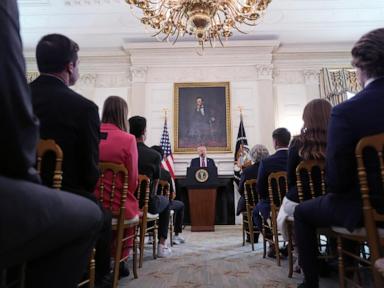
Donald Trump isn’t just looking at a scoreboard when he calls for Congress to step in and seize control of college athletics. He is looking at the wreckage of a cultural institution. He sees a system that has transitioned from a flawed amateur ideal to a lawless corporate frontier. The wild west had sheriffs. College sports has a compliance office that is effectively bringing a butter knife to a nuclear silo.
The Ghost in the Locker Room
Imagine a hypothetical quarterback named Elias. He grew up in a town where the local university’s stadium is the highest point on the skyline. He spent his childhood mimicking the throwing motion of the legends who came before him. When he finally signs that Letter of Intent, he thinks he has arrived.
Then the phone rings.
It isn't a coach. It’s an agent. Or a "booster collective" representative. They tell Elias that if he stays, he’ll make $50,000 in local car dealership appearances. But if he enters the transfer portal and moves three states over, a different collective has $400,000 waiting for him before he even takes a snap.
Suddenly, the jersey feels like a rented suit.
This isn't just about money. It’s about the erosion of the "student-athlete" as a functional concept. When Donald Trump argues that Congress needs to pass legislation to "control" this, he is tapping into a very specific anxiety: the fear that the games we love have become unrecognizable. The fear that the "amateur" spirit—as imperfect as it was—was the only thing keeping the whole house of cards from becoming a minor league with worse benefits.
A Legal Quagmire with No Exit
The Supreme Court essentially lit the fuse. With the Alston decision, the justices made it clear that the NCAA’s old way of doing business—restricting any and all compensation—was a violation of antitrust laws. The dam didn’t just crack; it vanished.
Now, we live in the era of the "unregulated market."
In any other industry, if a CEO wanted to jump from one company to another, there would be non-compete clauses, notice periods, or at least a standard contract. In college sports, thanks to the combination of NIL and the transfer portal, we have created a system of free agency without a collective bargaining agreement. It is pure, uncut chaos.
Trump’s insistence on federal intervention is grounded in a simple reality: the NCAA is powerless. They are a governing body that can no longer govern. Every time they try to enforce a rule, they get sued. Every time they try to cap a payment, a lawyer appears at their door with a preliminary injunction. They are a ghost ship.
The Invisible Stakes of the Mid-Major
We often focus on the giants—the Alabamas and the Michigans. But the real casualty of this lawless era is the school you’ve never heard of that pulls off a miracle in March.
Consider the "Cinderella" story. It relies on a group of under-recruited kids staying together for three or four years, building a chemistry that can topple a titan. In the current environment, that chemistry is a commodity. As soon as a mid-major player shows a flash of brilliance, the "big fish" come circling with NIL checks that the smaller school can’t possibly match.
The ladder is being pulled up.
By demanding that Congress intervene, the push is to create a "safe harbor"—a legal shield that would allow for a uniform set of rules. This isn't just about stopping players from getting paid. It’s about creating a floor and a ceiling so that the sport doesn't cannibalize itself. If every player is a free agent every six months, there is no narrative. There is no "us." There is only a rotating door of mercenaries.
The Burden of Being a Business
There is a weight to this wealth.
We ask young men and women to balance the rigors of a university education while simultaneously managing a small business centered on their own persona. They are their own brand, their own HR department, and their own PR firm.
When Trump calls for legislation, he is framing it as a way to "save" the sports. But what are we saving them from? We are saving them from the inevitable conclusion of a pure market: the death of the underdog. If money is the only metric of success, then the wealthiest four or five programs will simply buy the best rosters every single year, forever.
The unpredictability of sports—the reason we watch—is tethered to the idea that money isn't everything. But right now, money is the only thing.
The Federal Fix
What would this "control" actually look like?
It would likely mean a federal mandate that defines athletes as something other than employees, or perhaps a limited antitrust exemption that allows the NCAA (or a successor) to actually set limits on bidding wars. It would mean a national standard for NIL, replacing the current patchwork of state laws that allow some schools to offer "incentives" that would be illegal five miles across a state border.
It’s messy. It’s political. It involves the government sticking its hands into the one place Americans usually go to escape politics: the Saturday afternoon kickoff.
But the alternative is a slow-motion collapse.
We are watching the professionalization of childhood. We are watching the transformation of the campus quad into a trade floor. When the whistle blows and the ball is kicked, we want to believe that the players are out there for the glory of the game. We want to believe in the heroics of the amateur.
But as the checks get bigger and the portal stays open, that belief is getting harder to sustain.
The stadium lights are still bright. The bands still play the fight songs. But if you look closely at the eyes of the players on the sideline, you might see them checking their phones. They aren't looking for a text from their parents. They’re looking for the latest market valuation on their jersey.
The game is still being played, but the soul of it is out for bid to the highest solicitor.