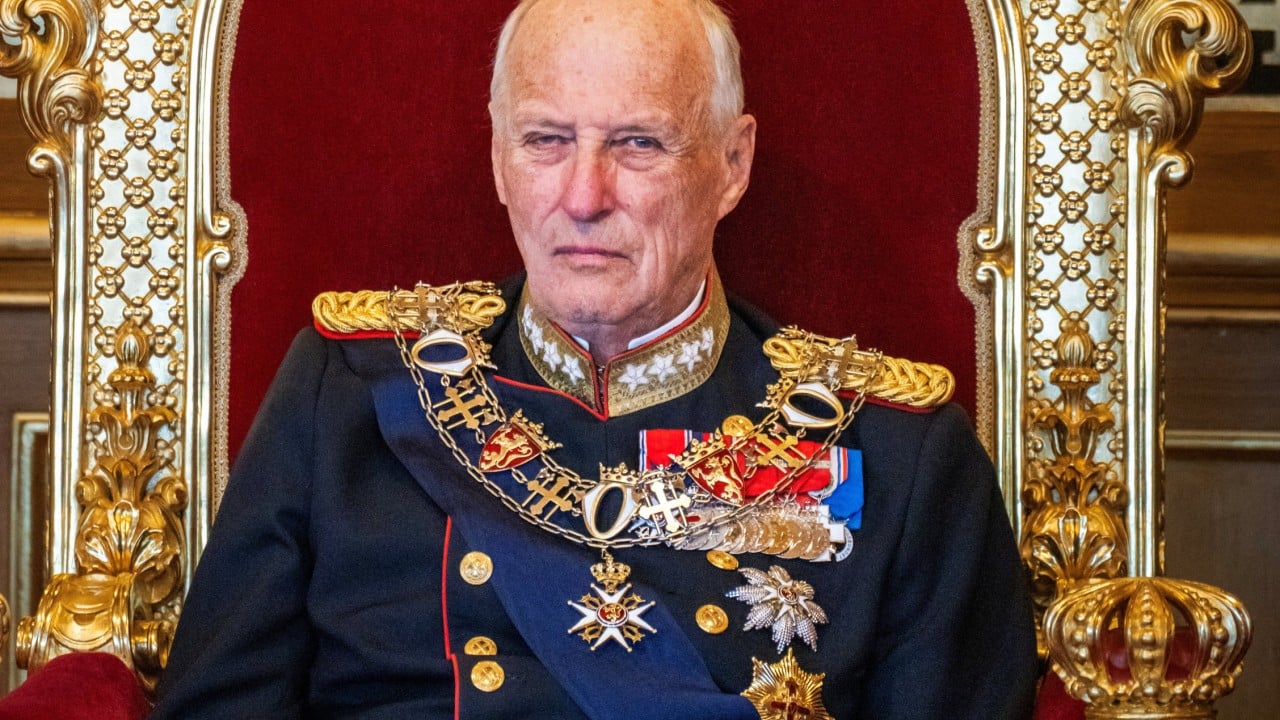
The lazy consensus across global newsrooms is that when a long-reigning monarch passes away, the institution takes a heavy blow. Obituaries for King Harald V of Norway write themselves. They lean on the comfortable, predictable tropes of an era ending, a grandfatherly figure of stability exiting the stage, and an uncertain future for the House of Glücksburg.
It is a lazy analysis. It completely misreads what a modern constitutional monarchy actually is.
Harald did not merely survive thirty-five years on the throne; he engineered a masterclass in institutional irrelevance turned weaponized charm. While pundits mourn the loss of tradition, they miss the brutal structural reality. Harald kept the Norwegian crown alive precisely because he stopped acting like an untouchable sovereign and started acting like an ordinary citizen who happened to inherit a palace. That is not the twilight of an institution. That is its modernization blueprint.
Look at the numbers. Republic sentiment in Norway has historically hovered around twenty to twenty-five percent. Despite domestic scandals involving the extended royal family—headlines that would have torpedoed lesser houses—public support for the monarchy remains remarkably resilient. Why? Because Harald understood a fundamental truth that British and Spanish royals frequently forget: in a hyper-egalitarian society like Norway, survival requires radical down-to-earthness.
When Harald rowed past cancer treatments, heart surgeries, and sailing championships, he weaponized vulnerability. He did not hide behind medieval pomp. He sat in traffic, cried publicly at national memorials following domestic tragedies, and explicitly stated that Norwegians include "girls who love girls, boys who love boys, and boys and girls who love each other." That wasn't just progressive pandering. That was ruthless institutional self-preservation.
Critics of the institution argue that hereditary privilege has no place in the twenty-first century. They are right on the ethics, but completely wrong on the mechanics. Monarchy is not a meritocracy; it is a psychological anchor. In times of compounding global instability—economic shifts, geopolitical fracture, digital hyper-connectivity—democracies suffer from acute political fatigue. Prime ministers change every few years, burning through public trust. A monarch provides continuity without executive interference.
Harald’s reign proved that a crown works best when it possesses zero political power and maximum cultural resonance. He was the ultimate shock absorber for the Norwegian state. When the political class stumbled, the King absorbed the ambient anxiety of the nation simply by showing up, looking slightly rumpled, and reminding people of their shared identity.
The transition to Crown Prince Haakon will not destabilize the Norwegian model. It will accelerate it. Haakon inherits an institution stripped of mystique and rebuilt on relatability. The challenge for Haakon is not whether he can fill his father's shoes, but whether he can maintain that razor-thin margin of relevance without sliding into celebrity culture. The moment a royal family starts behaving like influencers, the spell is broken. Harald knew where the line was. He never crossed it.
We love to romanticize the grand, tragic deaths of old-world sovereigns. We look for seismic shifts where there are only calculated pivots. Harald’s passing is not the end of an era. It is the proof of concept for how an archaic institution can hack a modern democracy and win.
Stop mourning the crown. Watch how it adapts.