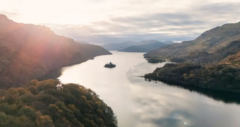
Scotland’s most iconic freshwater expanse is losing its soul to a mounting tide of litter and human waste. While recent headlines blame a simple lack of funding for the transformation of Loch Lomond into a glorified dumping ground, the reality is far more complex and damning. The crisis isn’t just a budget shortfall; it is a systemic failure of governance, a surge in irresponsible tourism, and a breakdown in local enforcement that has left the National Park Authority toothless. Without immediate intervention that moves beyond mere cleanup crews, the loch faces permanent ecological and reputational damage.
The Myth of the Cash Strapped Victim
It is easy to point at the Scottish Government’s budget and cry foul. Certainly, the Loch Lomond and The Trossachs National Park Authority has seen its operational capacity squeezed by inflation and stagnant grants. However, money is a convenient shield for a lack of strategy. For years, the management has prioritized high-level "vision" documents over the gritty, unglamorous work of waste management and ranger presence.
The visible rot—the abandoned tents, the scorched earth of illegal fire pits, and the plastic drifts clogging the shoreline—is the result of a strategy that hoped "Leave No Trace" education would be enough. It wasn’t. By the time the bins are overflowing on a Saturday afternoon, the battle is already lost. The park is operating on a reactive model in a world that requires aggressive, proactive containment.
A New Breed of Visitor
The profile of the loch-side visitor changed during the pandemic and never shifted back. Previously, the "Bonny Banks" were the domain of seasoned hikers and local families. Now, the area serves as an overflow valve for urban centers, attracting a demographic that views the wilderness as a low-cost, high-yield party venue.
This isn't an elitist observation; it’s a logistical nightmare. These "dirty campers" arrive with cheap, disposable gear—tents that cost less than a round of drinks and are treated with the same permanence. When the weekend ends, the gear stays. It is cheaper to buy a new polyester tent for the next trip than it is to pack up a wet one and take it home. This "fast fashion" approach to camping has created a mountain of non-biodegradable waste that the current infrastructure was never designed to process.
The Enforcement Gap
Laws exist to prevent this. The Land Reform (Scotland) Act 2003 established the right to roam, but it came with the caveat of responsible behavior. Furthermore, specific byelaws were introduced in 2017 to restrict camping in certain "management zones" to prevent exactly this kind of environmental degradation.
Why, then, is the loch still buried in trash?
The answer lies in the dilution of authority. Police Scotland is stretched thin, often viewing littering or illegal camping as a low-priority civil matter compared to violent crime or road safety. Rangers, meanwhile, have plenty of passion but very little power. They can ask a group of twenty intoxicated revelers to move on, but they cannot arrest them, and they rarely have the backup to issue fines that actually stick.
The result is an environment of total impunity. If there is no consequence for leaving a campsite looking like a war zone, people will continue to do it. The cost of cleaning up after these individuals is effectively a subsidy for bad behavior, paid for by the Scottish taxpayer.
The Hidden Ecological Price Tag
Litter is an eyesore, but the biological impact is the true scandal. We aren't just talking about unsightly crisp packets. The introduction of human waste into the watershed poses a direct threat to the loch’s water quality and its status as a site of special scientific interest.
Microplastics from abandoned gear are entering the food chain, affecting the Atlantic salmon and the rare powan—a whitefish found only in a handful of Scottish lochs. The nutrient loading from human waste can trigger harmful algal blooms, which in turn choke the oxygen out of the water, killing off aquatic life. This isn't a future threat; it is a slow-motion disaster happening every summer.
The Problem with Tents
Modern camping equipment is a chemical cocktail. Cheap tents are often treated with flame retardants and waterproof coatings that leach into the soil when left to rot. When a tent is abandoned near the shoreline, it eventually breaks down into smaller fragments that are impossible to recover.
The Fire Pit Scar
Illegal fires do more than just burn the grass. They sterilize the soil, killing the microorganisms and seed banks necessary for forest regeneration. In the ancient oak woods surrounding the loch, these scars can take decades to heal. Many visitors chop down live wood for fuel, unaware that green wood doesn't burn well, yet they continue the practice, damaging centuries-old trees for the sake of a smoky, ineffective blaze.
Infrastructure as a Deterrent
If you give people no place to put their trash, they will leave it where they stand. It’s a basic tenet of human psychology. The National Park has a chronic shortage of high-capacity, wildlife-proof waste facilities.
Compare Loch Lomond to national parks in North America or Scandinavia. In those regions, the "Pack It In, Pack It Out" mantra is backed by heavy-duty infrastructure at entry and exit points. There are clear, unavoidable stations where waste can be deposited. At Loch Lomond, bins are often small, hidden away in car parks, and emptied too infrequently. Once a bin is full, the area around it becomes a magnet for more bags. Within hours, scavenging birds and foxes have ripped the bags open, spreading the contents across the landscape.
The Economic Irony
Loch Lomond is a primary driver of Scotland’s multi-billion pound tourism industry. It is the "gateway to the Highlands." By allowing it to deteriorate into a "rubbish dump," the government is devaluing its own prime asset.
High-spending international tourists come to Scotland for the "untamed wilderness" depicted in marketing brochures. They do not come to see discarded Buckfast bottles and burnt-out gazebos. If the visual quality of the loch continues to slide, the economic return will follow. We are trading long-term sustainable revenue for the short-term convenience of not having to fund a proper patrol and maintenance budget.
A Blueprint for Recovery
Fixing this requires more than just a "Keep Scotland Beautiful" campaign. It requires a shift toward aggressive management and zero-tolerance enforcement.
- Permanent Ranger Power: Grant National Park rangers the statutory power to issue on-the-spot, high-value fines that are linked to the offender’s vehicle registration.
- The "Tent Tax": Work with retailers to implement a deposit-return scheme on cheap camping gear. If a tent is returned to a collection point, the consumer gets a portion of the price back. If it’s found abandoned, the unique serial number linked to the point of sale identifies the culprit.
- Physical Barriers: Increase the use of tactical landscaping—large boulders or fencing—to prevent vehicles from pulling up directly onto sensitive shorelines.
- Direct Government Intervention: Move the funding model away from discretionary grants and toward a dedicated "Heritage Protection Fund" derived from a small levy on local tourism businesses.
The End of the "Right to Roam"?
There is a growing, uncomfortable conversation in rural Scotland about whether the right to roam has become a "right to ruin." If the public cannot exercise their freedoms responsibly, those freedoms will eventually be curtailed. We are already seeing this with the expansion of camping management zones.
If we want to keep the loch open and accessible, the "good" visitors must stop being silent. Reporting illegal activity and demanding better from the authorities is the only way to shift the culture. The loch cannot defend itself.
Stop treating the cleanup as an annual chore and start treating the littering as an environmental crime. The time for polite signage and "awareness" is over. We are currently watching the slow-motion destruction of a national treasure, and the only thing more offensive than the trash is the lack of a serious plan to stop it.
Every day of inaction is a choice to let the loch die. Buy the bins, hire the rangers, and start issuing the fines today.