The stadium lights hum with a low, electric vibration that you only feel when the score is locked at zero and the clock is bleeding into the red. Eighty-fourth minute. Your lungs are screaming, but the ball just spilled loose. Suddenly, the pitch opens up. It is a green expanse of pure opportunity. You see the winger peeling away, the defender stumbling, and the sudden, sharp intake of breath from forty thousand people who know they are about to see something beautiful.
Then, a whistle.
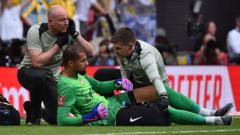
Not for a foul. Not for a ball out of play. A man in the opposing shirt is sitting on the grass. He isn't clutching a snapped ankle or holding a bloody nose. He is simply sitting. He looks at the referee with a blank, practiced expression of mild discomfort. His teammates gather around, nodding solemnly. The goalkeeper trots over to the touchline to take a slow, deliberate sip of water.
The momentum doesn't just stall. It evaporates. The "tactical timeout" has arrived, and it is killing the soul of the sport.
We call it gamesmanship. We call it "game management." But for the fan who paid a week's wages to sit in the rain, it feels like a heist. Football is a game of flow, a continuous narrative of physical and mental attrition. When players learn to hack that flow, they aren't just bending the rules; they are rewriting the physics of the competition.
The Invisible Injury
The anatomy of a tactical timeout is a masterpiece of deception. It usually occurs during a period of sustained pressure or immediately following a high-intensity transition. The goal is simple: reset the heart rates.
Consider a hypothetical defender named Elias. Elias is exhausted. His team has been pinned in their own third for six minutes. The opposing side is playing "heavy metal" football—relentless, fast, and suffocating. Elias knows that if the ball stays in play for another two minutes, his legs will give out, and a goal will follow. So, he waits for a natural stoppage, or he creates one. He goes down.
Because the referee cannot be a doctor, he must prioritize player safety. The game stops. The medical staff trudges onto the pitch. During this three-minute hiatus, Elias’s teammates receive tactical instructions from the manager. They breathe. They regroup. The attacking team, meanwhile, feels the adrenaline drain out of their boots.
This isn't an isolated incident. Data suggests that the "ball-in-play" time in elite European leagues is hovering at historically frustrating levels. We are paying for ninety minutes of drama and receiving sixty minutes of actual sport, interspersed with thirty minutes of guys adjusting their socks.
The Stop-Clock Solution
If the problem is the manipulation of time, the most obvious answer is to take time out of the players' hands.
Basketball and American football utilize a stopped clock for a reason. In those sports, the clock is a rigid arbiter. In football, time is an abstract concept managed by a single human being with a stopwatch. This creates a vacuum where "dark arts" thrive.
Imagine a world where the stadium clock stops the moment the whistle blows. No more frantic pointing at watches. No more goalkeepers taking forty-five seconds to place a ball for a goal kick. If the ball isn't moving, the time isn't moving.
Opponents of this change argue it would ruin the "purity" of the game. They worry it would lead to four-hour broadcasts filled with commercials. But we already have the four-hour experience; we just spend a quarter of it watching a physio spray "magic water" on a perfectly healthy knee. A sixty-minute "pure" clock—where the timer only runs while the ball is live—would likely result in more actual football than we currently see in a standard ninety-minute match.
The Sin Bin for the "Slightly" Sidelined
There is a particular cruelty in watching a player who was seemingly near death thirty seconds ago suddenly sprint back onto the pitch with the vigor of an Olympic hurdler the moment the game restarts.
To solve this, we must introduce a cost to the stoppage.
If a player requires medical attention that causes the game to stop, they should be required to remain off the pitch for a fixed duration. Not just until the next phase of play, but for a full five minutes.
This creates a genuine tactical dilemma. If Elias is actually hurt, five minutes off the pitch is a small price to pay for his long-term health. If he is faking it to catch his breath, he has just handed his team a five-minute period where they must play with ten men. Suddenly, the "tactical" benefit of the timeout disappears. The risk outweighs the reward.
This forces honesty. It turns a low-stakes lie into a high-stakes gamble.
Reclaiming the Technical Area
The modern touchline has become a secondary pitch. Managers now use every stoppage as an opportunity to hold mini-seminars, pulling three or four players aside to move them around like chess pieces. This turns football into a scripted affair, robbing it of the spontaneous, player-led ingenuity that defines the greats.
We need to restrict the "sideline huddle."
If the game stops for an injury, players should be mandated to stay in their positions on the pitch. No trips to the bench. No whispered instructions from the assistant coach. If a player leaves their designated zone to talk to the manager during an unscheduled break, it should be an automatic yellow card.
Football is supposed to be a test of which team can adapt to chaos in real-time. By allowing these constant tactical resets, we are rewarding the managers who can micromanage the best, rather than the players who can think the fastest.
The Power of the Public Shaming
Technology has given us VAR, but it hasn't given us a way to track the "theatre" of the sport.
We currently track distance covered, pass completion, and expected goals. Why are we not tracking "time wasted per player"?
Imagine a league table where the primary stat is the average time a player spends on the ground per match. Imagine a post-game broadcast where, instead of just analyzing a goal, the pundits analyze the three minutes a captain spent arguing about the placement of a free kick.
Transparency is a powerful deterrent. When a player knows that their reputation as a "diver" or a "time-waster" is backed by cold, hard data presented to millions of viewers, the behavior changes. Sponsors don't want to be associated with the player who spends more time on his back than on his feet. Fans don't want to buy the shirt of the man who cheated them out of the final ten minutes of a comeback.
The Weight of the Silence
Ultimately, this isn't about rules. It’s about a social contract.
When you walk through the turnstiles, there is an unwritten agreement between the performers and the audience. The audience provides the passion, the money, and the atmosphere. In return, the performers provide their best effort for the duration of the event.
The tactical timeout is a breach of that contract. It is a quiet admission that winning is more important than the game itself. It is a cynical calculation that says a trophy is worth more than the joy of the person in Row Z.
Think back to that winger. The one who was about to break free.
In the current version of the game, he is frustrated. He is watching the clock tick down while a man he hasn't even touched receives a standing ovation for wasting time. The tension is gone. The story is interrupted.
We have the tools to fix this. We can stop the clock, we can enforce mandatory cooling-off periods for the "injured," and we can force players to solve their own problems without a manager’s intervention. We can choose to value the flow over the result.
If we don't, we are left with a sport that is increasingly efficient, perfectly managed, and utterly lifeless. We are left with a game that knows how to win, but has forgotten how to play.
The whistle blows again. The player stands up, wipes the grass from his shorts, and trots back into position. He has successfully killed three minutes of your life that you will never get back. He smiles. The game restarts, but the magic has already left the building.