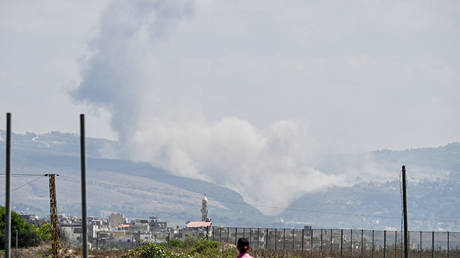
At least 37 people died when a massive Russian strike hit the western outskirts of Kyiv. The attack tore through the Bucha district, leaving dozens injured, wrecking over 50 residential buildings, and forcing emergency evacuations from a local care home. It stands as one of the single most destructive air raids to hit the capital region this year. Yet, the high casualty count isn't just a product of incoming fire. It points directly to an internal crisis of accountability that Ukrainian leadership is now forced to confront.
When the munitions depot in the village of Myla took a direct hit, it didn't just burn. The initial strike triggered massive, secondary detonations of stored shells, mines, and drone components. Those secondary explosions flattened nearby homes and turned a standard military logistics strike into a civilian catastrophe. President Volodymyr Zelenskyy didn't mince words in his public addresses following the blast. He called the situation a result of terrible negligence, noting that military ordnance was being stockpiled right next to residential areas.
The Cost of Repeating Fatal Mistakes
You don't have to look far back to see the pattern. Barely two months prior, a similar disaster struck the Kyiv suburb of Vyshneve. That incident involved an ammunition depot blast that killed 22 people and obliterated nearby housing. Prime Minister Serhii Koretskyi pointed out the obvious failure to learn from past errors, labeling the repetition of these safety violations as criminal negligence during wartime.
When state-owned enterprises and defense producers ignore zoning safety laws, civilians pay with their lives. Regulations exist for a strict reason. Explosives and residential neighborhoods cannot mix. Investigators have already opened criminal proceedings to determine how state officials and defense entities—including arms producer Ukroboronprom—authorized weapons storage in populated zones.
Surviving the Third Day of Near-Constant Raids
The strike on Myla didn't happen in a vacuum. It occurred on the third consecutive day of unrelenting air attacks across the capital region. Moscow has shifted tactics, heavily leveraging jet-powered drones and continuous waves to exhaust defensive systems through sheer volume.
The humanitarian toll stretches far beyond the capital. Down south in the Kherson region, continuous shelling has battered critical infrastructure, leaving local officials urging mass evacuations ahead of winter. Roughly 70 percent of that region remains under Russian control, making every utility line and heating grid a high-stakes target. Meanwhile, Ukraine continues pushing its own long-range drone strategy deep into Russian territory, aiming to disrupt Moscow's industrial capacity and fuel supplies at a rate of hundreds of launches per day.
Holding the Line on Internal Accountability
The tragedy in Bucha district forces an uncomfortable reality into the open. Winning an existential war requires military efficiency, but it also demands internal discipline. When local leaders like Dmytrivka community head Taras Didych die while rushing into the flames to rescue neighbors, their sacrifice highlights the bravery on the ground. That bravery is undermined when institutional shortcuts place munitions yards next to nursing homes and apartment complexes.
Real security means fixing structural vulnerabilities before the next missile hits. The ongoing criminal probes and promised punishments for state officials must result in immediate relocation of all unauthorized military storage away from civilian populations. If safety protocols continue to be treated as optional guidelines, the internal threats to civilian survival will match the external ones.