The leather steering wheel always felt cool against my palms at six in the morning. For ten years, that chill was the opening chord of my day. It was a private kingdom on four wheels, a fortress of air conditioning and personal radio stations buffering me from the humid roar of the city outside.
Then came the bill. Not just the physical slip of paper from the insurance company or the compounding dread of COE renewals in Singapore—that monstrous paper tiger of vehicle quotas that can cost more than a house elsewhere—but a different kind of toll. The cost of hours spent staring at the bumper of a grey sedan, the tightening in the lower back, the slow, corrosive detachment from the earth beneath my feet. For a more detailed analysis into similar topics, we suggest: this related article.
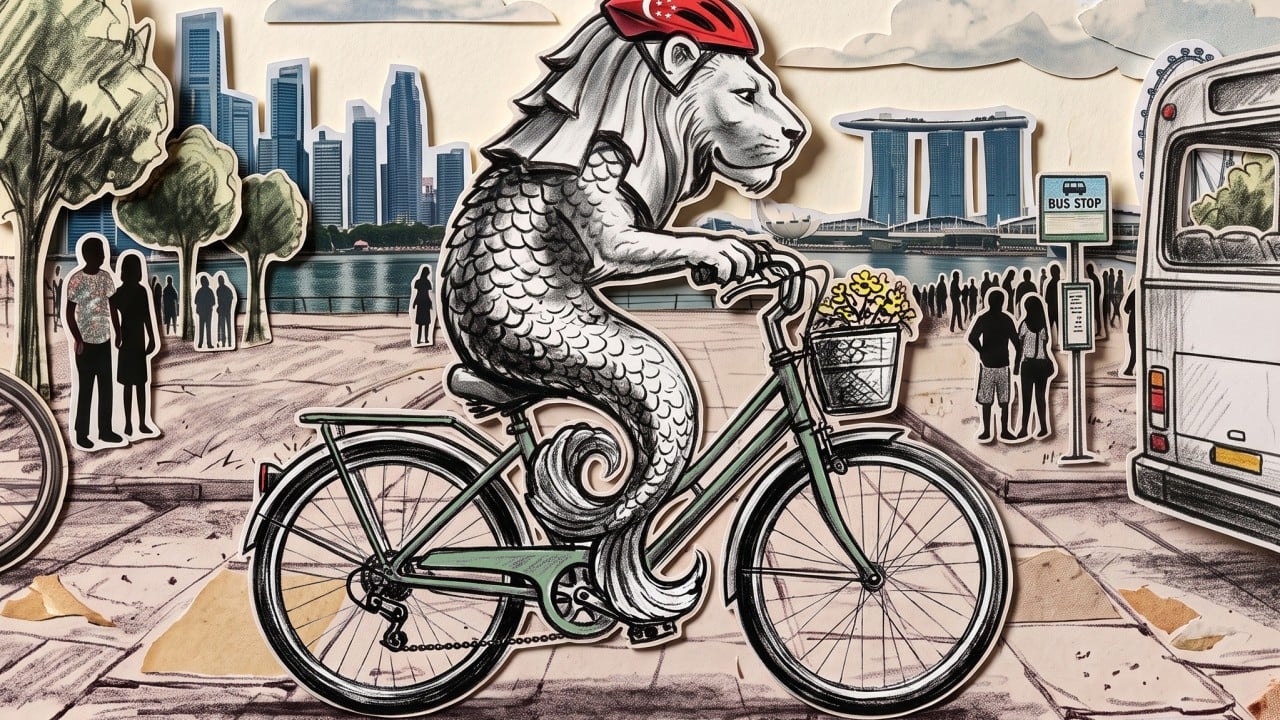
Across the island, a quiet rebellion is taking root. More Singaporeans are doing something that would have sounded like financial and social heresy a decade ago: they are giving up their cars.
They are going car-lite. To get more background on this issue, detailed analysis can be read at Vogue.
Statistics dryly record the shift. The Land Transport Authority notes a steady plateau or contraction in private car ownership rates relative to population growth, offset by a massive surge in rail ridership and active mobility infrastructure. But numbers flatten the human truth. This is not merely an economic calculation about parking rates, ERP gantries, and skyrocketing certificate of entitlement prices. It is an emotional reckoning with what we traded for the privilege of sitting in traffic.
Consider Marcus, a hypothetical composite drawn from dozens of former drivers I have spoken with over the past year. Marcus spent thirty-five grand a year just to keep a mid-sized Japanese sedan breathing on Singapore asphalt. Depreciation, petrol, insurance, maintenance, parking at his CBD office, ERP charges that nickel-and-dimed his paycheck every time he crossed an arterial road. One evening, stuck in a massive jam on the Ayer Rajah Expressway because of a minor fender bender three cars ahead, he looked around.
Every face in every car looked identical. Jaw clenched. Eyes locked on the rear lights ahead. Trapped in individual metal boxes, moving at the speed of a brisk walk while burning fossil fuels and draining lifeforce.
Marcus pulled home, parked the car, and did the math. Not just financial math, but life math. He realized he was working two extra hours a day simply to pay for the machine that got him to work.
He sold the car the following month.
To understand why this is happening en masse in a nation obsessed with upward mobility, you have to look at how Singapore has physically transformed around its citizens. The traditional narrative of progress used to be linear: work hard, get a degree, buy a five-room HDB flat, and buy a car to signal arrival. The car was the ultimate trophy of the Singapore Dream.
But dreams mutate.
As the MRT network expanded—threading underground webs from Jurong to Changi, weaving the Downtown Line through the historic veins of Chinatown and Rochor—the friction of distance began to dissolve. When you can step out of an air-conditioned apartment into a covered walkway that leads directly to an air-conditioned train station, the utility of a private metal cage begins to evaporate. Why navigate the labyrinth of a multistorey carpark, sweat through finding a lot, and battle peak-hour congestion when a train runs every two minutes with ruthless, clockwork precision?
The government didn't just build rail lines; they engineered an ecosystem. Walk-cycle-ride paths, sheltered linkways, and massive cycling networks sprouted across Housing Board estates. Ang Mo Kio transformed into a model walking and cycling town. Tampines wove green connectors right through the heart of neighborhoods, allowing children to bike to school without crossing hostile multi-lane highways.
Yet, infrastructure alone does not change a culture. Hearts change when people rediscover their senses.
When you drive everywhere, Singapore becomes a series of air-conditioned airlocks. Home to carpark. Carpark to office basement. Office to shopping mall atrium. You skim across the surface of the island like a stone skipping over water, never truly touching it. You miss the scent of damp earth after a sudden equatorial downpour. You miss the chatter of elderly uncles playing Chinese chess under an HDB void deck. You miss the sudden, startling flash of a yellow flame tree in full bloom because you were staring at the car's GPS screen.
Giving up the car forces a re-engagement with the physical texture of the city.
Walk through Tiong Bahru on a Tuesday morning without the panic of finding a roadside parking lot before the warden arrives. Notice the way the morning light catches the art deco curves of the pre-war shophouses. Step onto a public bus and listen to the polyphonic symphony of Hokkien, Malay, Tamil, and Mandarin bouncing off the windows.
This is the hidden liberation of the car-lite movement. It returns your attention to the world.
Critics often ask how families manage. How do you buy groceries for four? How do you visit aging parents in Woodlands when you live in Marine Parade? How do you survive the torrential rain?
The answers are woven into the modern urban fabric. Grocery delivery apps have decoupled sustenance from vehicle ownership. Car-sharing fleets—BlueSG, GetGo, Tribecar—lurk at almost every HDB block, allowing people to summon a vehicle for precisely thirty minutes to haul heavy cargo or ferry a sick pet to the vet, without paying the crushing fixed costs of depreciation and insurance while the car sits idle for ninety-five percent of the day. You only pay for the exact slice of time you use it. It is the ultimate rationalization of machinery.
And the weather? An umbrella is lighter than a steering wheel. A sheltered walkway is longer than you think.
There is also a profound psychological shift that occurs when you stop piloting a two-ton weapon through narrow streets. Road rage is a uniquely modern malady, born of the delusion that we own the asphalt and that everyone else is an obstacle to our personal velocity. On foot, on a bicycle, or inside a train carriage, that adversarial posture softens. You become part of a collective transit body. You nod at the stranger holding the door. You give up your seat to a tired nurse. You share the public space.
We are beginning to realize that convenience that isolates us is a trap. True freedom is not the ability to sit alone in a traffic jam of your own financing; it is the freedom of movement, of financial breathing room, of physical health restored by ten thousand daily steps that you didn't have to force yourself to take at a gym.
My own steering wheel hasn't felt cold in years. The space in the garage is now a rack for bicycles and a corner for potted plants. Sometimes, standing on the platform waiting for the train while the peak-hour crowd hums quietly around me, I feel a strange lightness. The engine isn't idling. The tank isn't draining.
The city is moving, and so am I, directly with it.