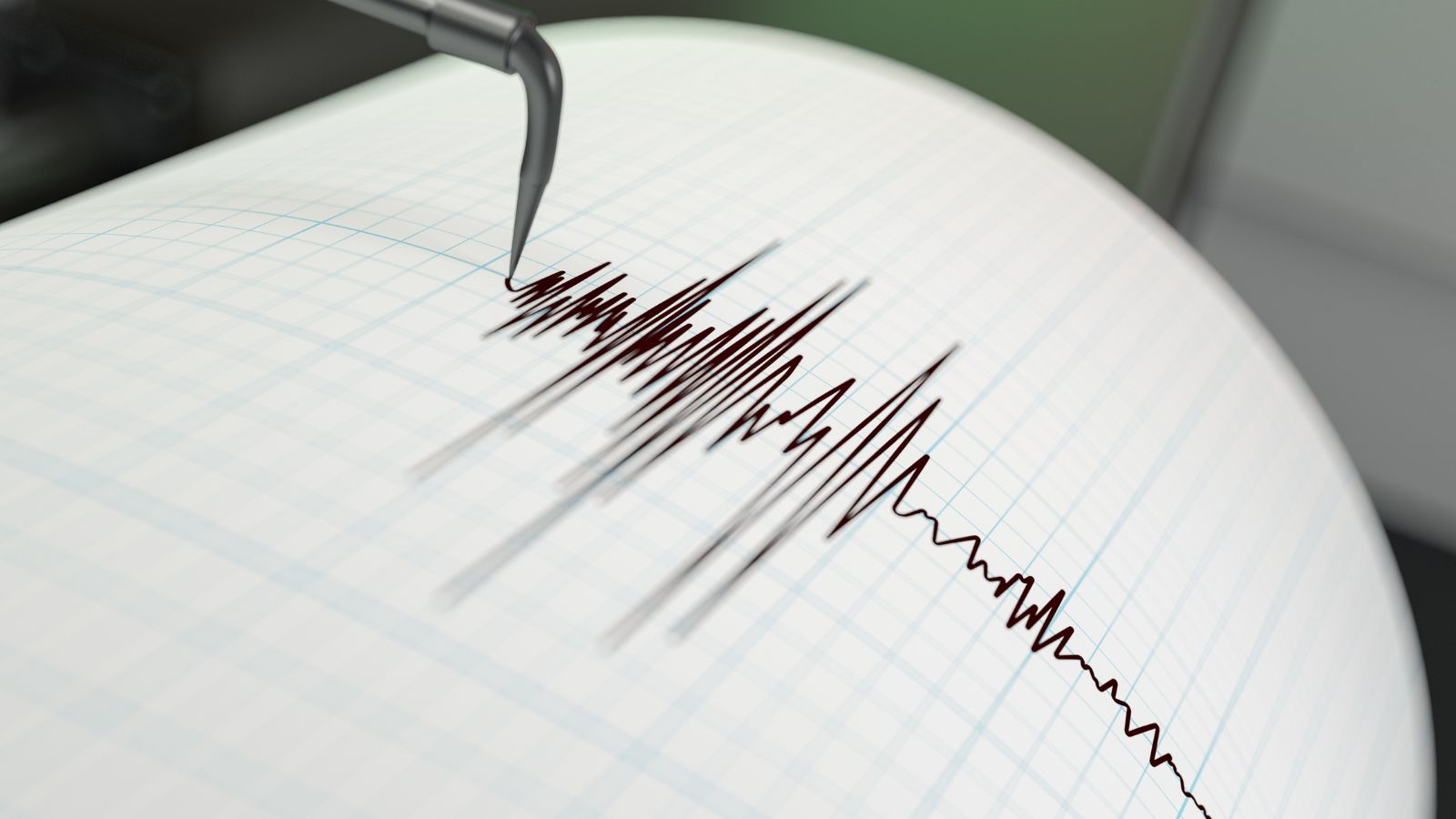
Disaster agencies love a precise number. When a magnitude 5.0 earthquake rattles southeastern Turkey, the headlines write themselves. The media rushes to report the depth, the epicenter, and the standard, bureaucratic statements from emergency management authorities. They treat the magnitude like a definitive scorecard for destruction.
This tracking is a fundamentally flawed way to understand seismic risk, and relying on it leaves populations exposed to predictable catastrophes.
A magnitude 5.0 earthquake is not a crisis. It is a baseline reality of living on a planet with moving tectonic plates. Yet every time the ground shakes, the public narrative focuses entirely on the energy released at the focus, rather than the structural and systemic vulnerabilities on the surface. We are obsessing over the wrong metric.
The Myth of Magnitude
The general public views earthquake magnitude as a linear scale of danger. A 5.0 is seen as scary, a 6.0 as severe, and a 7.0 as apocalyptic. This misunderstanding ignores the mechanics of seismic energy propagation and engineering reality.
Magnitude measures energy released at the source, calculated logarithmically. It tells us absolutely nothing about what happens when that energy hits a specific town.
Seismic Energy Source (Magnitude) -> Medium of Propagation -> Local Soil Conditions -> Structural Integrity (Damage/Intensity)
The metric that actually matters for human life is intensity—specifically, how the ground moves at a precise location, measured by the Modified Mercalli Intensity scale or peak ground acceleration (PGA). A shallow magnitude 5.0 directly beneath an old, unreinforced masonry town causes vastly more devastation than a magnitude 7.0 deep in the crust fifty miles away.
By hyper-focusing on the headline magnitude, disaster agencies and media outlets mask the real culprit of earthquake damage: decades of lax building code enforcement and poor urban planning.
Structural Amnesia and the Compliance Gap
I have spent years analyzing post-disaster zones, walking through the rubble of cities that were supposed to be protected by modern engineering standards. The refrain is always the same: "The earthquake was too strong."
That is almost always a lie.
Earthquakes do not kill people; buildings kill people. In southeastern Turkey, the East Anatolian Fault zone is one of the most thoroughly mapped, heavily studied seismic areas in the world. Engineers know exactly what kind of forces these regions will face. The building codes written on paper are often world-class, matching stringent European and American standards.
The failure is never the science. It is the execution.
- Amnesty Laws: Periodic legal exemptions that regularize substandard buildings for a fee.
- Subcontracting Dilution: High-quality designs corrupted by cheap materials, unwashed marine sand in concrete, and missing rebar during construction.
- Inspection Failures: Independent oversight bodies paid directly by the developers they are supposed to audit, creating a structural conflict of interest.
When a moderate 5.0 shock causes structural cracking or panic, it is a warning sign that the building stock is compromised. Labeling it an "unavoidable natural disaster" abdicates human responsibility.
Dismantling the PAA Fallacies
Look at the standard questions people ask after a moderate seismic event. The premises themselves show how skewed our collective understanding is.
"Is a magnitude 5.0 earthquake considered strong?"
No. Geologically, it is classified as moderate. Thousands of them occur globally every single year. If a 5.0 causes significant structural collapse in an urban area, it is an indictment of the local construction sector, not a demonstration of nature's overwhelming power.
"Can we predict when the next big earthquake will hit Turkey?"
Stop asking this. Deterministic earthquake prediction—knowing the exact day, time, and location of a future quake—is scientifically impossible with our current technology. Seismologists work in probabilities and long-term forecasts. We know the East Anatolian and North Anatolian faults will produce massive events again. Focus on prediction is an excuse for inaction. You do not need to predict the rain to build an umbrella; you do not need to predict the exact hour of a quake to reinforce a concrete column.
The Cost of the Wrong Strategy
The contrarian truth about seismic resilience is that retrofitting old buildings is expensive, politically unpopular, and completely necessary.
The standard approach to disaster management is reactive. Governments pour billions into search-and-rescue teams, mobile hospitals, and temporary housing after the fact. It looks heroic on television. It wins votes. But from an economic and humanitarian standpoint, it is pure negligence.
Imagine a scenario where a municipality spends $50 million retrofitting soft-story apartment buildings—structures where the ground floor consists of open retail spaces or parking garages, which are notorious for collapsing during tremors. The public never sees the disaster that didn't happen. The politician gets no credit for a building that stays standing.
If that same municipality spends $50 million on a shiny new fleet of emergency response vehicles, they get a ribbon-cutting ceremony. Then, when the inevitable shock hits, the buildings collapse anyway, and those vehicles move in to pull bodies from the wreckage.
We are subsidizing funerals instead of investing in foundations.
The Reality of Retrofitting
To be fair, the contrarian path of total structural enforcement has harsh downsides. It requires massive capital. It forces the temporary displacement of residents. It requires a level of political will and anti-corruption enforcement that few governments possess.
When you strip away the soft-story vulnerabilities of an older city, you often find that up to 30% of the housing stock needs major structural intervention or outright demolition. The economic friction this creates is immense. Property values fluctuate, rental markets tighten, and historical neighborhoods lose their aesthetic charm to thick concrete shear walls and steel bracing.
But the alternative is a recurring cycle of preventable tragedy, punctuated by useless bureaucratic press releases every time a moderate 5.0 tremor reminds us that the ground beneath our feet does not care about our economic compromises.
Stop reading the magnitude numbers. Start looking at the concrete.