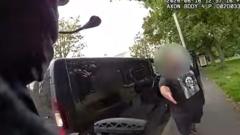
A driver spots an armed police officer desperately pursuing a fleeing suspect. The driver pulls over, rolls down the window, and shouts, "Get in!" The officer jumps in, they chase down the criminal, and the day is saved. The internet erupts in applause. The media calls the driver a hero.
It is a heartwarming, adrenaline-pumped narrative. It is also an absolute logistical and legal nightmare that should never be celebrated.
When you see a headline praising a civilian for inserting themselves into an active, armed police pursuit, you are witnessing a breakdown of operational security packaged as feel-good news. The lazy consensus tells us that communities should actively intervene to help overstretched police forces. The reality of modern policing, liability law, and tactical dynamics tells a completely different story.
Stop treating high-stakes law enforcement like a buddy-cop movie.
The Myth of the Helpful Bystander
The immediate reaction to these stories is always rooted in emotion. We want to believe that ordinary citizens can—and should—step up when the thin blue line needs a assist. But let’s look at the actual mechanics of an active pursuit.
When an officer enters a private citizen's vehicle during a chase, they are completely abandoning a controlled tactical environment.
- The Communication Blackout: The officer is now separated from their vehicle's mounted radio system, relying solely on a handheld unit that may suffer from degraded signal quality inside a non-police asset. They cannot easily relay real-time telemetry or coordinate roadblocks with dispatch.
- The Asset Vulnerability: A standard civilian vehicle lacks ballistic panels, siren systems, and high-visibility lighting. You are chasing an armed suspect in a tin can that cannot warn oncoming traffic to clear the intersection.
- The Liability Trap: If that civilian vehicle crashes, who pays? If the suspect opens fire on the car, the civilian is now a target in an unarmored vehicle.
I have spent years analyzing operational risk management. In any other high-risk industry—aviation, medicine, corporate security—introducing an untrained, unvetted asset into a critical emergency is considered a catastrophic failure of protocol. In law enforcement, for some reason, we call it heroism.
Dismantling the Premise of the "Good Citizen"
People frequently ask: Should civilians help police officers if requested?
The answer is almost universally no, unless it is a life-or-death struggle where the officer is being overpowered and has explicitly called for immediate physical assistance. A pursuit does not qualify.
Let's break down exactly what happens to a driver's psychology in these moments. The human body floods with cortisol and adrenaline. Tachycardia sets in. Fine motor skills deteriorate. Peripheral vision narrows—a phenomenon known as tunnel vision.
Now, take that physiologically compromised civilian and ask them to perform high-speed tactical driving while an armed officer is screaming into a radio in the passenger seat. You have not helped the police. You have just created a secondary hazard on the roadway.
Consider a thought experiment. Imagine a scenario where a civilian driver blows through a red light while giving an officer a lift, striking a pedestrian. The city’s legal team will immediately distance themselves from the driver. The officer’s union will protect the officer. The driver will be left holding the bag for vehicular manslaughter or crippling civil judgments, all because they wanted to be a good neighbor.
The Operational Reality
True authority in public safety relies on predictability and standardization. The National Police Chiefs' Council and various international law enforcement bodies spend millions developing strict pursuit policies. These policies dictate exactly when a chase must be terminated because the risk to the public outweighs the necessity of the apprehension.
When a civilian involves themselves, they completely bypass that risk assessment framework. The officer, driven by the immediate pressure of the chase, might make a split-second decision to accept the ride. But split-second decisions made under extreme stress are notoriously flawed.
Here is the brutal truth nobody wants to admit: it is better for an armed suspect to temporarily escape than it is to turn a civilian into an amateur getaway driver for the state. Police forces have helicopters, canine units, forensics, and data networks to track suspects down later. They do not need your Honda Civic.
Stop Playing Hero
If you find yourself in a situation where an active police operation is unfolding around you, the most effective thing you can do is get out of the way.
- Record, Don't Intervene: Maintain a safe distance and document the event if possible. Your smartphone footage is infinitely more valuable to detectives later than your attempt to play wheelman.
- Clear the Right of Way: Pull over safely to allow marked police units to navigate the terrain.
- Provide Information, Not Infrastructure: If you see a suspect run into an alley, call emergency services and report the exact direction of travel. Do not try to block them with your car.
The next time a viral video circulates showing a civilian driving an officer down a highway, do not share it with a caption about community spirit. Demand to know why the tactical response failed badly enough that an officer had to rely on hitchhiking to do their job.
Stop romanticizing corporate-level liability risks as neighborhood triumphs. Put your car in park. Let the professionals handle the gunfire.