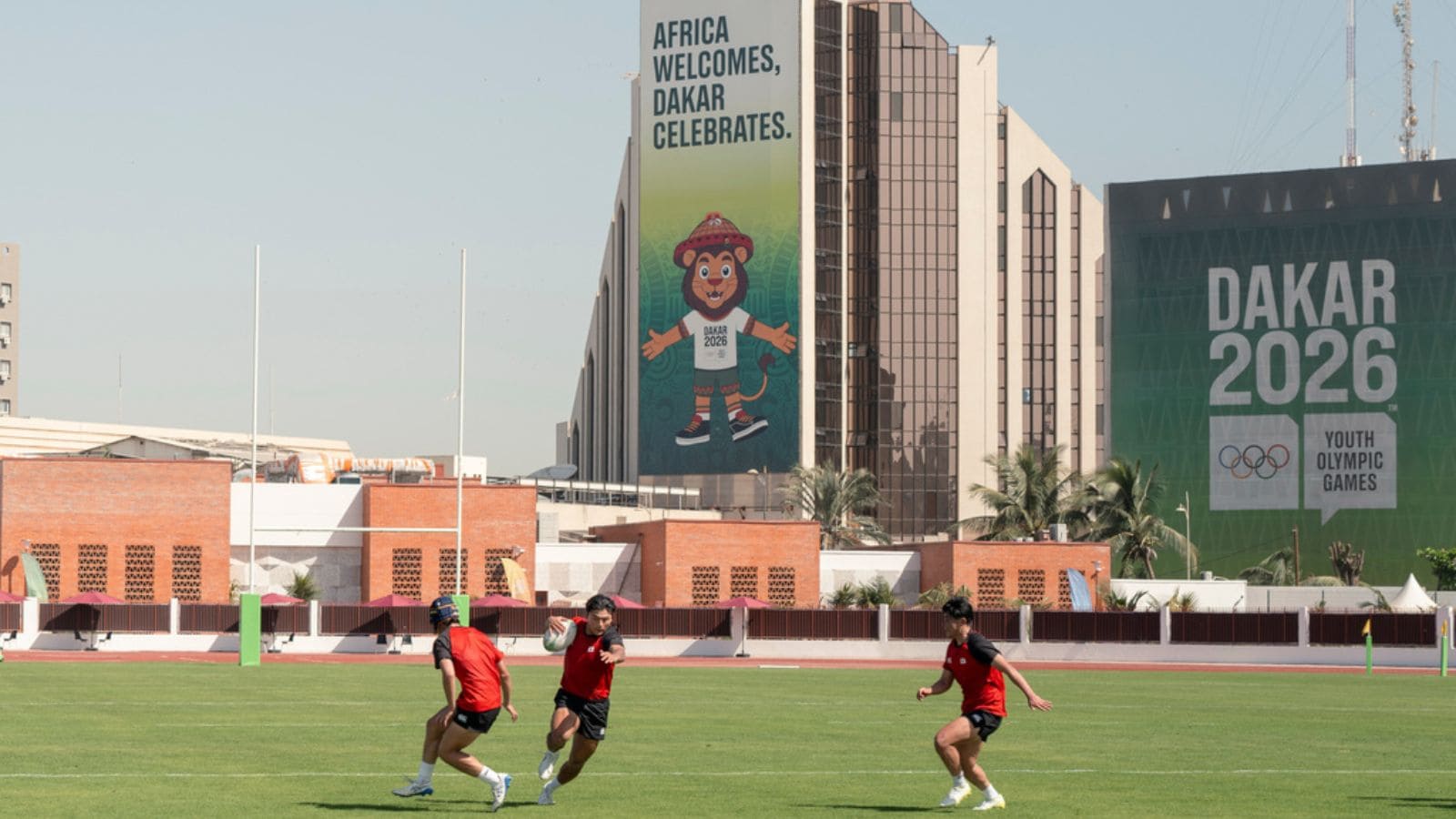
Hosting the fourth Summer Youth Olympic Games in Dakar represents a structural departure from the traditional mega-event capital expenditure model. By shifting the International Olympic Committee (IOC) away from single-city, high-cost infrastructure builds toward a multi-node, regional distribution across Dakar, Diamniadio, and Saly, Senegal is testing whether emerging economies can capture the geopolitical and developmental dividends of global sport without incurring sovereign debt traps. Standard media coverage frames Dakar 2026 as a symbolic milestone for the African continent. That framing misses the operational reality. The event is a live stress test of the IOC’s "New Norm" reform package, an effort to engineer fiscal sustainability into a sporting governance model that had priced out nearly every democratic and developing host nation over the preceding two decades.
The Architecture of Distributed Infrastructure
Traditional Olympic hosting relies on spatial concentration, forcing a single municipality to absorb peak transit loads, athlete housing requirements, and single-purpose venue construction within a compressed seven-year window. This model creates the classic "white elephant" dilemma: specialized facilities engineered for a two-week peak capacity that exceeds local baseline demand by orders of magnitude.
Senegal’s organizing committee (COJOJ) replaced spatial concentration with a three-pole distribution strategy, mapping event clusters directly onto pre-existing national development corridors under the Plan Sénégal Émergent (PSE).
- The Dakar Urban Core (Adaptive Reuse): Rather than clearing land for new construction in a dense coastal metropolis, Dakar utilizes existing civic assets. The renovation of the Iba Mar Diop Stadium and the Tour de l’Oeuf complex relies on brownfield upgrades rather than greenfield builds. The economic mechanism here is capital preservation: redirecting funds from concrete and steel into operational readiness, event overlay, and municipal transit upgrades.
- The Diamniadio Urban Pole (Pre-Planned Capacity): Located roughly 30 kilometers inland, Diamniadio was already designated by the Senegalese state as an administrative and industrial relief valve to decongest the Cap-Vert peninsula. The Dakar Arena and the Diamniadio Olympic Stadium were not conceived solely for the Youth Olympics; they were built as anchor tenants for a new satellite city. Similarly, the Youth Olympic Village utilizes university housing infrastructure constructed for the Université Amadou Mahtar Mbow. When the athletes depart, the real estate immediately converts to student accommodation without requiring costly post-Games structural retrofitting.
- The Saly Coastal Hub (Tourism Integration): Positioned 80 kilometers south along the Petite Côte, Saly absorbs beach and water disciplines. By leveraging existing hospitality inventory and resort infrastructure, the organizing committee eliminates the need to construct temporary coastal accommodations, shifting lodging expenditure directly into an established private-sector tourism ecosystem.
This tri-nodal distribution reduces localized congestion and spreads capital investment across distinct economic zones. Yet it introduces severe operational friction. Connecting three venues separated by up to 80 kilometers requires an unbroken logistical spine. The Train Express Régional (TER) linking Dakar to Diamniadio—and extending toward Blaise Diagne International Airport—serves as the primary artery. If rail headways falter or last-mile bus shuttles experience bottlenecks on the RN1 highway corridor, athlete transit windows collapse. Decentralization trades capital expenditure risk for operational complexity.
The Four-Year Delay as an Operational Buffer
Originally scheduled for 2022, the postponement of Dakar 2026 to October–November 2026—agreed upon by the IOC and Senegalese authorities in July 2020—is typically analyzed through the narrow lens of pandemic-induced calendar congestion. In operational terms, the four-year extension functioned as an unintended risk-mitigation mechanism.
Mega-event infrastructure projects in emerging markets routinely suffer from supply chain volatility, currency fluctuations affecting imported technical equipment, and permitting delays. In a standard seven-year cycle, compressed timelines force organizing committees into expedited procurement contracts, driving up costs through overtime labor and air-freight premiums—a phenomenon known in project management as "crashing the schedule."
The extended runway allowed Senegal to decouple civil engineering timelines from event-overlay timelines. Heavy infrastructure in Diamniadio and highway expansions along the coastal corridor reached completion within normal public-works cycles rather than emergency Olympic schedules. Furthermore, the delay provided a critical runway for human capital formation. Managing a multi-sport event featuring 35 sports across three distinct zones requires thousands of trained technical officials, broadcast technicians, security personnel, and logistics coordinators. Rather than importing expatriate consultants at exorbitant day rates to run core operations, the extended timeline enabled the transfer of institutional knowledge to local administrators through regional sporting test events and phased operational readiness programs.
The hypothesis that time equals stability has a clear boundary condition, however: inflation and political transition. Extending a project lifecycle across an additional electoral cycle exposes the organizing committee to administrative turnover and shifting fiscal priorities. Senegal’s 2024 presidential transition tested the continuity of state guarantees. Maintaining institutional momentum across political realignments requires ring-fenced budgets and statutory protections for organizing bodies so that mega-event commitments do not become collateral damage in domestic fiscal audits.
The Youth Olympic Value Proposition and the Broadcast Deficit
To evaluate Dakar 2026 accurately, one must distinguish the economic mechanics of the Youth Olympic Games (YOG) from the flagship Summer Olympics. The senior Games generate billions in broadcast rights and The Olympic Partner (TOP) global sponsorship revenues, creating a massive financial surplus that subsidizes host operations. The Youth Olympics operate under a fundamentally different revenue model.
Broadcast viewership for the YOG is a fraction of the senior Games, and international ticket sales do not trigger mass inbound tourism surges. Because external revenue generation is capped, the return on investment for a YOG host cannot be calculated through direct visitor spend or short-term hospitality tax receipts. If a host nation evaluates a Youth Olympics using standard tourism-multiplier metrics, the balance sheet will inevitably register a net loss.
The actual value proposition for Senegal rests on three non-broadcast mechanisms:
- Geopolitical Signaling and Foreign Direct Investment (FDI): Successfully executing an IOC-sanctioned global event serves as a sovereign credit-rating proxy. It demonstrates to institutional investors, sovereign wealth funds, and multinational corporations that the host state possesses the administrative capacity, security apparatus, and regulatory stability required to manage complex international operations.
- Demographic Alignment: With a median age hovering around 19 years, Senegal’s demographic pyramid is heavily weighted toward youth. Unlike aging European or East Asian hosts where Olympic legacy programs struggle to find young participants to fill renovated facilities, Senegal faces an acute supply deficit in organized youth sporting infrastructure. The physical legacy of Dakar 2026 meets an immediate, organic demographic demand.
- Sports Diplomacy and Continental Positioning: By securing the first Olympic event on African soil, Senegal establishes itself as the premier sporting and diplomatic hub of West Africa. This positioning creates downstream commercial opportunities for hosting continental federations, regional training centers, and pan-African corporate summits.
Structural Vulnerabilities in the Dakar Model
While the distributed, legacy-first model minimizes the risk of catastrophic financial loss, three structural vulnerabilities threaten execution:
1. Inter-City Transit Synchronization
The spatial separation between Dakar, Diamniadio, and Saly requires precision scheduling across disparate transport modes. Unlike compact Olympic parks where athletes and spectators walk between venues, Dakar 2026 relies on synchronized rail and road corridors. A single infrastructure failure on the TER rail line or severe traffic congestion along the toll highway between Diamniadio and Saly cascades immediately into delayed competition starts, missed broadcast windows, and compromised athlete recovery times. The organizing committee must operate dedicated Olympic lanes with strict enforcement—a measure that frequently generates friction with local commuters if public transit alternatives are not scaled simultaneously.
2. Post-Games Operational Expenditure (OpEx) Traps
Building a stadium is a one-time capital event; maintaining it is a perpetual operational liability. Even when venues like the Dakar Arena or renovated facilities in the capital are designed for community and regional use, specialized sporting surfaces, climate control systems, and broadcast-grade lighting carry high recurring maintenance costs. Without dedicated commercial management contracts, naming-rights partnerships, and non-sporting event calendars (concerts, trade exhibitions, conferences), municipal authorities risk inheriting assets whose annual OpEx drains public sports development budgets rather than funding them.
3. Programmatic Bloat vs. Local Relevance
The YOG sports program includes 35 sports, incorporating urban disciplines like breaking, skateboarding, 3x3 basketball, and BMX freestyle alongside traditional Olympic events. While urban sports require minimal permanent infrastructure—often utilizing temporary modular setups in public spaces—maintaining technical parity across all 35 disciplines stretches local officiating and medical support capacities. If resource allocation is spread too thin across low-participation niche sports to satisfy international federation mandates, the quality of the core athlete experience degrades.
Strategic Imperatives for Emerging-Market Hosts
Dakar 2026 establishes a replicable operating manual for future mid-sized and developing host nations, provided policymakers enforce strict boundary conditions before signing host contracts:
- Mandate Zero Single-Purpose Builds: Every venue in the master plan must have a legally binding, funded post-Games tenant—whether a university system, a municipal sports federation, or a private entertainment operator—signed prior to groundbreaking. If a sport cannot fit into an existing or dual-use facility, negotiate its removal from the local program or relocate the discipline to an existing regional venue.
- Cap Event Overlay Budgets: Temporary infrastructure (scaffolding, tents, temporary seating, perimeter fencing) frequently consumes 20% to 30% of organizing committee budgets while leaving zero physical legacy. Standardize modular rental agreements with regional suppliers rather than purchasing bespoke temporary assets.
- Integrate Transit Upgrades into National Infrastructure Budgets: Never allow Olympic organizing committees to fund mass transit rail or highway expansions out of event operating budgets. These projects must sit entirely within national transport ministry budgets, justified on 30-year commuter and freight utility rather than 14-day event peak loads.
- Monetize Institutional Knowledge: Formalize the training pipelines built for local event managers, security coordinators, and broadcast technicians into a permanent national event-management agency. Export this human capital to manage continental championships, cultural festivals, and international conferences across the region, converting a one-off Olympic operational expense into a recurring service-export industry.
Senegal’s execution in late 2026 will determine whether the IOC’s decentralized framework becomes the permanent standard for global sport or remains an isolated experiment. If Dakar delivers seamless inter-city logistics and immediate post-Games facility utilization without sovereign debt distortion, the monopoly of wealthy mega-cities over Olympic hosting will permanently break.